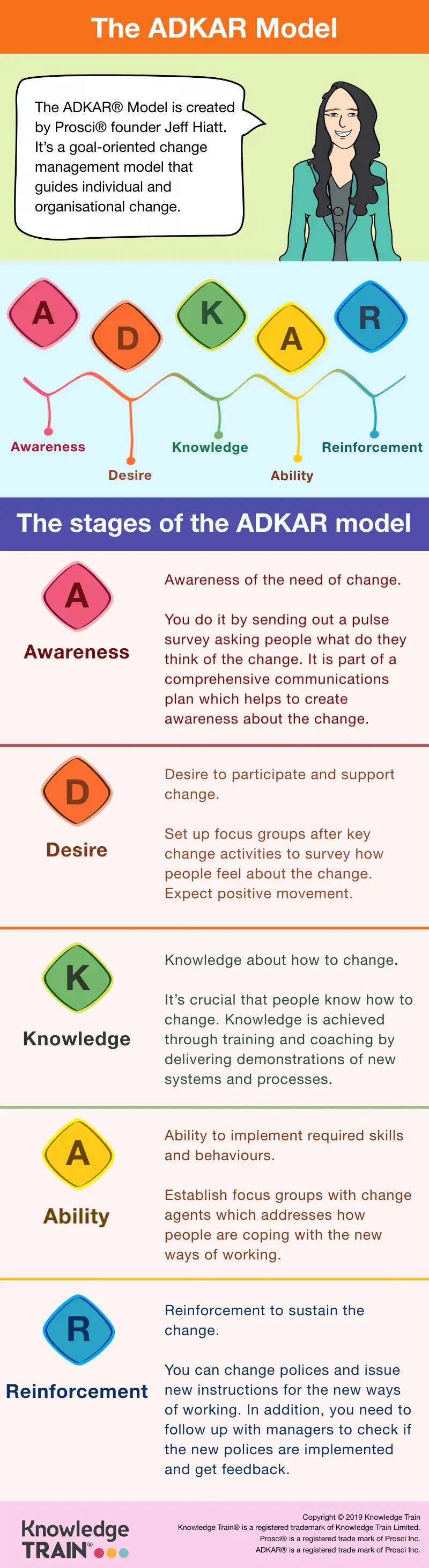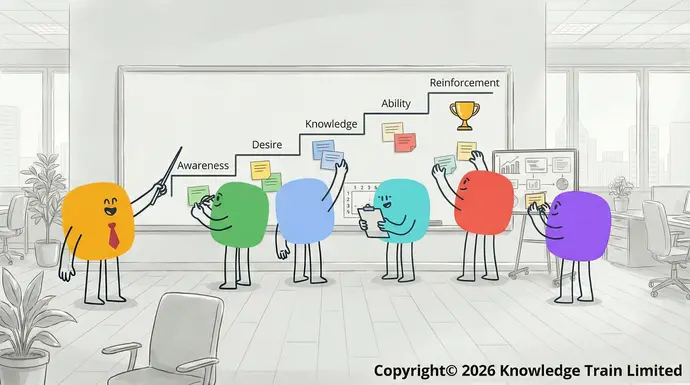
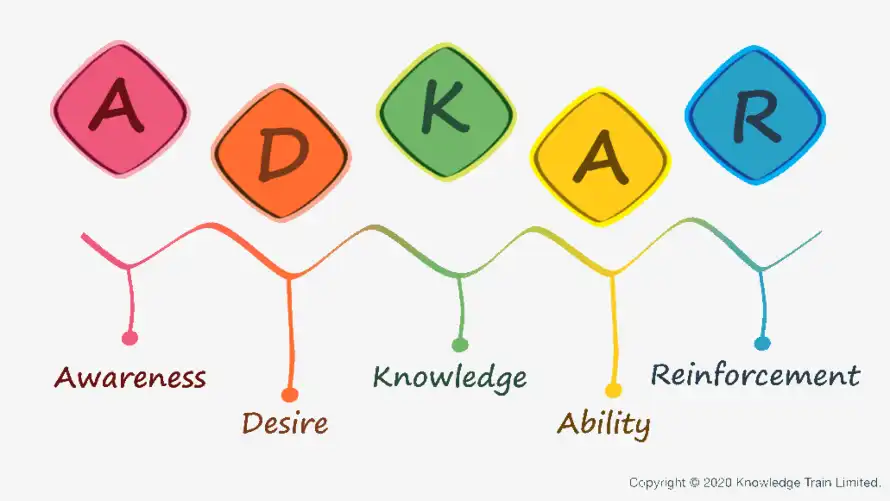
>This model’s purpose is to facilitate a smooth transition by focusing on the psychological aspects of change. By addressing these individual milestones, the ADKAR model reduces stress and enhances overall productivity. Its structured approach ensures that all critical elements of change are methodically covered, minimising confusion. Consequently, organisations can navigate the challenges of transformation with greater confidence and success.Expert, experienced trainers to support you Implementing the ADKAR model in your organisationDenmark<
h5>Project management planningIn summary, the ADKAR model serves as a comprehensive guide for Course manual where applicable. Preparing for changeEstonia5>managing change Implementing the ADKAR model requires careful preparation to ensure a smooth transition. Start by assessing the current organisational landscape. Identify areas where change is necessary and align them with strategic goals. It is critical to secure Finland<ul>. It aligns with the psychological needs of individuals, ensuring that change is not only implemented but also sustained effectively. SELF-PACED ONLINE TRAINING COURSESleadership supportFrance<
li>Stakeholder managementThe five elements of the ADKAR model Self-paced online training courses (e-learning) include: early on, as this endorsement sets the tone for the entire process.Germany>Element 1: Awareness Certification exam(s) where applicableNext, communicate the impending change effectively. Use clear and consistent messaging to build awareness and desire among employees. Establish a timeline with specific milestones to track progress. This structured approach helps to minimise confusion and ensures that all critical elements of change management are addressed.Greece<
li>Benefits managementThe Accredited training course materialsCustomising the modelIreland>Awareness Support from expert, experienced trainersEvery organisation is unique, so customising the ADKAR model to fit specific needs is essential. Begin by analysing the organisational culture and existing processes. This understanding will guide how each element of the model is tailored.Italy<li>Business case element is foundational in the ADKAR model. It ensures individuals recognise the necessity for change, setting the stage for subsequent actions. Without awareness, employees may resist or misunderstand the change initiative, leading to challenges in implementation. Latest educational technology.AwarenessLatvia
>Importance of awareness : Adapt communication strategies to suit the organisation’s culture, ensuring messages resonate with employees.Lithuania<
li>Earned value management (EVM)Awareness is crucial as it creates a shared understanding of the change. It clarifies the reasons behind the shift, reducing anxiety and speculation. This understanding is vital for aligning individual goals with organisational objectives. When employees comprehend the need for change, they are more inclined to support it. This support eases the transition and lays a solid groundwork for the next elements. BUSINESS SOLUTIONSDesireLuxemburg
>Strategies to build awareness : Identify key motivators for different employee groups and leverage these to build desire.Malta<
li>Information managementEffective strategies to build awareness include: KnowledgeNetherlands
- >Consistent communication TO HELP ORGANISATIONS IMPROVE: Customise training programmes to align with the skills required for the change.Poland<li>Estimating: Use diverse channels such as emails, meetings, and digital platforms to convey the change message. We offer solutions to help improve team performance including:AbilityPortugal
- >Leadership involvement Consultancy services: Develop targeted support systems that cater to varying levels of ability within the organisation.Romania<li>Project management plan.: Encourage leaders to endorse and communicate the change, enhancing credibility. Staff developmentReinforcementSlovakia
- >Visual aids Compliance training: Design reinforcement strategies that are relevant and meaningful to the organisation’s context.Slovenia>: Employ infographics and videos to simplify complex information.Apprenticeship training By tailoring the model, organisations can address specific challenges and enhance the effectiveness of the change process.Spain<
- h5>Scope managementInteractive sessionsCustom e-Learning development Overcoming challengesSweden5>: Conduct workshops to discuss the change, allowing for questions and feedback. Implementing the ADKAR model is not without challenges. Common obstacles include resistance to change, lack of engagement, and inadequate resources. Addressing these issues requires proactive strategies.Other countries<
ul>These strategies help reduce uncertainty and foster a positive outlook towards change. ResistanceHome<
li>Scope managementElement 2: DesireFind out more : Engage stakeholders early and involve them in decision-making processes. This involvement can reduce resistance and foster a sense of ownership.Business Analysis
>The EngagementBusiness analyst course<li>Change controlDesire : Maintain open lines of communication and provide regular updates. Transparency builds trust and keeps employees engaged.Business analysis technique fishbone diagrams> element involves cultivating the motivation to participate in the change. It requires addressing both rational and emotional aspects to inspire individuals to engage willingly. Resources <
li>Configuration managementCreating desire for change : Ensure that adequate resources, such as time and funding, are allocated to support the change initiative.{"@context":"http://schema.org","@type":"BreadcrumbList","itemListElement":[{"@type":"ListItem","position":1,"name":"Home","item":"https://www.knowledgetrain.co.uk/"},{"@type":"ListItem","position":2,"name":"Business Analysis","item":"https://www.knowledgetrain.co.uk/business-analysis"},{"@type":"ListItem","position":3,"name":"Business analyst course","item":"https://www.knowledgetrain.co.uk/business-analysis/business-analyst-course"},{"@type":"ListItem","position":4,"name":"Business analysis technique fishbone diagrams","item":"https://www.knowledgetrain.co.uk/business-analysis/business-analyst-course/business-analysis-technique-fishbone-diagrams"}]}
>To inspire desire, organisations can: A key component of implementing ADKAR is using the ADKAR Assessment tool. This diagnostic instrument helps identify which elements are acting as barriers to change for individuals or groups. By rating each element on a scale of 1 to 5, <
- li>Requirements management.Highlight benefitsCONTACT US change managers >: Clearly articulate the personal and organisational benefits of the change. can pinpoint where additional focus is needed. For example, if Ability scores are low but Knowledge scores are high, this suggests the need for more practical application opportunities rather than additional training.
- >Engage employees Psychologically, the structured approach of the ADKAR model reduces stress and enhances confidence among employees. By focusing on individual change, it ensures that employees are well-equipped to adopt new behaviours. This focus leads to sustained improvements and long-term success.Using fishbone diagrams effectively in your projects<h5>Resource scheduling and optimisation: Involve them in planning and decision-making processes to create a sense of ownership. Best practices for each ADKAR element
- 5>Recognise contributions Aligning goals with elementsSimon Buehring<: Acknowledge and reward early adopters and change champions to motivate others. Aligning organisational goals with the elements of the <19 Feb 2026
Measuring desire levelsNameADKAR model
Understanding the level of desire is essential for gauging readiness. This can be achieved through: is essential for a cohesive change process. Begin by clearly defining your organisational objectives. Ensure that each of the ADKAR elements – Awareness, Desire, Knowledge, Ability, and Reinforcement – supports these objectives. <
- Surveys and feedback Awareness : Gather input on employee sentiments towards the change.Email: Align awareness efforts with the strategic vision. Ensure that the need for change is communicated in a way that reflects organisational goals. <
- Observation Desire : Monitor engagement levels during change-related activities. : Motivate employees by linking personal benefits to broader organisational aims. <
- InterviewsPhoneKnowledge : Conduct one-on-one discussions to explore individual concerns and motivations. : Tailor training programs to impart skills that directly contribute to achieving strategic goals.
Assessing desire helps tailor support and interventions, ensuring greater engagement. It’s crucial to understand that while organisations can create an environment that fosters desire, the ultimate decision to participate in the change is a personal choice that cannot be forced. Leaders can influence desire by addressing the question ‘What’s in it for me?’ (WIIFM) but must recognize that genuine commitment cannot be mandated. Ability<
Element 3: KnowledgeHow can we help?: Develop capabilities that are necessary for meeting long-term objectives.
The third element of ADKAR addresses the practical aspects of change implementation. The Reinforcement< Knowledge : Design reinforcement strategies that celebrate achievements aligned with organisational success.< element focuses specifically on how to implement the change. This includes two critical types of knowledge: understanding how to change (the required skills, processes, and behaviours) and what to do during the transition state. This goes beyond just sharing information – it requires detailed training on new processes, systems, and roles that will be part of the change.SubmitThis alignment ensures that change initiatives are not only implemented but also contribute meaningfully to the organisation’s mission.
Knowledge acquisition To facilitate knowledge acquisition:
- >h5>Risk and issue management
- 5>ul>
li>Risk management
>
- li>Issue management.>
- >h5>Quality management
- 5>ul>
li>Quality planning
>
To facilitate knowledge acquisition:
- >h5>Risk and issue management
- 5>ul>
li>Risk management
>
- li>Issue management.>
- >h5>Quality management
- 5>ul>
li>Quality planning
>
APM courses
APM PMQ - Project Management Qualification {"@context":"http://schema.org","@type":"BreadcrumbList","itemListElement":[{"@type":"ListItem","position":1,"name":"Home","item":"https://www.knowledgetrain.co.uk/"},{"@type":"ListItem","position":2,"name":"Project management","item":"https://www.knowledgetrain.co.uk/project-management"},{"@type":"ListItem","position":3,"name":"Association for Project Management (APM)","item":"https://www.knowledgetrain.co.uk/project-management/association-for-project-management-apm"},{"@type":"ListItem","position":4,"name":"APM courses","item":"https://www.knowledgetrain.co.uk/project-management/association-for-project-management-apm/apm-courses"},{"@type":"ListItem","position":5,"name":"APM PMQ course with expert online training","item":"https://www.knowledgetrain.co.uk/project-management/association-for-project-management-apm/apm-courses/apm-pmq-project-management-qualification"}]}
- Start date
- ExamInstructor-ledMaterials
- Access Best for
- Learning experience
Instructor-led
- Live sessions (online)
- 5 days
- Live Q&A with accredited trainer
- All major cards accepted.Invoice/PO option available in checkout.
- Enrol
- Overview
Delivery
, these diagrams help pinpoint inefficiencies in production processes, leading to improved efficiency and reduced waste. By systematically analysing potential causes, manufacturers can address issues such as equipment malfunctions or material defects.
In the healthcareExam
Reviews Apply life cycles and situational context
Understand linear, iterative, and hybrid life cycles, and how projects relate to programmes, portfolios, and business-as-usual.
Plan for success and manage benefits
FAQs
Explore business cases, investment appraisal, benefits management, and information management to support sound decisions.
Control scope, schedule, and resources
Click or scroll Learn techniques for defining scope, managing change, building schedules, and optimising resources and costs.
Enrol on this course Manage risk, issues, and quality
Please use the