What is Agile?ADKAR model

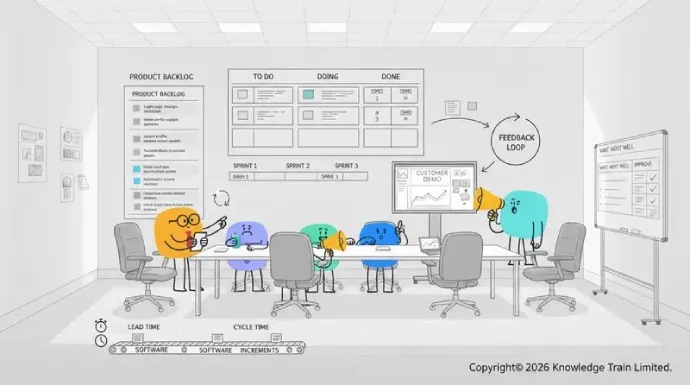
Definition of AgileCore Steps
AgileMain Focus refers to a set of principles and practices that guide teams in developing software products through incremental delivery, adaptive planning, and continual improvement. Agile emphasises iterative development, close team collaboration, and frequent customer feedback to deliver high-quality solutions quickly and efficiently.Kotter’s 8-Step
Agile methodology at a glance8 outlined steps
| AspectBuilding urgency, vision, momentum | DescriptionLewin’s Change |
|---|---|
| PurposeUnfreeze, Change, Refreeze | Deliver working software frequently, respond to change rapidlyPreparing, transitioning, embedding |
| Key valuesADKAR | Individuals and interactions, working software, customer collaboration, responding to changeAwareness, Desire, Knowledge, Ability, Reinforcement |
| ApproachIndividual adoption stages | Iterative, adaptive, and incrementalRelated concepts in change management |
| Popular frameworksOrganisational development | Scrum: A discipline focused on improving organisations through planned interventions in processes and culture., Kanban, Extreme Programming (XP)Stakeholder engagement |
| Stakeholders: The ongoing process of involving those impacted by change in planning and implementation. | Customers, product owners, cross-functional teams, Scrum MastersLeadership in change management |
Summary of the Agile Manifesto and Its values: The role of leaders in inspiring, directing, and supporting people through transitions.
The Risk managementAgile Manifesto: Identifying, analysing, and mitigating risks that arise during change initiatives., published in 2001 by 17 software development experts, established the foundation for Process improvementAgile methodologies: Reviewing and enhancing business processes to align with new goals.. It promotes four core values and twelve underlying principles to guide teams toward continuous improvement and customer satisfaction.FAQs
Agile Manifesto: Four valuesWhat is change management and why is it important?
- Individuals and interactions over processes and toolsChange management is the process of guiding organisations, individuals, or teams through transitions. It is important because it enables smoother implementation of change, reduces resistance, and ensures that strategic objectives are achieved efficiently.
- Working software over comprehensive documentationWhat are common change management frameworks?
- Customer collaboration over contract negotiationThe most common frameworks are Kotter’s 8-Step Process, Lewin’s Change, and the
- Responding to change over following a planADKAR
Agile principles framework. Each provides a structured approach to planning and implementing change.
Agile is supported by twelve guiding principles, intended to help teams create successful products in an ever-changing environment. These principles inform day-to-day Agile practices.How do you overcome resistance to change?
- Satisfy the customer through early and continuous delivery of valuable softwareOvercome resistance by communicating benefits clearly, involving stakeholders, offering support and training, addressing concerns promptly, and recognising employee contributions throughout the transition.
- Welcome changing requirements, even late in developmentWhat role do leaders play in change management?
- Deliver working software frequently, from a couple of weeks to a couple of monthsLeaders set the direction, communicate the vision, build trust, allocate resources, and provide motivation and support to drive successful change.
- Collaborate daily between business people and developersHow can employees be engaged during change initiatives?
- Build Engage employees by involving them early, asking for input, addressing worries, providing training, celebrating successes, and continuously seeking feedback to make improvements.projectsSubscribe to our exclusive offers and promotions around motivated individuals and provide support
- Convey information face-to-face whenever possibleSubscribe now
- Working software is the primary measure of progress
- Maintain a sustainable development pace
- Continuous attention to technical excellence and good design
- Simplicity – the art of maximising the work not done – is essential
- Self-organising teams produce the best architectures, requirements, and designs
- Regularly reflect and adapt to improve effectiveness
Historical origins and evolution of Agile
The Agile approach originated in the late 1990s as software teams sought alternatives to rigid project management models like the {"@context":"https://schema.org","@type":"WebPage","name":"Change Management: Models, Steps & Best Practices [2024 Guide]","url":"https://www.knowledgetrain.co.uk/change-management","description":"Learn what change management is, key models, steps, challenges, and best practices. A comprehensive 2024 guide for effective organisational change.","significantLink":"https://www.knowledgetrain.co.uk/change-management","mainEntity":[{"@type":"Article","headline":"Change management: models, steps, and best practices","about":[{"@type":"DefinedTerm","name":"change management","sameAs":["https://en.wikipedia.org/wiki/Change_management","https://www.google.com/search?&kgmid=/m/02rxbq1","https://www.wikidata.org/wiki/Q507232"]},{"@type":"DefinedTerm","name":"Kotter's 8-Step Process","sameAs":["https://en.wikipedia.org/wiki/John_Kotter#8-Step_Process_for_Leading_Change","https://www.google.com/search?&kgmid=/g/122ylnch","https://www.wikidata.org/wiki/Q56490748"]},{"@type":"DefinedTerm","name":"Lewin's Change Model","sameAs":["https://en.wikipedia.org/wiki/Kurt_Lewin#Three-Stage_Theory_of_Change","https://www.google.com/search?&kgmid=/g/11b6d4bthh","https://www.wikidata.org/wiki/Q111595438"]},{"@type":"DefinedTerm","name":"ADKAR model","sameAs":["https://en.wikipedia.org/wiki/ADKAR_model","https://www.google.com/search?&kgmid=/g/11c2633t9v","https://www.wikidata.org/wiki/Q24538064"]},{"@type":"DefinedTerm","name":"resistance to change","sameAs":["https://en.wikipedia.org/wiki/Resistance_to_change","https://www.google.com/search?&kgmid=/m/012f2z","https://www.wikidata.org/wiki/Q2163579"]},{"@type":"DefinedTerm","name":"stakeholders","sameAs":["https://en.wikipedia.org/wiki/Stakeholder_(corporate)","https://www.google.com/search?&kgmid=/m/06zl3","https://www.wikidata.org/wiki/Q1152283"]},{"@type":"DefinedTerm","name":"leadership","sameAs":["https://en.wikipedia.org/wiki/Leadership","https://www.google.com/search?&kgmid=/m/04t1k","https://www.wikidata.org/wiki/Q650112"]},{"@type":"DefinedTerm","name":"employee engagement","sameAs":["https://en.wikipedia.org/wiki/Employee_engagement","https://www.google.com/search?&kgmid=/m/0c3v","https://www.wikidata.org/wiki/Q537366"]},{"@type":"DefinedTerm","name":"communication","sameAs":["https://en.wikipedia.org/wiki/Communication","https://www.google.com/search?&kgmid=/m/01n7q","https://www.wikidata.org/wiki/Q11024"]},{"@type":"DefinedTerm","name":"change agent","sameAs":["https://en.wikipedia.org/wiki/Change_agent","https://www.google.com/search?&kgmid=/m/02z7g_","https://www.wikidata.org/wiki/Q507244"]},{"@type":"DefinedTerm","name":"process improvement","sameAs":["https://en.wikipedia.org/wiki/Process_improvement","https://www.google.com/search?&kgmid=/g/11bc61m3_5","https://www.wikidata.org/wiki/Q1530963"]},{"@type":"DefinedTerm","name":"implementation","sameAs":["https://en.wikipedia.org/wiki/Implementation","https://www.google.com/search?&kgmid=/m/035_q","https://www.wikidata.org/wiki/Q181876"]},{"@type":"DefinedTerm","name":"culture change","sameAs":["https://en.wikipedia.org/wiki/Organizational_culture#Change","https://www.google.com/search?&kgmid=/m/02jpz","https://www.wikidata.org/wiki/Q1286925"]},{"@type":"DefinedTerm","name":"organisational development","sameAs":["https://en.wikipedia.org/wiki/Organizational_development","https://www.google.com/search?&kgmid=/m/01534t","https://www.wikidata.org/wiki/Q1261513"]},{"@type":"DefinedTerm","name":"best practices","sameAs":["https://en.wikipedia.org/wiki/Best_practice","https://www.google.com/search?&kgmid=/m/04nsmj","https://www.wikidata.org/wiki/Q48283"]},{"@type":"DefinedTerm","name":"project management","sameAs":["https://en.wikipedia.org/wiki/Project_management","https://www.google.com/search?&kgmid=/m/06n8c","https://www.wikidata.org/wiki/Q171119"]},{"@type":"DefinedTerm","name":"business transformation","sameAs":["https://en.wikipedia.org/wiki/Business_transformation","https://www.google.com/search?&kgmid=/g/11b7wsy5xh","https://www.wikidata.org/wiki/Q28960900"]},{"@type":"DefinedTerm","name":"stakeholder engagement","sameAs":["https://en.wikipedia.org/wiki/Stakeholder_engagement","https://www.google.com/search?&kgmid=/g/11g7dk8pxm","https://www.wikidata.org/wiki/Q7566812"]},{"@type":"DefinedTerm","name":"transition","sameAs":["https://en.wikipedia.org/wiki/Transition_management","https://www.google.com/search?&kgmid=/g/11bzw6dtz0","https://www.wikidata.org/wiki/Q1131930"]},{"@type":"DefinedTerm","name":"risk management","sameAs":["https://en.wikipedia.org/wiki/Risk_management","https://www.google.com/search?&kgmid=/m/06tbh","https://www.wikidata.org/wiki/Q211119"]}],"mentions":[{"@type":"DefinedTerm","name":"change management","sameAs":["https://en.wikipedia.org/wiki/Change_management","https://www.google.com/search?&kgmid=/m/02rxbq1","https://www.wikidata.org/wiki/Q507232"]},{"@type":"DefinedTerm","name":"organisational change","sameAs":["https://en.wikipedia.org/wiki/Organizational_change","https://www.google.com/search?&kgmid=/m/03x62k","https://www.wikidata.org/wiki/Q11943131"]},{"@type":"DefinedTerm","name":"leadership","sameAs":["https://en.wikipedia.org/wiki/Leadership","https://www.google.com/search?&kgmid=/m/04t1k","https://www.wikidata.org/wiki/Q650112"]},{"@type":"DefinedTerm","name":"employee engagement","sameAs":["https://en.wikipedia.org/wiki/Employee_engagement","https://www.google.com/search?&kgmid=/m/0c3v","https://www.wikidata.org/wiki/Q537366"]},{"@type":"DefinedTerm","name":"communication","sameAs":["https://en.wikipedia.org/wiki/Communication","https://www.google.com/search?&kgmid=/m/01n7q","https://www.wikidata.org/wiki/Q11024"]},{"@type":"DefinedTerm","name":"change agent","sameAs":["https://en.wikipedia.org/wiki/Change_agent","https://www.google.com/search?&kgmid=/m/02z7g_","https://www.wikidata.org/wiki/Q507244"]},{"@type":"DefinedTerm","name":"process improvement","sameAs":["https://en.wikipedia.org/wiki/Process_improvement","https://www.google.com/search?&kgmid=/g/11bc61m3_5","https://www.wikidata.org/wiki/Q1530963"]},{"@type":"DefinedTerm","name":"implementation","sameAs":["https://en.wikipedia.org/wiki/Implementation","https://www.google.com/search?&kgmid=/m/035_q","https://www.wikidata.org/wiki/Q181876"]},{"@type":"DefinedTerm","name":"culture change","sameAs":["https://en.wikipedia.org/wiki/Organizational_culture#Change","https://www.google.com/search?&kgmid=/m/02jpz","https://www.wikidata.org/wiki/Q1286925"]},{"@type":"DefinedTerm","name":"project management","sameAs":["https://en.wikipedia.org/wiki/Project_management","https://www.google.com/search?&kgmid=/m/06n8c","https://www.wikidata.org/wiki/Q171119"]}]},{"@type":"FAQPage","mainEntity":[{"@type":"Question","name":"What is change management and why is it important?","acceptedAnswer":{"@type":"Answer","text":"Change management is the process of guiding organisations, individuals, or teams through transitions. It is important because it enables smoother implementation of change, reduces resistance, and ensures that strategic objectives are achieved efficiently."}},{"@type":"Question","name":"What are common change management models?","acceptedAnswer":{"@type":"Answer","text":"The most common models are Kotter’s 8-Step Process, Lewin’s Change Model, and the ADKAR model. Each provides a structured approach to planning and implementing change."}},{"@type":"Question","name":"How do you overcome resistance to change?","acceptedAnswer":{"@type":"Answer","text":"Overcome resistance by communicating benefits clearly, involving stakeholders, offering support and training, addressing concerns promptly, and recognising employee contributions throughout the transition."}},{"@type":"Question","name":"What role do leaders play in change management?","acceptedAnswer":{"@type":"Answer","text":"Leaders set the direction, communicate the vision, build trust, allocate resources, and provide motivation and support to drive successful change."}},{"@type":"Question","name":"How can employees be engaged during change initiatives?","acceptedAnswer":{"@type":"Answer","text":"Engage employees by involving them early, asking for input, addressing worries, providing training, celebrating successes, and continuously seeking feedback to make improvements."}}]}]}Waterfall model. In 2001, seventeen thought leaders signed Related articlesthe Agile Manifesto , formalising Agile values and sparking the formation of the Agile Alliance. Since then, Agile has evolved beyond software development into project management , product development, and operations.
Benefits of Agile
- Flexibility: Respond rapidly to changing customer needs and market conditions.
- Continuous improvement: Regular retrospectives help teams adapt and improve their processes.
- Customer satisfaction: Frequent delivery ensures customer requirements are met early and often.
- Transparency: Iterative development and open communication foster stakeholder trust.
- Reduced risk:What qualifications do change managers need? Incremental delivery allows for earlier issue detection and correction.
- Enhanced team collaboration:Simon Buehring Cross-functional teams communicate daily to resolve challenges efficiently.19 Feb 2026
Agile vs waterfall model
| AspectDiscover the essential qualifications needed by change managers and how these credentials can boost your career. Read on for detailed information. | Agile | Waterfall |
|---|---|---|
| Process | Iterative and incremental | Sequential and linear |
| Flexibility | Adaptive to change | Resistant to change after initial planningIs Change Management the course for you? |
| Customer involvement | High, continuous feedbackSimon Buehring | Typically only during requirements and acceptance stages23 Feb 2026 |
| Delivery | Frequent, partial releasesThinking about change management training? Learn what these courses involve and decide if it’s the right fit for you by reading further. | Full product delivered at project end |
| Risk | Problems discovered early | Issues often found late |
Agile frameworks and practices
Scrum framework
Scrum is a widely adopted Agile framework structured around short, timeboxed periods called Thriving in Change – Webinar with Luz Flores Leesprints . Teams maintain a Sevcan Yasaproduct backlog19 Feb 2026 of features and tasks, delivering increments of working software at the end of each sprint. Roles in Scrum include Product Owner, Scrum MasterWatch this insightful webinar with Luz Flores Lee to master Agile strategies for navigating change in your career. Scroll down to enhance your skills and advance your professional journey., and Development Team. Daily stand-ups, sprint planning, reviews, and retrospectives reinforce team collaboration and transparency.
Kanban
Kanban emphasises visualising work, limiting work in progress, and optimising flow. Teams use Kanban boards to track tasks and identify bottlenecks, often integrating continuous improvement practices.
User stories and Product Backlog
Features are typically described as user stories in a product backlog. This backlog is prioritised by the Product Owner and guides the work to be pulled into each sprint or iteration.
Agile project managementIs change management a good career choice?
Agile project management focuses on iterative planning, adaptive resource allocation, and continuous stakeholder engagement. Leaders support self-organising, cross-functional teams, encourage regular customer feedback, and facilitate incremental value delivery.Simon Buehring
Key concepts: Iterative and incremental delivery19 Feb 2026
Agile projects proceed in small iterations, each resulting in an incrementally improved product. This iterative approach enables rapid adaptation, regular feedback, and incremental value to stakeholders.
Team collaboration and cross-functional teamsConsidering a career in change management? Read this article to understand why it's a growing field and how to get started.
Agile emphasises collaboration between customers, stakeholders, and team members from diverse disciplines. Cross-functional teams are empowered to make decisions and deliver complete solutions within each iteration.
Continuous improvement practices
Agile teams conduct regular retrospectives to identify areas for improvement and adjust their processes. This culture of continuous improvement leads to increased quality, productivity, and team morale over time.
Further Resources
FAQs
What is Agile methodology?How ADKAR can revolutionise your change management strategy
Agile methodology is a set of practices and values that promote adaptive planning, evolutionary development, early delivery, and continual improvement. Agile methods empower teams to respond quickly to change and collaborate closely with stakeholders.Simon Buehring
What are the 12 principles of Agile?23 Feb 2026
The 12 Agile principlesUncover the essentials of the ADKAR model to effectively manage change. Learn how to confidently guide your team through transitions. Continue reading to master change management strategies. include prioritising customer satisfaction through early and continual delivery, welcoming changing requirements, delivering working software frequently, fostering daily collaboration, supporting motivated teams, preferring face-to-face communication, using working software as the main progress measure, maintaining a sustainable pace, focusing on technical excellence, maximising simplicity, enabling self-organising teams, and reflecting regularly for process improvement.
What is the difference between Agile and waterfall?
Agile is iterative, adaptable, and focuses on incremental delivery with frequent stakeholder feedback. Waterfall is linear, sequential, and requires upfront planning, often only allowing changes late in the project cycle.