
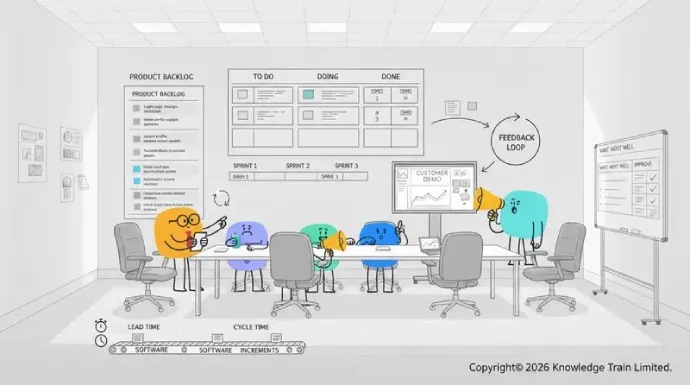
Core project management roles
- Customer satisfaction:Share knowledge and resourcesHelp their colleagues succeed
- Be adaptable to the changing project requirements.By promoting open communication, trust, and respect, project team members can overcome project challenges more effectively. This kind of collaboration boosts productivity, creativity, and ultimately, the success of the project, thereby contributing to the achievement of the organisation’s strategic goals.
- Enhance your skills with our expert-led courses
Instructor-led
| Introduction to Project Management course | £499 +vat | |
|---|---|---|
| See all dates | ||
| Instructor-led | ||
| Project Management Essentials | £999 +vat | |
| See all dates | Supporting project management roles | |
| Assistant PM | An | Assistant PM |
is a second manager or someone who is directly underneath the main PM and they help them out; they do the same job as a regular PM but on smaller or less important projects.
For example, if you are working on a huge project and it’s starting to get a lot of tasks, you may ask an Assistant PM to take over and get it done and they will, if it’s small enough! In summary, the assistant is a great help and acts as a mini PM. The responsibilities of an assistant include:
Planning the projectMonitoring the project and its workOverseeing the allocated budgetCommunicating with the stakeholdersAssisting the PM.Working under the PM, the assistant:Learns high-level project management skills
Gets first-hand experience of making top-level decisions
Builds leadership experience for his/her own future career development.
This relationship enables effective delegation of tasks as well as broader project supervision. The role of Assistant PM is particularly important for big or complex projects, offering extra management resources and helping to ensure that no detail is missed.
Project coordinatorA project coordinator
, or as we will be using to describe it, a coordinator. They work on the team as a supporting role. Some of the responsibilities of a coordinator include:
Meeting and calendar managementProject record keeping
Project logistics
Project tracking and reporting.
Project coordinators, supporting the PM and team, may:
Serve as a central point of communication
Support resource allocation and management
Monitor and control project budgets and expenses
The
project administrator
plays another important support role, providing administrative support. The project administrator’s key tasks include:Managing paperwork and digital files related to the project
Updating and maintaining
project management softwareSupporting financial tracking and budget reportsHelping to coordinate team schedules and resource allocation.
Documentation
is the heart of a project administrator’s job. This includes:Developing and organising project plans
Compiling progress reports and status updates
Archiving important communications and decisionsEnsuring compliance with organisational policies.Administrators leave a paper trail and detailed record of project actions and decisions. This documentation is a valuable tool for decision-making, performance reviews, and sharing knowledge for future projects
. It also contributes to the organisation’s long-term success and efficiency.
Senior project management roles