
- Close, daily cooperation between business people and developersSearch
- Build projects around motivated individuals
- Face-to-face conversation as the best form of communication
- Working product as the primary measure of progress
- Sustainable development paceUnited Kingdom
- Continuous attention to technical excellence and good designAustria
- Simplicity – the art of maximising the amount of work not done – is essentialBelgium
- Self-organising teams produce the best resultsBulgaria
- Regular reflections for continuous improvementCroatia
Key Agile frameworks and methodologiesCyprus
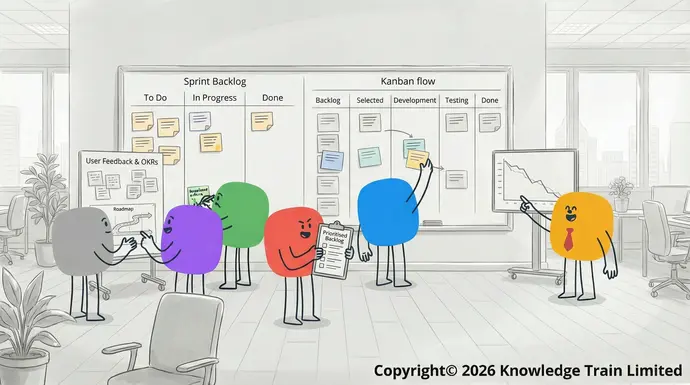
AgileCzech Republic encompasses various frameworks, each with its own practices and terminology. The most widely used Agile frameworks were designed for more efficient product delivery, rather than Denmarkproject managementEstonia. They include FinlandScrumFrance, Kanban, Lean, and Extreme Programming (XP):Germany
ScrumGreece
- Main focus:Ireland Team roles, time-boxed sprints, and iterative deliveryItaly
- Core roles:Latvia Product Owner, LithuaniaScrum MasterLuxemburg, Team MembersMalta
- Artefacts:Netherlands Product backlog, sprint backlogPoland
- Key events:Portugal Sprint planning, daily scrum, sprint review, sprint retrospectivesRomania
- Advantages:Slovakia Well-defined structure, clear accountability, transparencySlovenia
KanbanSpain
- Main focus:Sweden Visualisation of workflow, limiting work in progress, continuous flowOther countries
- Core elements:Home Kanban board, work-in-progress limits, cards/tasksProject Management
- Advantages:Project management vs product management Flexibility, real-time workflow visualisation, easy adoption without role changes
Lean{"@context":"http://schema.org","@type":"BreadcrumbList","itemListElement":[{"@type":"ListItem","position":1,"name":"Home","item":"https://www.knowledgetrain.co.uk/"},{"@type":"ListItem","position":2,"name":"Project Management","item":"https://www.knowledgetrain.co.uk/project-management"},{"@type":"ListItem","position":3,"name":"Project management vs product management","item":"https://www.knowledgetrain.co.uk/project-management/project-management-vs-product-management"}]}
- Main focus: Elimination of waste, maximising value, continuous improvement
- Core elements: Value stream mapping, optimised flow, customer focusProject management vs product management
- Advantages: Improved efficiency, reduced delays, enhanced qualityKnowledge Train
Extreme Programming (XP)19 Feb 2026
- Main focus: Technical excellence, frequent releases, customer involvement
- Core practices: Pair programming, test-driven development, continuous integration, user stories
- Advantages: Rapid feedback, high product quality, adaptability to change
Comparison: Scrum, Kanban, Lean, XP
| Framework | Main focus | Key practice | Team structure | Best use case |
|---|---|---|---|---|
| Scrum | Time-boxed iterations (Sprints) | Predefined roles and events | Cross-functional | Complex projects needing structure |
| Kanban | Visual workflow & limits | Kanban board, WIP limits | Flexible rolesCopied! | Ongoing support/operationsKey takeaways |
| LeanProject and product management are distinct roles that work best as a coordinated pair. | Eliminate wasteProject management focuses on delivering defined work on time, within budget, and to agreed quality. | Value stream mappingProduct management owns product vision, market fit, and lifecycle decisions from concept to retirement. | AnyProject managers make tactical trade-offs inside constraints, while product managers make strategic scope and positioning calls. | Process improvement, efficiencyBoth roles rely on shared skills like communication, problem-solving, and stakeholder management, but apply them differently. |
| XPClear role boundaries, shared documentation, and regular touchpoints reduce conflict and keep delivery aligned to product value. | Technical best practices | Pair programming, TDD | Small, tech-focused teams | Software projects needing qualityContents |
Agile vs traditional (waterfall) project management
The waterfall modelContents is a sequential, plan-driven approach where phases follow one another with minimal overlap. Agile project managementIntroduction contrasts this with its focus on flexible planning, iterative progress, and stakeholder feedback throughout:
| AspectDefining project and product management | Agile | WaterfallProject and product managers key differences |
|---|---|---|
| Approach | Iterative and incrementalSkills and qualifications | Sequential and linear |
| FlexibilityTools and methodologies | Highly adaptive to change | Change-resistantCareer paths and progression |
| Customer Involvement | Continuous collaborationHow they work together | Primarily at start/end |
| Risk managementMeasuring success | ||