
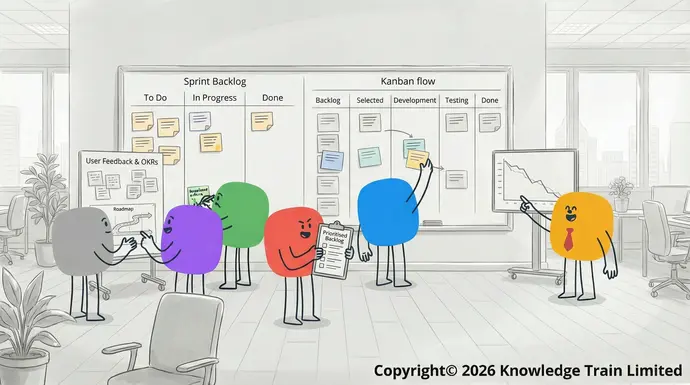
What is Agile project management?
Agile project managementSearch is an iterative approach to planning, executing, and
Key Agile frameworks and methodologies
Other countries. They include ScrumHome
| Lean | Eliminate wasteBenefits of the project triangle | Value stream mapping | AnyManaging the project triangle | Process improvement, efficiency |
| XPStrategies for balancing constraints | Technical best practices |
| scope | Change-resistant, | |
| Customer Involvementtime | Continuous collaboration, and | Primarily at start/endcost |
| Risk management in | Early and ongoing detectionproject management | Late-stage identification. It highlights the interconnected nature of these three aspects in delivering a successful project. |
| DeliveryThe triangle model is a crucial tool for project managers to understand and balance the competing demands of a | Work delivered frequentlyproject | Single final delivery. The scope refers to the project’s requirements, objectives, and deliverables. Time refers to the schedule and deadlines. Cost encompasses the budget and resources. The challenge is to optimise all three to meet project goals. |
| Suitable forEach corner of the triangle is dependent on the other two. A change in one element typically results in a change in at least one other. By understanding and managing these constraints, project teams can make informed decisions and adjustments to ensure project success. | Complex, evolving The project management triangle is a fundamental concept that helps projectsproject managers | Clear, fixed requirementsvisualise and optimise the key constraints of any project. By balancing scope, time, and cost, project teams can deliver successful outcomes that meet stakeholder expectations. |
Key roles and concepts in Agile projectsUnderstanding the project management triangle
- Product Owner:The three constraints explained Represents stakeholders, manages product backlog, prioritises featuresThe project management triangle is made up of three main constraints:
- Scrum Masterscope:, Facilitates timeScrum and process, removes impedimentscost
- User stories. Let’s have a detailed look at each of these.:Scope Short, simple descriptions of a feature told from the perspective of the user: Scope refers to the boundaries, objectives and deliverables of a project. It includes the goals and requirements of the project, as well as the specific features, functionalities and quality standards.
- Backlog:Time Ordered list of project tasks and features: The time constraint of a project refers to its duration and schedule. It involves factors such as the project start and end dates, milestones and deadlines, as well as the sequencing and dependencies of tasks.
- Sprint/Iteration:Cost Short, time-boxed development cycles: The cost constraint relates to the financial and resource aspects of a project. This includes the budget allocated to the project as well as the human resources and labour costs, and equipment and material expenses.
- Stakeholders:Relationship between constraints Individuals or groups with interests in project outcomesThe three constraints of scope, time and cost are interconnected and can impact each other. Changes to one constraint will likely influence the other constraints. For example, an increase in scope will often require additional time and resources, whereas a reduction in time may increase costs or decrease scope. Similarly, a reduction in budget may affect the project scope or timeline.
- Retrospectives:Project managers Regular meetings to assess and improve processes must carefully balance these constraints throughout the project lifecycle.
- Deliverables:Impact on project quality Outputs produced at the end of each iterationThe balance of scope, time and cost also has an impact on the
- Continuous Improvement:quality Commitment to reflect and implement enhanced ways of working of the project outcomes. If the three constraints are well-balanced, the project is more likely to achieve high-quality results. On the other hand, if there is an imbalance in any of the constraints, the quality of the project may be compromised. For example:
Benefits of Agile project managementA tight deadline may lead to a rushed project, resulting in lower quality outputs.
- Accelerated delivery of value through iterative incrementsA limited budget may result in a project being understaffed or under-resourced, which may also affect quality.
- Improved team collaboration and transparencyA project with an overambitious scope can strain resources and time, leading to poor results.
- Quick response to customer feedback and market changesSuccessful project management involves finding the right balance and making trade-offs between the three constraints while maintaining the desired level of quality. By understanding the impact of these constraints on each other, project managers can make informed decisions to lead the
- Reduced project risks and higher stakeholder satisfactionproject
- High-quality deliverables due to continuous review to a successful outcome.
Challenges and limitationsBenefits of using the project management triangle
- Requires experienced, self-organising teamsUtilising the project management triangle provides some distinct benefits to the project team and stakeholders. These are as follows.
- Most Easier change managementAgileThe triangle model helps to frameworks are designed for product delivery, not make changes easierproject management. This is because if a change arises, the project managers can easily evaluate how this change will affect the scope, time and cost, decide, as such it helps to quickly evaluate a change request, understand the ripple effects, and make an informed decision on change..Priority clarification
- Less suitable when requirements are fixed and well-definedVisualising the three constraints helps to
- Organisational resistance to cultural changeclarify priorities