
Key takeawaysComplete accredited training, then pass the relevant exam or assessment to qualify.
Agile improves delivery by combining iterative planning, tight feedback loops and disciplined ways of working.Plan to maintain the credential through continuing professional development or recertification where required.
- Agile delivers value in short iterations, using regular reviews and retrospectives to adapt quickly to change.Certification can improve employability, credibility, and progression into change, project, and leadership roles.
- Scrum, Kanban, Lean and XP offer different structures, so choose based on workflow needs and team maturity.
- Clear roles, prioritised backlogs and well-written user stories reduce confusion and keep work aligned to outcomes.
- Metrics such as velocity, cycle time and burn-down charts improve predictability when paired with a clear definition of done.
- Lightweight governance, change management and technical debt controls help Agile scale without losing quality.Contents
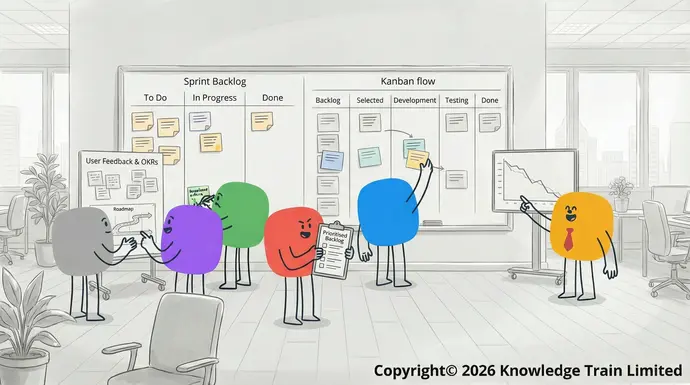
What is Agile project management?These
Agile project managementcertifications is an iterative approach to planning, executing, and are awarded by accrediting bodies or professional associations following completion of training and successful assessments.delivering projectsLeading change management certifications by breaking work into small, manageable increments known as iterations or sprints. Rather than following a strict linear plan, Certification ProviderAgileCredential focuses on adaptability, team collaboration, and continuous delivery of value to stakeholders. Main FeaturesAgile principlesCost (indicative, GBP) emphasise close communication, incremental progress, and regular feedback cycles to enhance quality and meet customer needs.Prerequisites / Eligibility
The Agile Manifesto: Values and principlesRecertification
The ProsciAgile ManifestoProsci Certified Change Practitioner underpins Agile project management, defining four core values and twelve guiding principles. These foster a culture of collaboration, adaptability, and response to change.ADKAR methodology
Agile Manifesto core values, focus on practical application, 3-day programme, assessment
- Individuals and interactions over processes and tools£2,800–£3,300
- Working software (or product) over comprehensive documentationNone, suitable for all professionals
- Customer collaboration over contract negotiationOngoing professional development recommended but not required
- Responding to change over following a planACMP (Association of Change Management Professionals)
Twelve principles of AgileCertified Change Management Professional (CCMP)
- Customer satisfaction through early and continuous deliveryGlobal standard, requires experience, exam-based
- Welcome changing requirements, even late in development£500–£750 (plus training costs)
- Deliver working products frequently21+ hours of change training, 3 years change experience
- Close, daily cooperation between business people and developersRecertification every 3 years
- Build APMG InternationalprojectsAPMG Change Management around motivated individuals Foundation/Practitioner
- Face-to-face conversation as the best form of communicationBased on CMI body of knowledge, exam focused
- Working product as the primary measure of progress£1,300–£2,000 (including training)
- Sustainable development paceNone for Foundation; Practitioner requires Foundation pass
- Continuous attention to technical excellence and good designNone (lifetime unless updating required)
- Simplicity – the art of maximising the amount of work not done – is essentialCMI (Change Management Institute)
- Self-organising teams produce the best resultsCMI Accredited Change Manager
- Regular reflections for continuous improvementGlobal accreditation, different levels for experience
Key Agile frameworks and methodologies£210–£500 (membership required)
AgileDepends on level; experience and evidence required encompasses various frameworks, each with its own practices and terminology. The most widely used Agile frameworks were designed for more efficient product delivery, rather than Annual membership and professional development evidenceproject managementLeading providers and their programmes. They include ProsciScrumProsci is recognised globally for its proprietary , Kanban, Lean, and Extreme Programming (XP):ADKAR methodology
Scrum. Its Change Practitioner certification is accessible to professionals from any background, delivered via accredited training organisations both online and in-person.
- Main focus:Association of Change Management Professionals (ACMP) Team roles, time-boxed sprints, and iterative deliveryThe Association of Change Management Professionals offers the Certified Change Management Professional (CCMP) credential. It is aligned with the ACMP Standard for
- Core roles:Change Management Product Owner, and requires relevant training and work experience. Candidates must pass a certification exam to qualify.Scrum MasterAPMG International, Team MembersAPMG International provides Foundation and Practitioner change management certifications based on the Change Management Institute’s (CMI) body of knowledge. Training can be taken through an accredited training organisation, with assessments in exam format.
- Artefacts:Change Management Institute (CMI) Product backlog, sprint backlogCMI offers accreditation recognising capability at Foundation, Specialist, and Master levels. Entrants must demonstrate experience in real-world
- Key events:organisational change Sprint planning, daily scrum, sprint review, sprint retrospectives and maintain ongoing professional development.
- Advantages:How to get change management certification Well-defined structure, clear accountability, transparencyChoose a certification provider
Kanban (e.g., Prosci, ACMP, APMG International, or CMI) and select the credential that matches your career goals.
- Main focus:Check eligibility requirements Visualisation of workflow, limiting work in progress, continuous flow, such as prior experience, training hours, or prerequisite qualifications.
- Core elements:Complete required training Kanban board, work-in-progress limits, cards/tasks via an accredited training organisation, either in-person or via online certification programmes.
- Advantages:Register for and schedule your certification exam Flexibility, real-time workflow visualisation, easy adoption without role changes where required. Some credentials involve coursework assessment instead.
LeanSit the exam or finish required assessments
- Main focus:. Exams may be delivered online or at testing centres. Elimination of waste, maximising value, continuous improvementMaintain your credential
- Core elements: by fulfilling recertification or continuing professional development requirements if applicable. Value stream mapping, optimised flow, customer focusSteps to obtain certification
- Advantages:Here are the typical steps to obtain certification: Improved efficiency, reduced delays, enhanced qualityReview certification providers and eligibility
Extreme Programming (XP)Undertake required training
- Main focus:Complete application and documentation Technical excellence, frequent releases, customer involvementPass examination or assessment
- Core practices:Receive and maintain your Pair programming, test-driven development, continuous integration, certificationuser storiesBenefits of change management certification
- Advantages:Validates your expertise in the change management process and best practices Rapid feedback, high product quality, adaptability to changeEnhances career prospects for roles such as change practitioner or
Comparison: Scrum, Kanban, Lean, XPproject manager
| FrameworkRecognised by employers as evidence of professional skills and commitment to | Main focusorganisational change | Key practiceBroadens knowledge of tools, methodologies, and frameworks (such as | Team structureADKAR | Best use case) |
|---|---|---|---|---|
| ScrumMay result in higher remuneration and increased leadership opportunities within | Time-boxed iterations (Sprints)project management | Predefined roles and events and organisational development | Cross-functionalKeeps you up to date with current standards and emerging trends | Complex projects needing structureCompare change management certification options |
| KanbanOption | Visual workflow & limitsFormat | Kanban board, WIP limitsPros | Flexible rolesCons | Ongoing support/operationsOnline certification |
| LeanRemote, self-paced or live virtual classes | Eliminate wasteFlexible scheduling, accessible worldwide, good for working professionals | Value stream mappingRequires motivation, less networking potential | AnyIn-person training | Process improvement, efficiencyClassroom settings hosted at training centres or organisations |
| XPHands-on learning, direct peer and instructor interaction | Technical best practices | Pair programming, TDDLimited locations/dates, higher travel costs | Small, tech-focused teamsFree certification | Software projects needing qualityAvailable as short courses, MOOC platforms, or provider taster sessions |
Agile vs traditional (waterfall) project managementLow barrier to entry, basic knowledge, good introduction
The Limited credibility, often not fully accredited, may lack robust examinationwaterfall modelReview available is a sequential, plan-driven approach where phases follow one another with minimal overlap. change management coursesAgile project management to start your learning journey. For related routes, see contrasts this with its focus on flexible planning, iterative progress, and stakeholder feedback throughout:project management certification
| Aspect and explore the guide to the change management process. | AgileFAQs | WaterfallWhat is change management certification? |
|---|---|---|
| ApproachChange management certification is a professional qualification proving your ability to plan and deliver change initiatives. It indicates training in recognised frameworks, such as | Iterative and incrementalADKAR | Sequential and linear or those defined by professional bodies. |
| FlexibilityHow do I become certified in change management? | Highly adaptive to changeSelect a recognised provider (e.g. Prosci, ACMP, APMG, CMI), ensure you meet the eligibility criteria, complete the required training, and pass the certification exam. Some | Change-resistantcertifications |
| Customer Involvement also require documentation of experience. | Continuous collaborationWhat is the best change management certification? | Primarily at start/endThe best |
| Risk managementcertification | Early and ongoing detection depends on your career goals, experience, and employer requirements. Leading options include Prosci, ACMP’s CCMP, APMG International, and CMI accreditations, each with distinct methodologies and recognition. | Late-stage identificationHow much does it cost? |
| DeliveryCosts range widely: Prosci is around £2,800 – £3,300, ACMP (CCMP) typically £500 – £750 (plus training), and APMG International from £1,300. Prices vary with training format and provider. | Work delivered frequentlyIs change management certification worth it? | Single final deliveryYes, change management certification is worth it for professionals seeking roles in change, leadership, or |
| Suitable forproject management | Complex, evolving . Certification is valued by organisations, enhances career prospects, and boosts knowledge and credibility in managing projectsorganisational change | Clear, fixed requirements. |
Key roles and concepts in Agile projectsIs change management training worth it?
- Product Owner:Yes, change management training is worth it for professionals seeking roles in change, leadership, or Represents stakeholders, manages product backlog, prioritises featuresproject management
- Scrum Master. Training equips students with the knowledge and skills to plan for change, how to implement change, and how to support continuous improvements after change.:What is change management training? Facilitates Change management trainingScrum usually involves attending a short course to learn the ideas, strategies, and skills that can be applied to manage change effectively. Training generally covers: process, removes impedimentsHow to plan for change.
- User storiesHow to implement change.:How to support continuous improvements after change. Short, simple descriptions of a feature told from the perspective of the userWhich change management certification is best?
- Backlog:In the UK, Ordered list of project tasks and featuresChange Management Foundation and Practitioner certification
- Sprint/Iteration: from APMG is best because APMG International is a globally recognised certification body with a successful history of managing qualification schemes for businesses and professionals. Short, time-boxed development cyclesThe certification was developed in collaboration with the Change Management Institute and aligned to the Institute’s Change Management Body of Knowledge (CMBoK).
- Stakeholders:Related resources Individuals or groups with interests in project outcomesChange management courses
- Retrospectives:Project management courses Regular meetings to assess and improve processesSubscribe to our exclusive offers and promotions
- Deliverables: Outputs produced at the end of each iterationSubscribe now
- Continuous Improvement: Commitment to reflect and implement enhanced ways of working
Benefits of Agile project management
- Accelerated delivery of value through iterative increments
- Improved team collaboration and transparency{"@context":"https://schema.org","@type":"WebPage","name":"Change Management Certification: Program Comparison & How to Get Certified","url":"https://www.knowledgetrain.co.uk/change-management/change-management-courses/change-management-qualifications","description":"Learn what change management certification is, compare top programmes, discover costs, and find step-by-step guidance on how to become certified.","mainEntity":[{"@type":"Article","headline":"Change Management Certification: What It Is, Leading Programmes, and How to Get Certified","significantLink":"https://www.knowledgetrain.co.uk/change-management/change-management-courses/change-management-qualifications","about":[{"@type":"DefinedTerm","name":"Change management certification","sameAs":["https://en.wikipedia.org/wiki/Change_management_(engineering)","https://www.google.com/search?&kgmid=/m/0g4r4f","https://www.wikidata.org/wiki/Q5053284"]},{"@type":"DefinedTerm","name":"Prosci","sameAs":["https://en.wikipedia.org/wiki/Prosci","https://www.google.com/search?&kgmid=/g/11f6fzt3rn","https://www.wikidata.org/wiki/Q7244406"]}],"mentions":[{"@type":"DefinedTerm","name":"Change Management Institute","sameAs":["https://en.wikipedia.org/wiki/Change_Management_Institute","https://www.google.com/search?&kgmid=/g/11g0bxn4dx","https://www.wikidata.org/wiki/Q28889134"]},{"@type":"DefinedTerm","name":"APMG International","sameAs":["https://en.wikipedia.org/wiki/APMG_International","https://www.google.com/search?&kgmid=/g/11bwtlsy11","https://www.wikidata.org/wiki/Q28346316"]},{"@type":"DefinedTerm","name":"Association of Change Management Professionals","sameAs":["https://en.wikipedia.org/wiki/Association_of_Change_Management_Professionals","https://www.google.com/search?&kgmid=/g/11btxjs10g","https://www.wikidata.org/wiki/Q28960492"]},{"@type":"DefinedTerm","name":"Certification exam","sameAs":["https://en.wikipedia.org/wiki/Certification_(professional)","https://www.google.com/search?&kgmid=/m/02zsnz","https://www.wikidata.org/wiki/Q507799"]},{"@type":"DefinedTerm","name":"Eligibility","sameAs":["https://en.wikipedia.org/wiki/Eligibility","https://www.google.com/search?&kgmid=/m/02pz0w","https://www.wikidata.org/wiki/Q16741708"]},{"@type":"DefinedTerm","name":"Change management process","sameAs":["https://en.wikipedia.org/wiki/Change_management_(engineering)","https://www.google.com/search?&kgmid=/m/0g4r4f","https://www.wikidata.org/wiki/Q5053284"]},{"@type":"DefinedTerm","name":"Accredited training organisation","sameAs":["https://en.wikipedia.org/wiki/Accreditation","https://www.google.com/search?&kgmid=/m/02zsnz","https://www.wikidata.org/wiki/Q47506"]},{"@type":"DefinedTerm","name":"Credential","sameAs":["https://en.wikipedia.org/wiki/Credential","https://www.google.com/search?&kgmid=/m/01g39z","https://www.wikidata.org/wiki/Q1763386"]},{"@type":"DefinedTerm","name":"Organisational change","sameAs":["https://en.wikipedia.org/wiki/Organizational_change","https://www.google.com/search?&kgmid=/m/04j3q","https://www.wikidata.org/wiki/Q1173899"]},{"@type":"DefinedTerm","name":"Project management","sameAs":["https://en.wikipedia.org/wiki/Project_management","https://www.google.com/search?&kgmid=/m/01bxlb","https://www.wikidata.org/wiki/Q173251"]},{"@type":"DefinedTerm","name":"Change practitioner","sameAs":["https://en.wikipedia.org/wiki/Change_management_(engineering)","https://www.google.com/search?kgmid=/m/0g4r4f","https://www.wikidata.org/wiki/Q5053284"]},{"@type":"DefinedTerm","name":"Online certification","sameAs":["https://en.wikipedia.org/wiki/Certified_Professional","https://www.google.com/search?kgmid=/m/02zsnz","https://www.wikidata.org/wiki/Q507799"]},{"@type":"DefinedTerm","name":"In-person training","sameAs":["https://en.wikipedia.org/wiki/Professional_development","https://www.google.com/search?kgmid=/m/05gsm4","https://www.wikidata.org/wiki/Q15830879"]},{"@type":"DefinedTerm","name":"Free certification","sameAs":["https://en.wikipedia.org/wiki/Massive_open_online_course","https://www.google.com/search?kgmid=/m/0gbbw31","https://www.wikidata.org/wiki/Q4546290"]},{"@type":"DefinedTerm","name":"Certification cost","sameAs":["https://en.wikipedia.org/wiki/Certification_(professional)","https://www.google.com/search?kgmid=/m/02zsnz","https://www.wikidata.org/wiki/Q507799"]},{"@type":"DefinedTerm","name":"Certification provider","sameAs":["https://en.wikipedia.org/wiki/Professional_certification","https://www.google.com/search?kgmid=/m/0g4r4f","https://www.wikidata.org/wiki/Q5053284"]},{"@type":"DefinedTerm","name":"Certification requirements","sameAs":["https://en.wikipedia.org/wiki/Professional_certification","https://www.google.com/search?kgmid=/m/0g4r4f","https://www.wikidata.org/wiki/Q5053284"]},{"@type":"DefinedTerm","name":"Recertification","sameAs":["https://en.wikipedia.org/wiki/Professional_certification","https://www.google.com/search?kgmid=/m/02zsnz","https://www.wikidata.org/wiki/Q507799"]}]},{"@type":"FAQPage","mainEntity":[{"@type":"Question","name":"What is change management certification?","acceptedAnswer":{"@type":"Answer","text":"Change management certification is a professional qualification proving your ability to plan and deliver change initiatives. It indicates training in recognised frameworks, such as ADKAR or those defined by professional bodies."}},{"@type":"Question","name":"How do I become certified in change management?","acceptedAnswer":{"@type":"Answer","text":"Select a recognised provider (such as Prosci, ACMP, APMG, or CMI), ensure you meet the eligibility criteria, complete required training, and pass the certification exam. Certain certifications also require you to document your experience."}},{"@type":"Question","name":"What is the best change management certification?","acceptedAnswer":{"@type":"Answer","text":"The best change management certification depends on your goals and background. Popular options include Prosci, ACMP’s CCMP, APMG International, and the CMI credentials. Research programme focus, global recognition, and your career needs."}},{"@type":"Question","name":"How much does it cost?","acceptedAnswer":{"@type":"Answer","text":"Change management certification costs typically range from £210 to over £3,000, depending on the provider, format (online or in-person), and whether training is included."}},{"@type":"Question","name":"Is change management certification worth it?","acceptedAnswer":{"@type":"Answer","text":"For professionals managing organisational change or involved in project management, certification enhances your skills, credibility, and employment prospects. Employers often value this qualification when recruiting or promoting change practitioners."}}]}]}
- Quick response to customer feedback and market changes
- Reduced project risks and higher stakeholder satisfactionRelated articles
- High-quality deliverables due to continuous review
Challenges and limitations
- Requires experienced, self-organising teams
- Most Agile