Agile project management: Frameworks, benefits and how it works

Key takeaways
Agile improves delivery by combining iterative planning, tight feedback loops and disciplined ways of working.Contents
- Agile delivers value in short iterations, using regular reviews and retrospectives to adapt quickly to change.
- Scrum, Kanban, Lean and XP offer different structures, so choose based on workflow needs and team maturity.
- Clear roles, prioritised backlogs and well-written user stories reduce confusion and keep work aligned to outcomes.Contents
- Metrics such as velocity, cycle time and burn-down charts improve predictability when paired with a clear definition of done.
- Lightweight governance, change management and technical debt controls help Agile scale without losing quality.Introduction
- Types of project risks
- Close, daily cooperation between business people and developersProject risks can be classified into various categories, including:
- Build Internal risksprojects: These risks originate from within the project or the organisation itself. They can be related to factors such as team dynamics, resource availability, or management decisions. around motivated individualsExternal risks
- Face-to-face conversation as the best form of communication: These risks arise from factors outside the project’s control, such as economic conditions, regulatory changes, natural disasters, or market trends.
- Working product as the primary measure of progressTechnical risks
- Sustainable development pace: Technical risks are associated with the technology or methodologies used in the project. They may involve issues like software glitches, hardware failures, integration challenges, or inadequate technical expertise.
- Continuous attention to technical excellence and good designFinancial risks
- Simplicity – the art of maximising the amount of work not done – is essential: Financial risks impact the project’s budget, funding, or financial resources. They can include factors like unexpected cost overruns, currency fluctuations, or inadequate financial planning.
- Self-organising teams produce the best resultsOperational risks
- Regular reflections for continuous improvement: Operational risks affect the day-to-day functioning of the project. They can encompass issues like human errors, process inefficiencies, supply chain disruptions, or equipment failures.
Key Agile frameworks and methodologiesStrategic risks
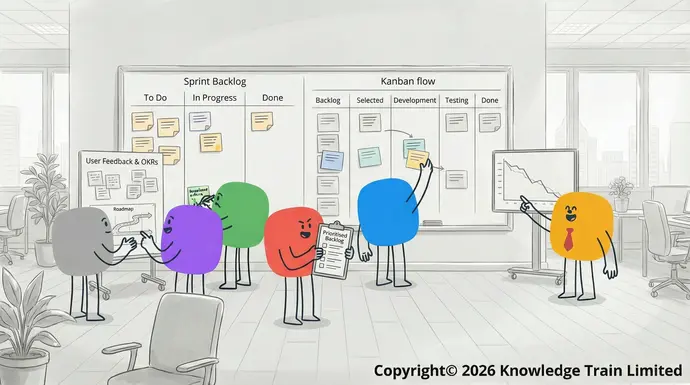
Agile: Strategic risks influence the project’s alignment with the organisation’s overall business goals. They may involve risks related to changing market demands, competitive pressures, or organisational changes. encompasses various frameworks, each with its own practices and terminology. The most widely used Agile frameworks were designed for more efficient product delivery, rather than Impact of risks on project successproject managementRisks can have a variety of impacts on a project’s success:. They include Positive effectsScrum: These could include opportunities for innovation or efficiency improvements, Kanban, Lean, and Extreme Programming (XP):Negative effects
Scrum: These could lead to delays, cost overruns, or quality issues.
- Main focus:Effective Team roles, time-boxed sprints, and iterative deliveryrisk management
- Core roles: is important for minimising negative impacts and maximising the potential for opportunities and overall project success. Product Owner, By identifying and assessing risks, Scrum Masterproject managers, Team Members can develop contingency plans and take proactive steps to mitigate potential problems. This helps increase the chances of achieving project goals and delivering value to stakeholders.
- Artefacts:Enhance your skills with our expert-led courses Product backlog, sprint backlog
- Key events: Sprint planning, daily scrum, sprint review, sprint retrospectives
- Advantages:Instructor-led Well-defined structure, clear accountability, transparencyIntroduction to Project Management course
Kanban
- Main focus:£499 +vat Visualisation of workflow, limiting work in progress, continuous flow
- Core elements:See all dates Kanban board, work-in-progress limits, cards/tasks
- Advantages: Flexibility, real-time workflow visualisation, easy adoption without role changes
LeanInstructor-led
- Main focus:Project Management Essentials Elimination of waste, maximising value, continuous improvement
- Core elements:£999 +vat Value stream mapping, optimised flow, customer focus
- Advantages:See all dates Improved efficiency, reduced delays, enhanced qualityCommon project management risks
Extreme Programming (XP)Scope creep
- Main focus:Common causes Technical excellence, frequent releases, customer involvementScope creep
- Core practices: is the uncontrolled expansion of a project’s scope without corresponding adjustments to time, budget, and resources. Common causes of scope creep include ambiguous initial requirements, lack of change control processes, Stakeholder pressure for additional features, and insufficient stakeholder engagement. Pair programming, test-driven development, continuous integration, Impactuser storiesScope creep can have several impacts on a project:
- Advantages:It can increase the project’s duration, require more resources and increase costs Rapid feedback, high product quality, adaptability to changeIt can lead to delays and missed deadlines
Comparison: Scrum, Kanban, Lean, XPIt can cause the project to lose focus and drift away from its original objectives
| FrameworkIt can lead to team burnout and demotivation. | Main focusTo prevent scope creep, it is crucial to have a clear understanding of the project’s objectives and requirements, and to establish change control processes to manage and approve any changes to the project scope. | Key practiceBudget overruns | Team structureCommon causes | Best use caseBudget overruns |
|---|---|---|---|---|
| Scrum occur when the actual cost of a project exceeds the initially allocated budget. Common causes of budget overruns include inaccurate cost estimation, scope changes, unforeseen expenses, and poor resource management. | Time-boxed iterations (Sprints)Impact | Predefined roles and eventsPrevent budget problems by performing a detailed cost analysis and ensuring financial reporting is transparent throughout the project. | Cross-functionalSchedule delays | Complex projects needing structureCommon causes |
| KanbanSchedule delays | Visual workflow & limits can occur due to a variety of reasons: | Kanban board, WIP limitsUnrealistic time estimates | Flexible rolesResource unavailability | Ongoing support/operationsDependency conflicts |
| LeanExternal factors (e.g. weather, supplier delays). | Eliminate wasteImpact | Value stream mappingSchedule delays can lead to missed deadlines and milestones, increased costs due to prolonged project duration, reduced stakeholder satisfaction and potential loss of competitive advantage. | AnyTo address time-related risks, implement effective project scheduling techniques and regularly monitor project progress. | Process improvement, efficiencyResource constraints |
| XPTypes of resource risks | Technical best practicesResource risks | Pair programming, TDD can take various forms, such as: | Small, tech-focused teamsSkill shortages | Software projects needing qualityEquipment or material unavailability |
Agile vs traditional (waterfall) project managementInsufficient funding
The Limited time availability.waterfall modelImpact on project performance is a sequential, plan-driven approach where phases follow one another with minimal overlap. Resource constraints can result in reduced productivity, compromised quality of deliverables, increased stress on team members and potential project delays.
| Invest time in gathering and documenting clear requirements and maintain ongoing stakeholder engagement to ensure alignment. | ||
| Risk managementOperational changes | Early and ongoing detectionTypes of operational risks | Late-stage identificationOperational changes |
| Delivery can include: | Work delivered frequentlyOrganisational restructuring | Single final deliveryProcess modifications |
| Suitable forTechnology upgrades | Complex, evolving Regulatory changes.projectsImpact on project execution | Clear, fixed requirementsOperational changes can affect |
Key roles and concepts in Agile projectsprojects
- Product Owner: by disrupting established workflows, requiring additional training or resources, altering project priorities and necessitating scope or timeline adjustments. Represents stakeholders, manages product backlog, prioritises featuresStay informed about potential organisational changes and maintain flexibility in
- Scrum Masterproject planning: to accommodate operational shift Facilitates Scrum process, removes impediments
- User stories: Short, simple descriptions of a feature told from the perspective of the user
- Backlog:s. Ordered list of project tasks and featuresBy knowing about common project management risks, you can make specific plans to help prevent or overcome them. In addition, proactive risk management involves:
- Sprint/Iteration:Regular risk assessments Short, time-boxed development cyclesClear communication with stakeholders
- Stakeholders:Robust change management processes Individuals or groups with interests in project outcomesContinuous monitoring and adaptation.
- Retrospectives:Keep in mind that effective risk management is an ongoing process that needs careful monitoring and flexibility throughout the project. If you plan and work for these common risks, you will be able to increase the probability of success in your project.
to document all identified risks.Challenges and limitations
- Requires experienced, self-organising teams
- Most Agile frameworks are designed for product delivery, not project managementRisk assessment and prioritisation.After identifying risks, assess their potential impact and likelihood of occurrence. Tools you can use include:
- Less suitable when requirements are fixed and well-definedRisk matrix
- Organisational resistance to cultural change: Plot risks on a chart based on their probability and impact
- Potential for scope creep without disciplined backlog managementQuantitative analysis
Real-world applications and use cases: Assign numerical values to risks
Agile project management originated in software development but is now used in industries including marketing, education, manufacturing, and construction. Its Qualitative analysiscontinuous improvement: Categorise risks based on severity. and Prioritise risks based on their potential impact.team collaborationRisk response planning principles enhance innovation, adaptiveness, and client-centric outcomes.For each prioritised risk, develop a response strategy. Common responses include:
- ITAvoidance/software:: Eliminate the threat by changing Dynamic product requirements, regular releases, user feedbackproject plans
- Marketing:Mitigation Campaigns adapted based on analytics and feedback: Reduce the probability or impact of the risk
FAQs
What is the difference between Agile and waterfall project management?Instructor-led
The main difference is that Project Management EssentialsAgile is iterative and flexible, allowing change at any stage, while £999 +vatwaterfall follows a strict, linear process where each phase must be completed before the next begins. Agile encourages frequent feedback and continuous delivery of value, whereas waterfall often delivers only at the end.See all dates
What are the main stages of an Agile project?Tools and techniques for project risk management
Typical stages of an Agile project include vision and roadmap creation, backlog development, sprint planning, execution (iteration), review, and retrospectives. Continuous improvement occurs at every stage.Risk register
What are the key frameworks of Agile project management?A
Key Agile frameworks are risk registerScrum is a document that lists all identified risks along with their potential impact and planned mitigation. Components to include are:, Kanban, Lean, and Extreme Programming (XP). Each offers a unique structure for managing roles, processes, and workflow.Risk description
What are the benefits and challenges of Agile project management?Probability and impact assessment
Advantages include adaptability, stakeholder engagement, and high product quality. Challenges may include initial resistance, need for team discipline, and less suitability for projects with fixed, unchanging requirements.Risk owner
Where is Agile project management commonly used?Mitigation strategies
While most common in software development, Agile is used in industries such as marketing, manufacturing, construction, and education wherever flexible, iterative approaches add value.Contingency plans.