MoSCoW prioritisation methodKey components of a successful business case

Key takeaways
MoSCoW helps teams make clear trade-offs so the most valuable work is delivered first.
- MoSCoW categorises requirements into Must, Should, Could, and Won’t to create shared priorities.Self-paced
- Focusing on Must items reduces risk by protecting the minimum needed for success.Better Business Cases Practitioner (with Foundation) self-paced online
- Should and Could items provide flexibility when time, budget, or resources tighten.
- Won’t items prevent scope creep by explicitly deferring low value work.£1,199 +vat
- Running a workshop with post-it notes and tracking outcomes on a Kanban board keeps alignment high.

IntroductionBe clear and concise:
Read this article to learn more about the MoSCoW method and how to use it. Make sure that your business case is clear, concise, and easy to understand. Avoid using technical jargon and use simple, straightforward language.
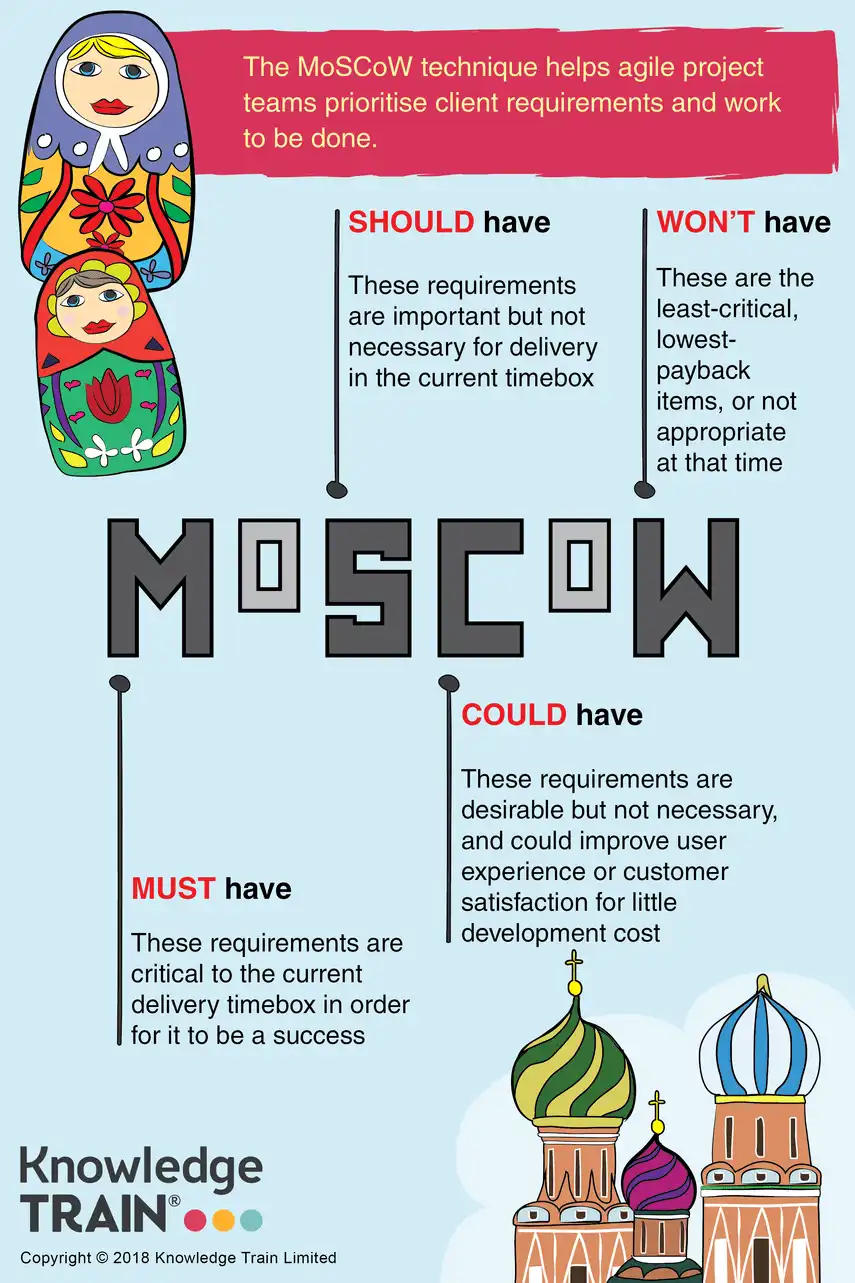
What is MoSCoW prioritisation?Focus on the benefits:
MoSCoW analysis is a prioritisation technique commonly used on agile projects. It stands for: Highlight the potential benefits of the initiative, including financial and non-financial benefits.MMonitor progress:ust Regularly monitor the progress of the initiative and make any necessary adjustments to ensure success.SBy following these steps, organisations can ensure that their business case is well-structured, persuasive, and provides a clear path to success.hould Business case and organisational decision-makingCThe business case can have a significant impact on organisational decision-making. It presents a proposed solution to a business problem, backed by data and analysis, and lays out the costs, benefits, and risks associated with that solution.ould This information helps decision-makers weigh the options and make informed choices that align with the organisation’s goals and objectives. A well-crafted business case can provide a roadmap for implementation, help secure buy-in and support from stakeholders, and increase Won’t. MoSCoW analysis helps teams understand which requirements or tasks they should focus on. MoSCoW was invented by Oracle employee Dai Clegg in 1994 and is the most common prioritisation technique used on agile projects.
Though the MoSCoW method is often used to prioritise customer’s requirements on projects, it can also be used outside of projects. For example, to prioritise business as usual work within an organisations or to prioritise jobs to do at home in your personal life.