Project schedulingAGILE

Key takeawaysLearn the fundamentals of Agile Business Analysis.
A strong schedule turns a plan into a workable timeline that can be managed and improved.Practitioner
- A project schedule focuses on timing, sequencing, and deadlines, while the project plan also covers scope, budget, and resources.4-day course including Foundation.
- Use a Work Breakdown Structure to define tasks, group them into work packages, and set clear milestones.Lean Six Sigma
- Sequence work using dependencies and estimates, then assign resources realistically based on availability and skills.Yellow Belt
- Validate the schedule with stakeholders, communicate it widely, and monitor progress with regular updates.Self-paced training course to gain LSS Yellow Belt.
- Choose fit-for-purpose tools, and use CPM or CCPM to manage critical paths, constraints, and buffers in complex projects.PMI
IntroductionPMI-PBA
Project schedulingSelf-paced course to prepare you for the exam (exam not included). is an integral part of effective Business Analysis Learning Library (BALL)™project managementCHANGE MANAGEMENT. Project scheduling includes the development of a project timeline, including tasks, resources, and milestones, that is necessary to ensure a project’s successful completion. A solid schedule can provide a roadmap for project execution, allowing APMG Change Managementproject managersFoundation to allocate resources, monitor progress and recognise potential issues in advance.Learn the fundamentals of enterprise change management.
In the modern workplace, having an edge in project scheduling is vital to the successful Practitioner delivery of projectsIncludes Foundation & Practitioner combined option. within the time and budget constraints. In this article, we will explore the fundamentals of project scheduling. We will discuss key concepts, techniques, and best practices for project scheduling. In addition, we will analyse the challenges commonly faced in project scheduling and review tools and software solutions that can simplify and optimise the process.PROGRAMME MANAGEMENT
Understanding project schedulingMSP
What is a project schedule?®
A Foundation project scheduleLearn the fundamentals of programme management. is a detailed document that outlines the timeline of tasks and milestones that must be completed to accomplish the project. It acts as a roadmap for project execution and monitoring.Practitioner
Components of a project scheduleIncludes Foundation & Practitioner combined option.
- Tasks and activitiesINFORMATION TECHNOLOGY (IT)
- Duration and deadlinesITIL
- Resource allocation®
- Dependencies and constraintsFoundation
- Milestones and deliverables.Learn the fundamentals of ITIL service management.
Difference between project schedule and project planStrategist DPI
A 3-day ITIL Strategist: Direct, Plan & Improve (DPI) course.projectSpecialist: DSV 3-day ITIL Specialist: Drive Stakeholder Value (DSV) course.planSpecialist: CDS is a more comprehensive document that encompasses the schedule, as well as other project aspects such as scope, budget, and resources. The project schedule, on the other hand, focuses on the time aspect, including task sequencing and deadlines.3-day ITIL Specialist: Create, Deliver and Support (CDS) course.
Benefits of using a project scheduleIT Learning Library (ITLL)™
- Provides clarity and directionBUSINESS LEARNING LIBRARY (BLL)™: A project schedule offers a clear path for project execution, ensuring that all team members are aware of their responsibilities and deadlines.Agile Learning Library (ALL)™
- Improves time managementBusiness Analysis Learning Library (BALL)™: A schedule helps to prioritise tasks and allocate time efficiently, reducing the risk of missing deadlines.Compliance Learning Library (CLL)™
- Allows efficient resource allocationIT Learning Library (ITLL)™: A project schedule enables the optimal distribution of personnel, equipment, and materials across project tasks.Business solutions
- Helps in effective risk management
Six steps to create a project schedule
A project schedule is a comprehensive document that outlines a project’s timeline. It is one of the most important project management tools. Scheduling is one of the key tasks in project management. To help you along, here are six steps that will allow you to create a solid schedule for your project.
1. Define tasks and milestones
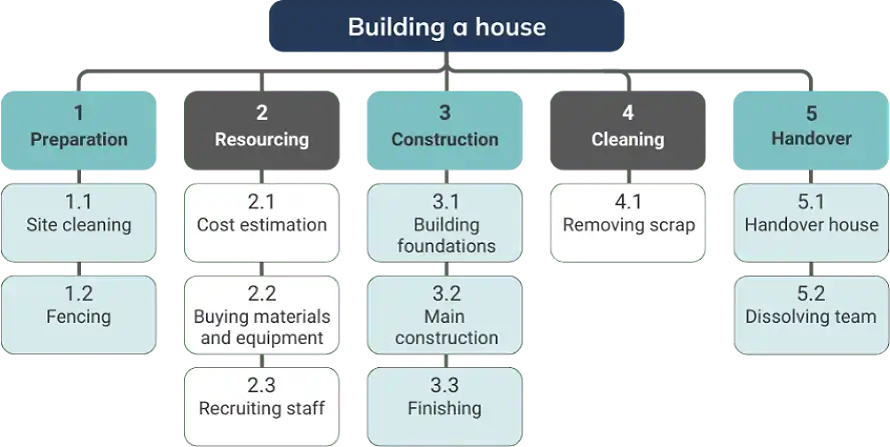
List all the tasks that are necessary to complete the project. Then determine the project milestones, and group tasks that make up each milestone into work packages. The process of preparing a comprehensive list of project tasks is known as