
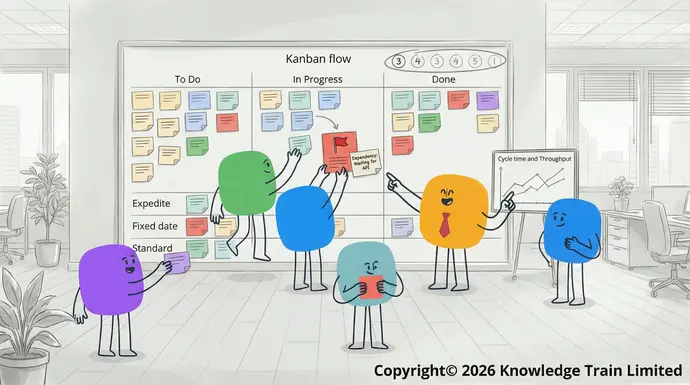
Lithuania in their work processes. David J. Anderson introduced the first adaptation of Kanban principles specifically for knowledge work applications. Kanban has become popular across different sectors because it provides efficient workflow management.
Core principles of KanbanLuxemburg
Kanban is built on six fundamental principles:Malta
- Visualise the workflowNetherlands: Use a Kanban board to develop a visual depiction of your workflow process. Using Kanban boards offers a straightforward view of both task advancement and workflow obstructions.Poland
- Limit work in progress (WIP): Establish task limits for each stage of the workflow to control work volume. Limiting work in progress stops overloading while enhancing focus and efficiency.Portugal
- Manage flowRomania: Ensure continuous assessment and enhancement of work item progression through the system. Identify and address bottlenecks promptly.Slovakia
- Make process policies clearly statedSlovenia: Establish clear rules and communication procedures that outline the workflow progression through the system.Spain
- Implement feedback loopsSweden: Create frequent review sessions to collect insights that lead to data-driven workflow enhancements.Other countries
- Improve collaborativelyHome: Team members should collaborate to discover and execute process improvements on an ongoing basis.Project Management
Teams that follow these principles will develop an Project management examplesadaptable and {"@context":"http://schema.org","@type":"BreadcrumbList","itemListElement":[{"@type":"ListItem","position":1,"name":"Home","item":"https://www.knowledgetrain.co.uk/"},{"@type":"ListItem","position":2,"name":"Project Management","item":"https://www.knowledgetrain.co.uk/project-management"},{"@type":"ListItem","position":3,"name":"Project management examples","item":"https://www.knowledgetrain.co.uk/project-management/project-management-examples"}]}productive system for managing workflows. Kanban enables organisations to make incremental improvements to their systems without causing process interruptions which makes it an appealing choice for many companies.
Key components of a Kanban system
Kanban boardProject management examples
In any Kanban system the Kanban boardKnowledge Train serves as the most crucial component. The Kanban board acts as a visual display of your team’s workflow and task advancement.19 Feb 2026
Physical vs digital boards
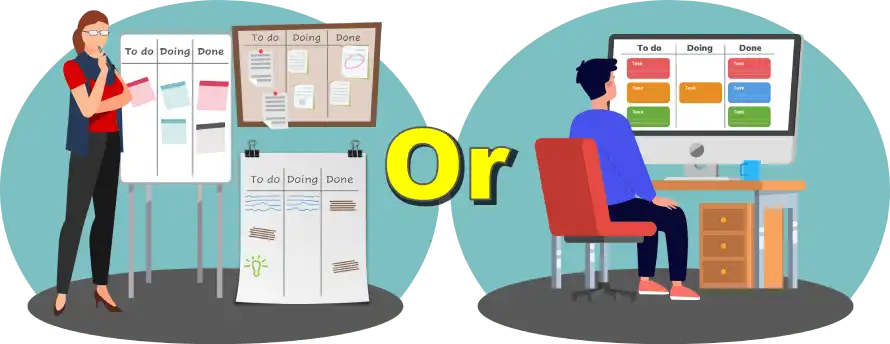
Organisations have the option to implement either physical or digital Kanban boards.
- Physical boards : Teams commonly use whiteboards and spacious walls with sticky notes to display tasks.
- Digital boards : Access virtual Kanban boards on any device by using software platforms that support them.
Each board type provides benefits that teams need to evaluate against their preferences and environmental needs.
Columns and workflow stages
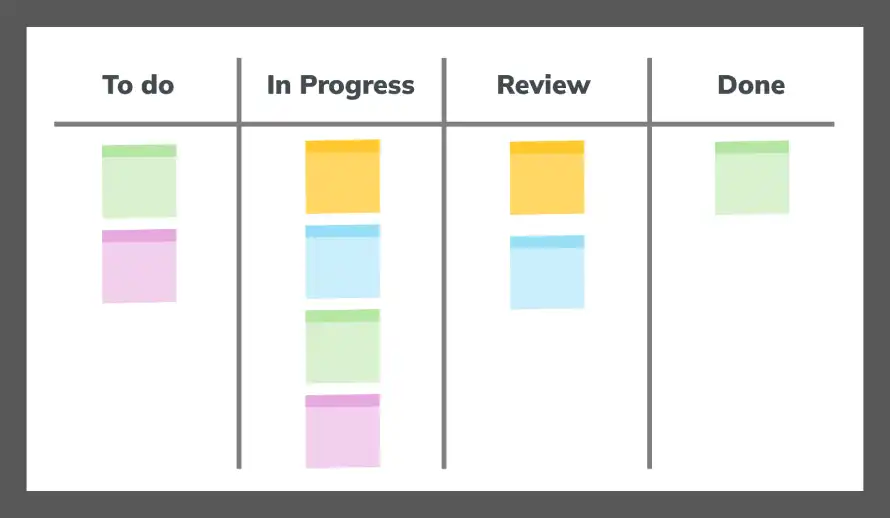
Kanban boards organise work stages through a system of multiple columns. A basic board might include:
- To Do
- In Progress
- Review
- Done.
Teams can personalise board columns to show their unique stages of work.
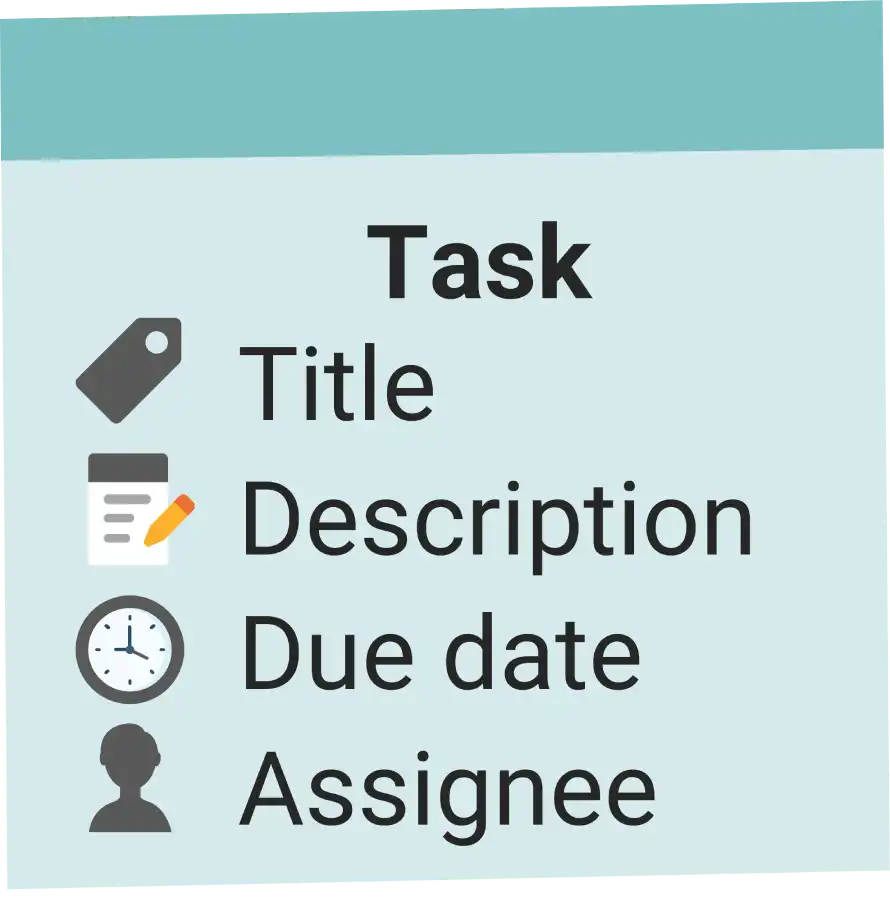
- projectsProject management methodologies and tools
- Team members or departments
- Types of workConclusion
Work items are categorised through classes of serviceFAQs based on their urgency and impact levels.Introduction
- Expedite: Highest priority, bypass normal flowProject management
- Fixed date: Time-sensitive items is the process of leading a project or initiative from the initial idea to the final deliverable. It involves the planning, coordination, and execution of various tasks and activities to ensure the successful completion of the project. Project management has become increasingly important in recent years, as more and more organisations recognise the value of efficient and effective project execution.
- Standard: Regular work itemsProject management is relevant in any industry or field where
- Intangible: Low priority or improvement tasks.projects
Prioritisation and workflow management are undertaken. This can include construction, engineering, software development, marketing, event planning, product development, and many others. The principles and practices of project management are widely applicable and can be used to improve the success rate of projects of all kinds.
| Easy to modify establishes the fundraiser’s goals and objectives, including the target amount to be raised. They create a budget that includes all expenses associated with the fundraiser, such as venue rental, marketing materials, and refreshments. | Automated trackingVolunteer management |
| Limited spaceThe project manager recruits volunteers to assist with the fundraiser. They create a volunteer schedule, assign roles and responsibilities, and provide training and support to ensure that all volunteers understand their tasks and the event’s overall objectives. | Unlimited scalabilityEvent execution and evaluation |
| Team must be co-locatedOn the day of the event, the project manager ensures that everything runs smoothly. They monitor the event’s progress, address any issues that arise, and ensure that all tasks are completed as planned. After the event, they evaluate its success and document any | Supports distributed teamslessons learned |
Evaluate which option aligns most closely with your team’s requirements and workplace setup. for future reference.
Setting up columns and WIP limits2. Home renovation project
- Organise your workflow by setting up columns that correspond to each stage.Blueprint creation and permit applications
- Include a ‘Done’ column so you can monitor finished tasks.The project manager works with the homeowner and architect to develop detailed blueprints for the renovation project. They also navigate the permit application process, ensuring that all necessary permits are obtained before work begins.
- Set initial work in progress limits for all columns according to your team’s capacity.Contractor coordination
Adjust these limits whenever you gather insights into how your team operates.The project manager sources and manages contractors for the renovation project. They vet potential contractors, negotiate contracts, and coordinate their schedules to ensure that the renovation stays on track.
Developing team policies and guidelinesBudget and schedule management
Team-wide consistency in Kanban system usage is maintained through definitive policies.The project manager tracks the renovation project’s budget and timeline. They manage cash flow, handle payments, and adjust the timeline as needed to keep the project on track and within budget.
Definition of done3. Process improvement innovation
Define specific conditions that identify when a task reaches completion. This might include:Market research and consumer feedback
- Code review completedThe
- Testing passedproject manager
- Documentation updated conducts market research to understand the current market landscape and identify potential opportunities for innovation and improvement. They also gather consumer feedback through surveys, focus groups, and other channels to understand their needs and pain points.
- Stakeholder approval received.Solution brainstorming
Handling blockers and dependenciesThe project manager leads cross-functional teams in brainstorming and idea generation sessions. They facilitate discussions, help evaluate potential solutions, and narrow down the options based on their feasibility, impact, and alignment with the company’s goals.
Develop procedures for:Implementation planning
- Identifying and marking blocked tasksOnce a solution has been selected, the project manager develops an implementation plan. They oversee the process, manage resources, and ensure that the new process or product is effectively integrated into the company’s operations.
- Escalating persistent blockers4. Business office consolidation
- Managing dependencies between tasks or teams.Facility selection and preparation
- Team coordination (designers, developers, stakeholders)Weekly reviews: Assess completed work and upcoming priorities.The project manager assembles and coordinates a team of designers, developers, and stakeholders. They facilitate communication and collaboration between team members to ensure that everyone is aligned on the project goals and their specific roles and responsibilities.
- Monthly retrospectivesTimeline creation and testing: Use monthly retrospectives to measure how well your Kanban system works and determine how it can be improved.The project manager develops a detailed timeline for the website development process, including key milestones and deadlines. They also coordinate testing phases to ensure that any issues are identified and addressed before the website is launched.
The system adapts to your team’s requirements through collaborative meetings.Contingency planning
Adjusting the system based on feedback and metricsThe project manager anticipates potential issues and plans for contingencies to mitigate their impact on the project. This may include budget overruns, delays in content delivery, or technical challenges.
Regularly analyse key metrics such as:6. Construction technology innovation
- Cycle timeIdentifying industry needs
- ThroughputThe project manager researches the construction industry to identify current challenges and needs. They consult with industry professionals to understand potential areas for technological innovation.
- Work in Progress (WIP).Prototype development
Employ the insights obtained from data analysis to refine your Kanban system through data-driven changes. This might involve:Collaborating with engineers and designers, the
- Refining WIP limitsproject manager
- Adjusting column structures oversees the development of prototypes for new construction technology. This includes multiple iterations and refinements based on testing and feedback.
- Implementing new policies or guidelines.Implementation and testing
Through continuous evaluation and improvements to your Kanban system you will develop an optimised project management framework. Your goal with Kanban should be to embrace ongoing improvement as you and your team advance together.The project manager coordinates on-site testing of the new technology in real construction environments. They collect data on its performance, user experience, and areas for improvement. Based on the results, they guide further refinements and modifications before full-scale implementation.
Benefits of Kanban project management7. Remote working
Kanban implementation within project management delivers multiple benefits that lead to better team performance and improved project results.Software selection and implementation
Improved visibility and transparencyThe project manager evaluates various collaboration and productivity tools. They select appropriate software solutions and oversee their implementation across the organisation, including training sessions for employees.
Kanban boards create a transparent visual display of the current progress in ongoing tasks. This transparency allows:Cost analysis and projections
- Team members to quickly understand project statusA detailed cost analysis is conducted, comparing the expenses associated with remote work setups to traditional office costs. The project manager creates cost-saving projections and potential productivity gains.
- Managers should pinpoint workflow bottlenecks and resource allocation problemsEmployee survey and communication
- Project stakeholders can monitor advancement without requiring frequent updates.To ensure a smooth transition to remote work, the project manager conducts surveys to understand employee needs an
Enhanced team collaboration
The visual framework of Kanban promotes better team communication and cooperation.
- Team members can easily determine which individuals are assigned to which tasks
- Team members from different functions should collaborate during each stage of task progressiond concerns. They also develop a communication strategy to keep all staff informed about the remote work plan and address any questions or issues.
- The team gains a common perspective on project objectives and important priorities.8. Deck building
Increased efficiency and productivityDesign and material selection
The method of restricting work-in-progress within Kanban results in:The project manager collaborates with the homeowner and designers to create a deck plan that meets aesthetic and functional requirements. They research and select suitable materials, considering factors like durability, cost, and maintenance needs.
- Reduced multitasking and context switchingPermit acquisition
- Emphasise task completion before beginning new workNavigating local building regulations, the project manager secures all necessary permits for the deck construction. They ensure the design complies with safety standards and zoning requirements.
- Streamlined workflowsConstruction management with fewer bottlenecks and delays.Throughout the building process, the project manager oversees the construction team. They monitor progress, manage the budget, and address any unforeseen issues that arise during construction.
Flexibility in planning and execution9. Product development
Unlike rigid methodologies, Kanban offers adaptability:Market analysis and concept development
- Teams can incorporate changes anytime without interrupting their work processes.The project manager leads market research efforts to identify consumer needs and preferences. They guide the team through concept development, ensuring the product aligns with market demands and company capabilities.
- The board allows users to adjust priorities by moving cards around.Prototype creation and testing
- The system adapts to support the team’s requirements and project specifications.Overseeing the creation of product prototypes, the project manager coordinates testing phases. They gather feedback from potential users and stakeholders, using this information to refine the product design.
Reduced cycle times and faster deliveryProduction and launch planning
Kanban achieves improved efficiency by streamlining workflows and minimising waste.As the product nears completion, the project manager develops a production strategy. They coordinate with manufacturing teams, create a launch timeline, and oversee marketing efforts to ensure a successful product introduction.
- Accelerate progress by reducing the duration between when a task starts and finishes10. Customer loyalty programme launch
- Enable faster feedback loops and iterative improvementsProgramme design and structure
- Enable faster value delivery to customers or stakeholders.The project manager works with marketing and customer service teams to design an engaging loyalty programme. They define reward structures, membership tiers, and programme rules that align with company objectives and customer preferences.
The advantages of Kanban reach further than these key areas. Teams consistently experience increased job satisfaction along with lower stress levels and higher-quality outputs. Organisations that develop deeper expertise with Kanban should expect to experience better predictability and Implementation and integrationrisk managementCoordinating with IT teams, the project manager oversees the integration of the loyalty programme into existing systems. They ensure seamless data flow between the programme and other customer-facing platforms. while their project success rates improve.Monitoring and optimisation
Kanban metrics and analyticsAfter launch, the project manager continuously monitors programme performance. They analyse customer engagement data, gather feedback, and implement improvements to enhance the programme’s effectiveness and customer satisfaction.
Data-driven decision-making is essential for successfully implementing Kanban practices. Teams utilise key metrics and analytics tools to track performance while pinpointing areas needing enhancement.Project management methodologies and tools
Cycle timeEffective project management is grounded in proven methodologies and supported by robust tools. Familiarity with these can greatly improve the success rate of projects.
CyclePopular methodologies Waterfalltime: A linear and sequential approach where each phase must be completed before the next begins. Ideal for projects with well-defined requirements and minimal expected changes. represents the total time from the start to the completion of work on an item. This metric helps teams:Agile
- Understand how long tasks typically take: A flexible and iterative approach,
- Identify process bottlenecksAgile
- Set realistic expectations for task completion. is suited for projects with evolving requirements. It promotes continuous improvement and customer collaboration.
Determine cycle time by monitoring how long each task remains within the “In Progress” column.Lean
Lead time: Concentrates on maximising value while reducing waste and is popular in manufacturing and software development.
Lead timeScrum measures the complete duration between the initial request of a task and its final delivery. Lead time combines waiting time with cycle time to provide a complete duration measure. Lead time helps:: A subset of Agile,
- Manage customer expectationsScrum
- Lead time analysis reveals starting delays for new tasksutilises short, time-boxed iterations known as sprints. Effective for complex projects that need frequent reassessment.
- Improve overall process efficiency.Six Sigma
Throughput: A data-driven approach aimed at eliminating defects and reducing variability. Commonly used in quality improvement projects.
Throughput Essential project management toolsrepresents the quantity of finished items within a specified timeframe. This metric provides insights into:Project management software
- Team productivity:
- Capacity planningTools
- Identifying trends in work completion rates. like Microsoft Project, Asana, and Trello help organise tasks, timelines, and team responsibilities.
By monitoring throughput every week or month you can evaluate how your team performs as time progresses.Communication tools
Cumulative flow diagrams: Platforms such as Slack and Microsoft Teams enable real-time communication and collaboration.
Cumulative flow diagramsDocument management systems (CFDs) provide a visual depiction of task statuses across different time periods. They help teams:: SharePoint and Google Drive allow for centralised storage and easy access to project documents.
- Identify bottlenecks and constraintsTime-tracking software
- Visualise work in progress (WIP) levels: Harvest and Toggl are useful for monitoring time spent on tasks, aiding in resource allocation and billing.
- Understand how work flows through the system.Risk management tools
CFDs display the quantity of items at each workflow step using time along the x-axis and item count on the y-axis.: Assist in identifying, assessing, and mitigating potential project risks.
Control chartsSelecting the appropriate methodology and tools depends on the project’s nature, team dynamics, and organisational culture. Proficiency in these methodologies and tools is essential for modern
Control chartsproject managers monitor cycle times for distinct items and graphically represent them through time intervals. They help teams: to navigate complex projects successfully.
- Identify outliers in task completion timesEnhance your skills with our expert-led courses
- Understand process stability
- Predict future performance.
The control charts demonstrate expected ranges for cycle times through their upper and lower control limits.
Teams that consistently evaluate these metrics will obtain valuable knowledge about their Kanban process. Continuous improvement and maximum efficiency in workflow optimisation become achievable through this data-driven method.Self-paced
Comparing Kanban to other project management methodologiesFor those looking to build a career in project management, focus on developing key skills such as strong leadership abilities, effective communication, technical proficiency in different methodologies and tools, and problem-solving capabilities. Work on building a comprehensive portfolio and continuously expand your knowledge and expertise.
Teams can select the most effective methodology for their projects by learning about the distinct features of Kanban compared to other approaches.Remember, successful project management is as much about people skills as it is about technical know-how. Embrace learning opportunities, stay up-to-date with the latest industry trends, and you’ll be well on your way to a fulfilling career in the world of
Kanban vs Scrumproject management
Kanban and .ScrumFAQs both fall within the What is the difference between project management and programme management?Agile Project managementframework focuses on managing individual projects with specific goals and timelines. In contrast, programme management oversees multiple related projects to achieve broader organisational objectives. While project managers concentrate on delivering specific outcomes, programme managers ensure alignment across various projects and strategic goals., but each methodology operates with its own unique characteristics.How can I gain project management experience without formal training?
| AspectYou can gain project management experience by volunteering for leadership roles in community organisations or taking on small-scale projects at work. Offer to coordinate team initiatives or assist current project managers. Managing personal projects, such as event planning or home renovations, using | Kanbanproject management principles | Scrum can also be beneficial. |
|---|---|---|
| WorkflowWhat are the most in-demand project management certifications? | Continuous flowThe | Fixed-length sprintsProject Management Professional |
| Roles (PMP) certification is the most widely recognised and valued. Other popular certifications include | FlexiblePRINCE2 | Defined (, Scrum MasterAgile Certified Practitioner, Product Owner) (PMI-ACP), and Certified ScrumMaster (CSM). The best certification for you depends on your industry and career goals. |
| ChangesHow do I handle unexpected challenges during a project? | Allowed at any timeWhen faced with unexpected challenges, stay calm and assess the situation objectively. Communicate transparently with stakeholders and team members. Develop alternative solutions, evaluate their impact on project goals, and implement the most suitable option. Always document these challenges and resolutions for future reference. | Discouraged during sprintWhat are the key metrics for measuring project success? |
| PlanningKey project success metrics include: | ContinuousOn-time completion | Sprint-basedBudget adherence |
| MetricsScope fulfilment | Cycle time, Lead timeQuality of deliverables | Velocity, Burndown chartsStakeholder satisfaction |
- Project management degrees in the UK
- Analyse metrics to identify areas for enhancement
- Encourage team members to identify and implement process improvements.Knowledge Train
A continuous improvement culture enables teams to enhance their Kanban system progressively which results in better efficiency and effectiveness.20 Mar 2026
Common challenges and solutions in Kanban project management
Kanban presents multiple advantages, but teams can face difficulties when putting this system into operation. Knowledge of these challenges and their resolutions ensures that the adoption process will be successful.Looking to further your career with a project management degree from a UK university? Our guide will walk you through the best project management degrees available and help you find the perfect degree to help you take your career to the next level.
Resistance to change
Challenge : Team members might show resistance toward new workflow implementation and practice adoption.
Solution :
- Educate the team on Kanban’s benefits
- Implement changes gradually
- Celebrate early successes to build momentum.Project management steps
Incorrect WIP limits
ChallengeKnowledge Train: Setting incorrect Work-in-Progress (WIP) limits results in operational inefficiencies.19 Feb 2026
Solution :Project management is crucial for success. Discover the essential phases and elevate your skills to ensure projects from start to finish deliver exceptional outcomes.
- Start with conservative limits
- Track workflow progress and make necessary adjustments to limits according to data findings
- Encourage team input on setting appropriate limits.
Lack of team buy-in
Challenge : Kanban implementation faces difficulties when the team does not fully commit.
Solution :People in PRINCE2: Free ebook
- Involve the team in the implementation process
- Address concerns and questions openlySimon Buehring
- Demonstrate how Kanban addresses existing pain points.21 Apr 2026
Inconsistent use of the Kanban board
ChallengeUnderstand the people aspect of PRINCE2 with our free ebook. Ideal for those preparing for the PRINCE2 Foundation course.: When updates to the Kanban board do not occur regularly their purpose becomes ineffective.
Solution :
- Establish clear guidelines for board usage
- Integrate board updates into daily routines
- Use automation tools to simplify updates.
Difficulty in measuring and improving flow
ChallengeWhat soft skills do project managers need?: Teams experience difficulties when trying to measure and improve their workflow efficiency.
SolutionSimon Buehring:
- Set up crucial metrics including cycle time and throughput to measure Kanban performance19 Feb 2026
- Implement cumulative flow diagrams as part of your visual analytics tools
- Conduct regular retrospectives to identify improvement areas.Discover essential soft skills for project managers and why they are crucial for successful project delivery. Read on to enhance your skill set.
Teams that anticipate problems and implement precise solutions will navigate their Kanban journey successfully to utilise this project management approach ‘s full potential.
Simon BuehringWhat are the essential metrics to track in a Kanban system?
- Understand the strategic benefits of project portfolio management in aligning projects with organizational goals. Learn more by reading on.
- Throughput
- Work in Progress (WIP)
- Cumulative Flow.
The collected data from these metrics offer valuable information regarding operational efficiency and productivity while highlighting potential areas for development.
How often should we review and adjust our Kanban board?
Conduct daily stand-ups for quick updates. Schedule weekly evaluation sessions to examine finished tasks and determine next priorities. Monthly retrospectives allow teams to assess system performance and implement necessary changes.
Is it necessary to use specialised software for Kanban project management?
Specialised software provides better visualisation and analysis of data but remains an optional tool. Co-located teams can achieve effective project management with physical boards that utilise sticky notes. Remote teams and complex projects increase the usefulness of digital tools.
How can I convince my team to adopt Kanban methodology?
Show your team how Kanban improves workflow visibility and enhances project flexibility. Initiate Kanban implementation through a limited pilot project to show its positive results. Engage your team throughout the implementation process while addressing concerns directly as they arise.
What are the potential drawbacks of using Kanban?
Potential challenges include:
- Resistance to change
- Difficulty in setting appropriate WIP limits
- Some teams experience motivation through the absence of timeboxing constraints
- Work may remain stagnant if there isn’t effective management.
Can Kanban be scaled for large projects or organisations?
Portfolio Kanban and the Flight Levels approach enable the scaling of Kanban systems. Multiple teams and organisational levels can use Kanban principles through these methods.
How does Kanban support continuous improvement in project management?
Kanban promotes continuous improvement through:
- Visualisation of workflow bottlenecks
- Regular review meetings
- Metrics-driven decision making
- Encouragement of incremental changes.
Ongoing refinement enables teams to maintain steady improvements in their processes and productivity.