
Key takeaways
APM is the UK chartered professional body that sets expectations for project delivery and professional development.
- APM supports better project, programme, and portfolio outcomes through standards, guidance, and a shared professional language.Copied!
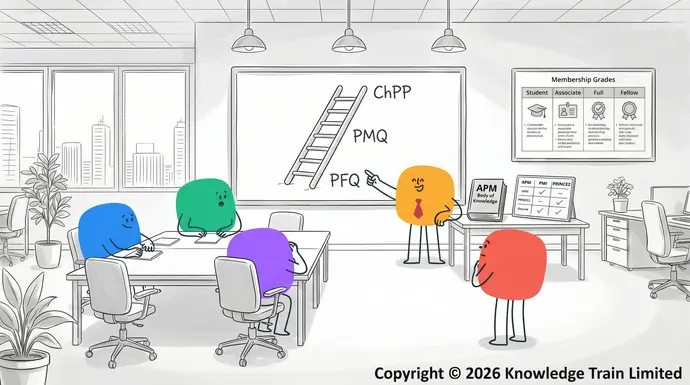
- PFQ builds fundamentals, PMQ validates broader knowledge, and ChPP recognises assessed competence and judgement in practice.Key takeaways
- The APM Body of Knowledge helps standardise terminology and strengthens governance, decision making, and capability building.Scope, time and cost move together, so every change needs a conscious trade-off.
- Membership grades signal career progression and provide CPD resources, networking, and professional recognition.Any shift in scope, schedule, or budget typically forces an adjustment in at least one other constraint.
- APM is different from PRINCE2 and PMI, and many professionals combine routes based on role scope and employer needs.Imbalances often show up as rushed work, under-resourcing, or overambitious deliverables that reduce quality.
project managers
The Association for Project Management (APM) is the chartered professional body for project management in the United Kingdom. In practice, it works to improve how projects, programmes, and portfolios are delivered by providing a recognised visualise and optimise the key constraints of any project. By balancing scope, time, and cost, project teams can deliver successful outcomes that meet stakeholder expectations.qualifications frameworkUnderstanding the project management triangle, professional standards, and membership pathways for aThe three constraints explained
The project management triangle is made up of three main constraints: project managerscope and wider delivery roles.,
APM’s activities commonly relate to:time
- Professional membership and and recognition, including progression through membership grades.cost
- Qualifications and certification. Let’s have a detailed look at each of these. that assess knowledge and professional competence.Scope
- CPD: Scope refers to the boundaries, objectives and deliverables of a project. It includes the goals and requirements of the project, as well as the specific features, functionalities and quality standards. expectations and learning resources to support ongoing capability.Time
- Guidance on : The time constraint of a project refers to its duration and schedule. It involves factors such as the project start and end dates, milestones and deadlines, as well as the sequencing and dependencies of tasks.project governanceCost, ethics, and good practice.: The cost constraint relates to the financial and resource aspects of a project. This includes the budget allocated to the project as well as the human resources and labour costs, and equipment and material expenses.
- Community building through events, interest networks, and publications.Relationship between constraints
APM qualifications and certificationsThe three constraints of scope, time and cost are interconnected and can impact each other. Changes to one constraint will likely influence the other constraints. For example, an increase in scope will often require additional time and resources, whereas a reduction in time may increase costs or decrease scope. Similarly, a reduction in budget may affect the project scope or timeline.
APM qualifications are designed to support learning and professional development across different career stages, from introductory project management to more advanced competence assessment. The best starting point depends on your experience, theProject managers
must carefully balance these constraints throughout the project lifecycle.project management methodologyImpact on project quality used in your organisation (for example PRINCE2 environments), and whether you need knowledge validation or professional recognition.The balance of scope, time and cost also has an impact on the
APM Project Fundamentals Qualification (PFQ)quality
- Purpose of the project outcomes. If the three constraints are well-balanced, the project is more likely to achieve high-quality results. On the other hand, if there is an imbalance in any of the constraints, the quality of the project may be compromised. For example:: Introductory certification covering key concepts, language, and foundational knowledge in project management.A tight deadline may lead to a rushed project, resulting in lower quality outputs.
- Who it is forA limited budget may result in a project being understaffed or under-resourced, which may also affect quality.: Beginners, new starters, and people who work with projects (including stakeholders) but are not yet project managers.A project with an overambitious scope can strain resources and time, leading to poor results.
- PrerequisitesSuccessful project management involves finding the right balance and making trade-offs between the three constraints while maintaining the desired level of quality. By understanding the impact of these constraints on each other, project managers can make informed decisions to lead the : None.project
- Format to a successful outcome.: Typically a short course plus a multiple choice exam.Benefits of using the project management triangle
- OutcomesUtilising the project management triangle provides some distinct benefits to the project team and stakeholders. These are as follows.: Easier change managementAPM PFQThe triangle model helps to provides a baseline understanding of planning, roles, risk, and communication, supporting progression to more advanced study.make changes easier
APM Project Management Qualification (PMQ). This is because if a change arises, the project managers can easily evaluate how this change will affect the scope, time and cost, decide, as such it helps to quickly evaluate a change request, understand the ripple effects, and make an informed decision on change.
- PurposePriority clarification: Knowledge based certification aligned to the APM Body of Knowledge and common delivery practices.Visualising the three constraints helps to
- Who it is forclarify priorities: Practitioners who contribute to projects, including aspiring or current project managers.. This will make it possible for the team to quickly identify important elements in the project, direct resources to important tasks and make trade-offs as required based on the project goals.
- PrerequisitesImproved client communication: No formal prerequisite, but some experience or prior study helps.The triangle is a helpful
- Formatcommunication tool: Assessed by a written exam. to both communicate with and educate clients. The project managers can use the triangle to show the project’s constraints to the clients, visualise how changes would affect them, and set realistic expectations regarding project deliverables.
- OutcomesRisk reduction: Utilising the triangle will help in APM PMQmanaging risks provides a stronger grasp of planning, governance, stakeholder management, and control, supporting improved performance in project delivery roles.. This is possible because this will help the team to predict potential problems earlier in the process, have a contingency plan, and balance the risks in all three constraints.
Chartered Project Professional (ChPP)The use of the project management triangle allows for
- Purposemanagers: Competence based assessment recognising professional capability and judgement in project delivery. to make decisions in a balanced manner. As such, it becomes possible to deal with complex projects with great ease.
- Who it is forEnhance your skills with our expert-led courses: Experienced professionals working in project management, programme management , or portfolio managementInstructor-led.Introduction to Project Management course
- Prerequisites : Demonstrable experience and evidence of professional practice, typically supported by membership and CPD.£499 +vat
- Format : Application with evidence and assessment (process can evolve over time).See all dates
- Outcomes : Professional recognition that you can apply good practice, leadership, and governance in real delivery contexts.
How APM qualifications relate to PRINCE2 and other methodologies
APM qualifications are generally methodology agnostic and focus on transferable principles and knowledge. Instructor-ledPRINCE2Project Management Essentials is a project management methodology used widely in the UK and beyond; many organisations use PRINCE2 alongside APM aligned learning. In practice, PRINCE2 may provide a structured method for managing stages and controls, while APM learning may broaden understanding across domains such as governance, stakeholder engagement, risk, and professionalism.
APM Body of Knowledge£999 +vat
The APM Body of KnowledgeSee all dates is a reference framework that describes key concepts, functions, and areas of knowledge used in project based work. It is used by learners, practitioners, trainers, and employers to build a shared language and improve capability across delivery roles.Managing the project management triangle
It supports the profession by helping to:Maintaining the balance of the project management triangle requires strategic decisions and careful trade-offs between scope, time, and cost. Here are some tips to help:
- Standardise terminology across teams and organisations.Choose at least one flexible constraint
- Inform learning pathways and a qualifications framework.One constraint should be identified as more flexible than the others. This allows some wiggle room when dealing with changes or issues. Ask yourself:
- Provide a common basis for improving governance and decision making.Which constraint is easiest or least impactful to change?
High level knowledge areas commonly associated with the APM Body of Knowledge include:Are stakeholders willing to adjust scope, extend deadlines, or increase budget if necessary?
- Governance and organisational context, including How will increased flexibility in one constraint impact the other two?project governanceIdentifying a flexible constraint up-front allows for better risk management and issue resolution.
- Planning and schedulingPrioritise features and requirements
- Risk, issues, and change controlIt is important to carefully evaluate the importance of each project deliverable. This will help you focus on what is essential to project success. Create a comprehensive list of features and requirements, then:
- Quality managementRank or score each based on value and importance
- People, leadership, and teamworkClearly define “must-have” vs. “nice-to-have” features
- Communication and Leverage prioritisation to inform trade-off decisions.stakeholder managementThis prioritisation process allows for objective trade-off discussions if needed.
- Commercial and procurement considerationsDevelop a risk management plan
- Integration across Proactively identifying and managing risks will help avoid imbalances in the triangle. A programme managementrisk management and planportfolio management should include:
Def when deciding on training, certification routes, or professional membership. Both support project management, but they have different histories, geographies, and qualification portfolios.
| Factor | APM (UK professional body) | PMI (global professional body) |
|---|---|---|
| Geography focusine project boundaries | United Kingdom centred, with wider international reach through members and partners: Clearly outline the scope of the project and its deliverables at the beginning. | International membership and certifications used globallyScope change control |
| Common certifications: Establish a process for handling changes to the project scope. | PFQ, PMQ, ChPPMonitor for scope creep | PMP (Project Management Professional) and other PMI credentials: Regularly review project requirements to ensure they align with the defined scope. |
| Primary emphasisPrioritisation | Professional body, membership grades, standards, and UK chartered role: Use a prioritisation method, such as | Professional body with a broad certification ecosystem and global communitiesMoSCoW |
| Terminology and frameworks, to determine which features are essential, desirable, optional, or not required. | APM Body of Knowledge oriented language in many UK contextsTime management approaches | PMI standards and terminology used widely across industries |
| Typical audiencesWhen managing project time, you can try these tips: | UK based project professionals, employers, and sectors using APM aligned frameworksCritical path | Project professionals seeking globally recognised certification such as PMP: Identify the tasks that must be completed on time for the project to stay on schedule. |
If you work in a : Optimise the use of resources to avoid overloading or underutilisation.PRINCE2 environmentTimeboxing, you may still choose APM or PMI learning depending on organisational expectations, role scope (project, programme, portfolio), and your preferred certification path.: Set a fixed time period for specific tasks or project phases.
History and governanceAgile sprints
APM is a long established UK organisation supporting the project profession. It operates as a membership organisation with governance arrangements typical of professional bodies, including leadership, committees, and published standards and policies. Key milestones often referenced in authoritative sources include its development into the UK’s chartered body for the profession and the establishment of structured qualification and membership pathways.: Break the project into short, focused work cycles with specific goals.
For verifiable organisational facts such as dates, governance updates, and current policies, consult APM’s official publications and register entries where applicable.Cost control methods
SourcesWhen managing project cost, you can try these tips:
- APM official website: membership, qualifications, chartered information, and publications.Earned value management
- General reference entry for Association for Project Management for high level organisational facts.: Track the project’s progress in relation to its budget and schedule.
- UK professional standards and governance references where relevant to chartered bodies.Cost baseline
FAQs: Create a detailed budget for each phase of the project.
What does APM stand for in project management?Forecasting
In project management, APM most commonly stands for the Association for Project Management, the United Kingdom based professional association for the project profession. Because APM is also used in other industries, it is worth confirming the context, especially in IT where APM can refer to Applications Performance Monitoring.: Regularly estimate the future costs of the project based on current performance and trends.
What is the Association for Project Management (APM)?Vendor management
management in the United Kingdom. It supports the profession through membership (professional membership), CPD, standards and guidance such as the APM Body of Knowledge, and a qualifications framework that includes certifications like PFQ, PMQ, and Chartered Project Professional.: Define specific, measurable quality criteria for the project deliverables.
What does APM do?Continuous testing
APM advances project management by setting professional expectations, providing training aligned qualifications and certification, supporting CPD, and publishing guidance on topics such as project governance and stakeholder management. It also connects members through events, communities, and resources that help individuals and organisations improve project, programme, and portfolio delivery.: Implement regular quality checks throughout the project lifecycle.
Is APM a chartered body?Peer review
Yes. APM holds chartered status as the professional body for project management in the UK. Chartered status indicates formal recognition of a professional body’s role in promoting standards and competence. For individuals, APM also provides chartered style professional recognition through routes such as Chartered Project Professional (ChPP).: Leverage the expertise of team members to identify and address quality issues.
What qualifications does APM offer?Customer feedback
APM offers a range of project management qualifications and certifications including the Project Fundamentals Qualification (PFQ) for beginners, the Project Management Qualification (PMQ) for broader knowledge assessment, and Chartered Project Professional (ChPP) for experienced practitioners. These routes align with APM guidance and support development across project, programme, and portfolio roles.: Regularly collect and incorporate stakeholder feedback on project deliverables.
How do I join APM membership?Through the implementation of these methods, project managers can successfully navigate and mitigate trade-offs between the competing constraints of scope, time, cost, and quality. However, it is important to note that constraint management is an iterative process that necessitates continuous monitoring and adjustment in response to changing project dynamics.
You typically join by choosing a membership grade that matches your career stage, such as Student, Associate, Full, or Fellow, then applying through the APM website. Requirements can include experience evidence and commitment to CPD for higher grades. Check current criteria directly with APM, as grades and requirements may change.Tools for managing the project management triangle
Is APM equivalent to PMI or PMP?Software can help you keep track of the project management triangle and ensure your project management is top-notch. Here are some of the best project management software to consider:
APM and the Project Management Institute (PMI) are different professional bodies. PMP (Project Management Professional) is a PMI certification, not an APM qualification. They are not direct equivalents, but both can be valuable depending on your location, employer expectations, and whether you need UK aligned chartered recognition or a widely used global certification route.Project management software options
Is APM better than PRINCE2?Monday.com
APM and PRINCE2 are not like for like. APM is a professional association offering membership, standards, and qualifications, while PRINCE2 is a project management methodology. Many professionals use both: PRINCE2 for method and controls, and APM learning for broader professional knowledge including governance, stakeholder management, and development pathways.: A flexible platform suitable for multiple project types and management styles. With Visual boards for easy task tracking and prioritisation, it’s one of the best software for project management, and it also has customisable workflows for specific project requirements.
What is the APM Body of Knowledge used for?ClickUp
The APM Body of Knowledge is used as a reference for learning and consistent practice across the profession. It supports a shared understanding of key topics such as governance, planning, risk, quality, people, and stakeholder management. It is often used by trainers, learners, and employers to structure development and align capability.: A feature-rich tool with robust Agile project support and time tracking and resource management features. ClickUp also provides multiple view options (list, board, Gantt, calendar) to cater to different preferences and project needs.
Does APM cover programme and portfolio management?Teamwork
Yes. While APM is often associated with project management, its guidance and professional development coverage extends to programme management and portfolio management. This reflects how organisations govern and deliver change at different levels, linking individual projects to strategic objectives through structured governance, benefits focus, and stakeholder engagement.: A client-focused platform designed for team collaboration. It has a budget and expense tracking features, as well as