Managing Successful Programmes (MSP)

Key takeaways
MSP is a flexible framework for governing and delivering transformational change across multiple linked projects.
- Use MSP when change is complex, ambiguous, and benefits-led, especially in public or politically sensitive programmes.Copied!
- Break large transformations into manageable, inter-related projects while keeping alignment to outcomes and benefits.Key takeaways
- MSP is built on principles, governance themes, and a transformational flow that guides the full programme lifecycle.Information Technology links systems, data and teams to deliver secure, scalable services.
- Specification-led programmes can still use MSP, but it may need scaling to fit clearer output definitions.IT combines hardware, software, networks, databases and security controls to manage and protect information.
- Choose PRINCE2 or a PMO when you mainly need project delivery or resource coordination rather than transformation.Its value comes from automation, faster collaboration, and better decisions through analytics and AI.
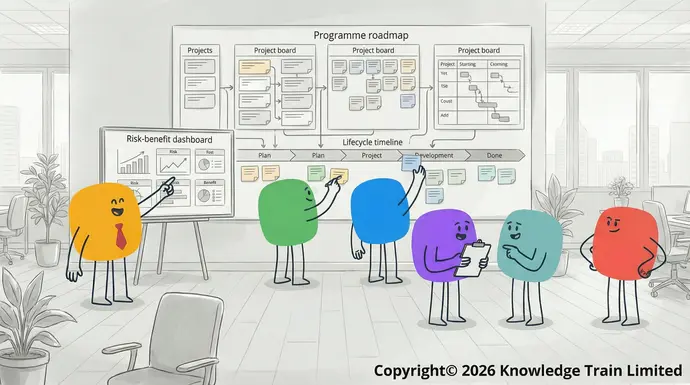
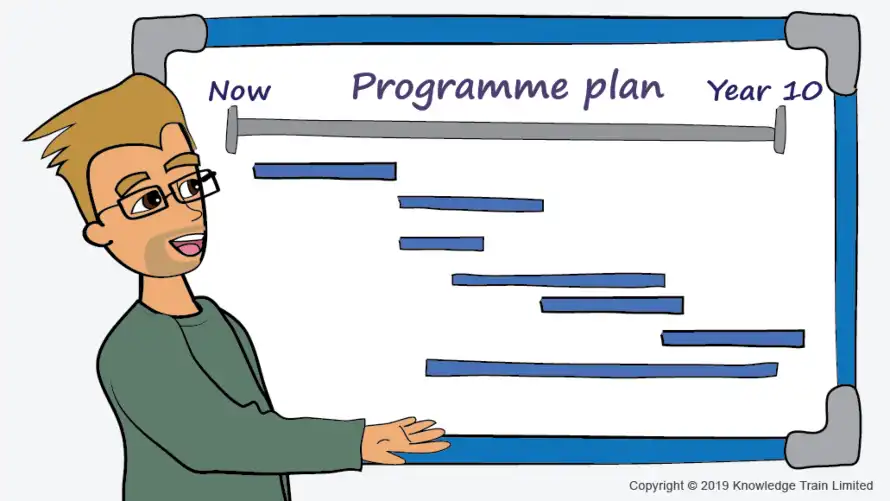
Why use Managing Successful Programmes?Cybersecurity tools
There are many and varied drivers of organisational change. Technology, competition, legislation, and the environment are common factors which are driving organizations to change. Maintaining the status quo is no longer an option. Businesses which do not change will go out of business. Governments which fail to meet the expectations of their citizens will face their wrath.Systems for protecting networks and data (e.g. firewalls, encryption)
Organisational changeSoftware, networks, information security, authentication, hardware
The E-commerce platformsManaging Successful ProgrammesWebsites and apps for online shopping and transactions
.Managing Successful Programmes approach is not required. Instead a project management approach such as PRINCE2 will suffice.Importance of IT
If an organisation only wants to efficiently allocate resources to its different projects and to coordinate them, then IT is essential for modern society and the global economy. It enables rapid information sharing, process automation, global collaboration, data-driven decision-making, and secure communications. Digital transformation initiatives rely on IT to deliver innovation, competitive advantage, and improved public services. Cybersecurity and information security are now crucial for protecting critical infrastructure and safeguarding privacy in an increasingly interconnected world.Managing Successful ProgrammesIT careers is also not required. Instead, the organisation would benefit from a project management office.Careers in IT span areas such as systems analysis,
Managing Successful Programmes frameworkproject management
Managing Successful Programmes is based on three core program management concepts:, software development, network administration,
Principlescybersecurity
These are derived from lessons (both positive and negative) learned from previous programme experiences. They underpin the success of any transformational change., IT support, data management, and artificial intelligence. Professionals may work across sectors, supporting digital transformation and ensuring the reliable operation of information systems. Required skills range from technical proficiency in hardware and software to abilities in project management and problem-solving.
Governance themesFuture trends in IT
Every organisation has different governance requirements. Governance themes allow the organisation to ensure the right leadership, delivery team, organization structures and controls are put in place, thereby giving the best chance for success.The future of IT will be shaped by advances in artificial intelligence, machine learning, cloud computing, big data analytics, quantum computing, and enhanced cybersecurity solutions. Digital transformation across industries is set to accelerate, with increased focus on