
Key takeawaysContents
IT courses combine theory and practical work to build job-ready digital skills.
- Most programmes cover programming, networking, databases, cyber security, cloud computing, and project delivery.
- You can choose from certifications, diplomas or degrees, plus online or face-to-face study formats.Contents
- Industry credentials such as CompTIA, Cisco, Microsoft, AWS, and CISSP can strengthen employability and salary prospects.
- Common outcomes include IT support, network administration, software development, cyber security, cloud roles, and data careers.Projects in modern organizations
- Continuous learning and updated certifications help keep skills relevant as technology and threats evolve.
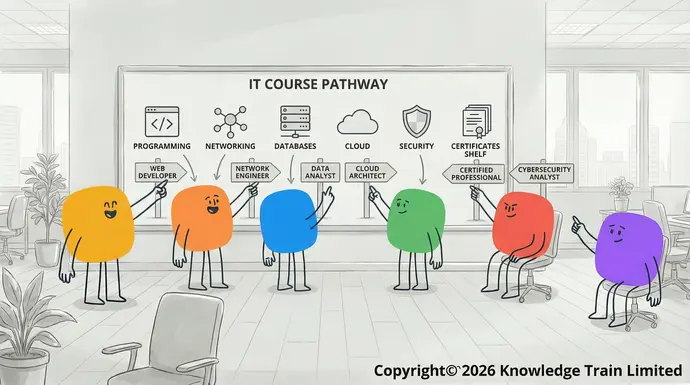
IT course overviewTemporary
An Information Technology (Their ITtemporary nature) course provides structured learning in the principles, technologies and practices that power computers and digital networks. Delivered by universities, colleges and online platforms, IT courses prepare you for key roles such as IT support, network administration, software development and means they have a clear beginning and an end, differentiating them from ongoing business operations.cybersecurityRiskier. Sources from universities and accredited online providers offer in-depth knowledge and skills for the dynamic technology sector.Because projects often involve work which has never been done before, they inherently have more uncertainty over the work compared with everyday operations. This makes project riskier than business-as-usual.
Core subjects in an IT courseRequire project management
Most When staff within an organization work in their everyday operations, they report to a line manager. In projects, the people doing the work report to a IT coursesproject manager incorporate a combination of theoretical foundations and hands-on practical skills. Core areas typically covered include: who is likely not their usual line manager. This presents greater risks.
- Programming:Project management Learn to write software using programming languages such as Python, Java or C++. is a discipline that has developed to address these challenges.
- Networking:Cross-functional Understand how devices connect, communicate and operate within a network environment.Most projects in modern organizations affect multiple functional areas within the same business which requires more extensive efforts at communication and stakeholder engagement.
- Databases:Furthermore, they exhibit progressive elaboration; they commence with a broad vision that gets refined over time as more information becomes available. Study data storage, management and retrieval using systems like SQL.Types of projects
- CybersecurityThere can be many different types of projects, but every project delivers something tangible (known as :outputs Develop skills to protect systems from threats, covering ). Using these outputs enable business operations to do things differently (known as risk managementoutcomes and ethical hacking.), and the positive results of these outcomes can be measured in the form of
- Software development:benefits Apply methods for designing, coding and maintaining applications., or
- Cloud computing:value Explore hosting and resources delivered over the internet. gained.
- Data science & artificial intelligence:Projects can be classified in three main ways. Learn techniques for analysing data and developing smart algorithms.Operational projects
- IT project management:These enhance or streamline ongoing operations, ensuring businesses remain efficient. Gain experience in managing technical Strategic projectsprojectsThese are directed at achieving long-term objectives, aligning with the company’s overarching vision. and teams using frameworks like Transformational projectsAgileSuch projects result in fundamental shifts in how the business operates or is perceived, like a company-wide digital transformation or a complete rebranding. and Examples of projectsScrumApple’s iPhone launch is a classic example of a product-driven project that redefined communication and technology..Similarly, IBM’s transformation from a hardware company to a service-oriented business showcases the impact of transformational projects. These cases underscore the potential of well-executed projects to revolutionize industries and steer companies towards unprecedented success.
Types of IT coursesEnhance your skills with our expert-led courses
IT courses are available in a wide range of formats to suit different goals and learning preferences. Common types include:
- Certification courses: Short-term courses leading to industry Instructor-ledcertificationsIntroduction to Project Management course such as CompTIA (A+, Network+), Cisco (CCNA), and Microsoft qualifications.
- Diplomas and degrees:£499 +vat Longer programmesSee all dates like Diploma, Bachelor of Information Technology, or Masters in Information Technology, typically from universities or polytechnics.
- Online courses : Flexible self-paced study on platforms like Coursera, Udemy or edX, often including micro-credential options.Instructor-led
- Offline/face-to-face courses:Project Management Essentials Classroom-based instruction at colleges and universities with personalised support and labs.
Key IT course providers and platforms£999 +vat
| Provider | TypeSee all dates | StrengthsWhy projects matter |
|---|---|---|
| CourseraProjects enable strategic alignment. They translate the organization’s mission and vision into actionable steps, ensuring goals are not just stated, but achieved. | Online (degree, short courses)Projects also drive innovation, allowing companies to break new ground, launch revolutionary products, or pioneer services. | University partnerships, certificates, flexible studyFurthermore, in a rapidly changing market, projects provide a means to respond to market changes, ensuring the organization remains competitive and relevant. |
| edXWhy projects fail | Online (degree, micro-courses)However, not all projects achieve their desired outcomes. | University-backed, academic credit optionsScope creep |
| Universities, where projects extend beyond their initial objectives, is a common challenge. Projects can also falter due to insufficient resources or if they are misaligned with stakeholder expectations. | Offline/online (degree, diploma)The repercussions of such failures are profound: financial setbacks, wasted time, and the considerable cost of missed opportunities. | Accredited qualifications, student support, campus facilitiesRelationship with the organization |
| CompTIA/CiscoProjects and business-as-usual are two sides of the same coin. While they are distinct—projects being unique and operations being routine —they often overlap. | Certification (online/offline)For instance, the outcome of a project might be integrated into daily operations. It’s crucial to understand this relationship to ensure that projects, once completed, enhance, and align with an organization’s daily functions. | Industry-recognised certificates for networking, support, securityIn addition, projects can often form part of a programme or portfolio of change. |
Career outcomes and IT jobsContributing to programmes
Completing an IT course opens up diverse career paths in the technology sector. Typical job roles include:If a project is part of a programme it contributes to the programme’s goals by delivering one or more outputs. These outputs, when combined with those from other related projects, produce an impact that helps achieve the overarching outcomes envisaged by the program. Each project within the
- IT support specialist:program Diagnose and resolve users’ technical issues. has a unique role to play, and the successful completion of every project is imperative to realize the programme’s objectives.
- Network administrator:Contributing to portfolios Plan, deploy and maintain computer networks.Additionally, a project can also be a component of a broader portfolio comprising various projects and programmes. Within such a portfolio, each programme or project should adhere to the organization’s strategic objectives. The overall success of the
- Software developer:portfolio Create and maintain applications and systems. hinges on the combined performance of these
- Cybersecurity analyst:programmes Protect data and systems from cyber threats. and projects. Through the delivery of their distinct outputs and outcomes, they actively contribute to the realization of the strategic objectives encompassed within the portfolio.
- Cloud solutions architect:Enhance your skills with our expert-led courses Design modern cloud-based IT infrastructures.
- Data scientist: Extract insights from data using advanced analytical tools.
Industry certifications such as CompTIA A+, CCNA and cloud credentials are highly valued and often linked to improved salary prospects. Technical skills learned in IT courses are increasingly required in fields like finance, healthcare, education and more. For further details see UK government digital skills guidance and university career services.Instructor-led
Some related articles are particularly well-regarded.
What careers can I pursue after completing an IT course?
Typical roles include IT support, network administration, cybersecurity analyst, software developer, and data scientist. Advanced positions may require additional experience or qualifications.