What is cybersecurity? Types, threats and best practicesRomania

| Ensures applications are resistant to threats by identifying and mitigating vulnerabilities in software. | |
| Endpoint securityproject delivery | Secures devices such as computers, laptops, tablets, and mobiles from threats. outcomes. PMOs may operate at the project, programme, or portfolio level and are commonly found in sectors such as |
| Cloud securityIT | Protects data, applications, and infrastructures involved in cloud computing from breaches and leaks., government, construction, and finance. |
| Information securityPMO functions and roles | Protects the confidentiality, integrity and availability of data regardless of its format.PMOs perform a wide range of functions, adapting their roles according to organisational needs. The main functions and roles typically include: |
| Operational securityGovernance: | Establishes policies and procedures for handling and protecting data assets. Establishing frameworks, processes and controls for effective decision-making and |
Common cybersecurity threatsrisk management
- Malware: across the project lifecycle. Malicious software such as viruses, worms, ransomware, and spyware.Standardisation:
- Phishing: Implementing and maintaining Fraudulent messages designed to trick users into disclosing sensitive information.project management methodologies
- Social engineering:, best practices, and standards. Manipulation of individuals to gain confidential data.Support:
- Data breach: Providing guidance, templates, tools, training and mentoring for Project Managers and teams. Unauthorised disclosure of sensitive information.Methodology Enforcement:
- Cyberattack: Ensuring consistent application of Any attempt to disrupt, disable, or control computer systems.project management approaches
- Zero-day exploit: for delivery excellence. Attacks that target vulnerabilities before they can be patched.Resource Management:
- Advanced persistent threat (APT): Coordinating allocation and utilisation of project personnel, tools, and budgets. Prolonged and targeted cyberattacks, often carried out by organised groups.Portfolio Management
Cybersecurity best practices:
- Use strong, unique passwords and change them regularly. Overseeing and prioritising
- Enable multi-factor authentication wherever possible.projects
- Update and patch operating systems and applications promptly. to align with strategic objectives and maximise value.
- Verify email senders and beware of unexpected attachments or links (phishing protection).Process Improvement:
- Install and maintain up-to-date antivirus and firewall software. Reviewing and refining
- Back up important data securely and regularly.project delivery
- Limit access based on the principle of least privilege. processes to ensure continuous improvement.
- Follow cyber hygiene routines and educate staff about social engineering risks.Stakeholder Engagement:
- Develop an incident response plan and conduct regular security training. Acting as an interface between project teams, senior management, and other stakeholders.
- Adopt a zero trust approach by continuously verifying devices and users.Change Management
Cybersecurity roles and careers:
The demand for cybersecurity professionals continues to grow. Typical roles include: Supporting change initiatives and minimising resistance through structured strategies.
- Security analystTypes of PMOs
- Penetration tester (ethical hacker)PMOs are not one-size-fits-all. Their structure, authority and level of influence can vary significantly. The three primary PMO types are:
- Security architectSupportive PMO:
- Incident responder Provides consultative services, best practices, templates, and guidance. Has low control and operates as a resource for Project Managers.
- Chief Information Security Officer (CISO)Controlling PMO:
Qualifications such as CISSP, CompTIA Security+, and NIST Framework knowledge are often required for advancement. Requires compliance with
Cybersecurity vs information securityproject management
While standards and methodologies. Has moderate control—enforces processes and reviews adherence. cybersecurityDirective PMO: focuses on protecting digital assets from cyber threats, Directly manages projects and assigns Project Managers. Exercises high control and is responsible for information securityproject delivery encompasses the protection of all information assets, both digital and physical. Cybersecurity is thus a subset of information security. and outcomes.
Glossary of key cybersecurity entitiesOrganisations may adapt their PMO model based on size, maturity, and strategic needs. A PMO may evolve from supportive to controlling or directive as project management capability matures.
- Malware:PMO best practices Harmful software aimed at damaging or stealing data.Implementing a PMO involves defining objectives, selecting the right PMO type, securing stakeholder support, setting up governance structures, and continuously reviewing processes. Best practices for successful PMO implementation include:
- Firewall:Aligning PMO objectives with organisational strategy. Hardware or software for controlling traffic based on security rules.Engaging stakeholders and securing executive sponsorship.
- Encryption:Adopting recognised standards and methodologies (such as those from Transforming data so it is unreadable without a key.PMI
- Phishing:). Deceptive messages to acquire sensitive data.Investing in PMO tools for tracking, reporting, and collaboration.
- Zero trust:Developing competency through PMO certification and staff training. Security approach requiring all users be continuously verified.Emphasising process improvement and
- NIST:change management US National Institute of Standards and Technology, provider of key cybersecurity frameworks..
- CIA Triad:PMO certification & standards Confidentiality, Integrity, Availability – three core cybersecurity goals.Professional recognition is available for PMO practitioners through PMO certification programmes. The Project Management Institute (PMI), a leading standards organisation, offers certifications such as the
- Intrusion detection:Project Management Professional Identifying unauthorised activity on networks or systems. (PMP) and Certified Associate in Project Management (CAPM). PMO-specific certifications such as the PMO-CP (PMO Certified Practitioner) are also available.
- Vulnerability:Certifications Weakness in a system that may be exploited by threats. validate competency in project, programme, and portfolio management, enhancing PMO effectiveness and credibility. Learn more about certification options on
- Incident response:PMI.org Organised approach to addressing and managing security incidents..
FAQsPMO in practice
What is cybersecurity in simple words?Corporate IT PMO:
Cybersecurity means protecting computers, networks, and data from unauthorised access and attacks to keep them secure and private. A global retailer established an IT PMO to standardise project methodologies across numerous business units, leading to improved delivery times and enhanced resource management.
What are the main types of cybersecurity?Government Programme Office:
The main types are network security, application security, endpoint security, cloud security, and information security. A government department implemented a controlling PMO to oversee national infrastructure
What are the top cybersecurity threats?
Major threats include malware, phishing, ransomware, social engineering, data breaches, and zero-day exploits.programmes
How is information security different from cybersecurity?. This supported greater transparency, better risk management, and alignment with public policy objectives.
Information security covers protection of all types of information, while cybersecurity is focused specifically on securing digital data and systems from cyber threats.Financial services PMO:
How can individuals and organisations protect themselves? A bank set up a directive PMO to directly manage regulatory compliance
Use unique strong passwords, enable multi-factor authentication, regularly update software, guard against phishing, use antivirus and firewalls, and maintain data backups.projects
What is the CIA Triad in cybersecurity?, centralising project oversight for timely delivery.
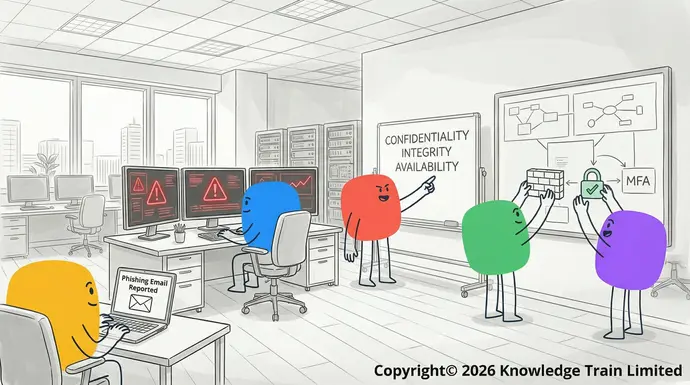
The CIA Triad refers to the three core principles: confidentiality, integrity, and availability, which all security measures aim to protect.PMO vs. project manager
What does a cybersecurity professional do?While a
A cybersecurity professional safeguards networks and systems from attacks, detects vulnerabilities, manages incidents, and ensures compliance with security policies.Project Manager