
- Engaging people with the change process: Using intrusion detection systems and monitoring to identify cyber threats quickly.
- ResponseA key part of : Enacting incident response plans to minimise damage during an active threat.managing change
- Recovery in an organisation is to engage those people affected by a change initiative. Staff will be involved in the change process eventually, therefore communicating and engaging with staff about a change plan early helps lay the groundwork for its later success.: Restoring systems and data following an incident through backups and patching vulnerabilities.Preparing for organisational transition
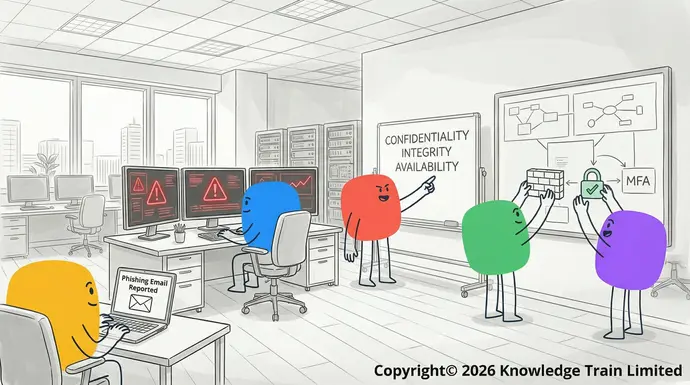
The CIA Triad underpins all cybersecurity strategies: ensuring confidentiality (only authorised access), integrity (accuracy of information), and availability (information accessible when needed).Change managers
Types of cybersecurity are often appointed to make organisational change go smoothly. They use
| Typechange management frameworks | Description to make changes such as: |
|---|---|
| Network securityRestructuring job roles. | Protects data during transfer between devices and prevents unauthorised access to networks using firewalls, intrusion detection, and encryption.Restructuring business processes. |
| Application securityImplementing new technologies. | Ensures applications are resistant to threats by identifying and mitigating vulnerabilities in software.Decreasing resistance to a change initiative |
| Endpoint securityResistance is inevitable in any change initiative because people often find it unsettling being asked to work in new and different ways. So, change managers can often expect a denial reaction from staff. It takes time to overcome those reactions. When | Secures devices such as computers, laptops, tablets, and mobiles from threats.change managers |
| Cloud security are transparent from day one, the less resistance they are likely to face. | Protects data, applications, and infrastructures involved in cloud computing from breaches and leaks.Improving performance and productivity |
| Information securityWhen an organisation adapts improved ways of working, it tends to increase productivity. At the same time, it encourages innovation. As a result, it guarantees improved performance and places an organisation in a healthier environment better able to succeed. | Protects the confidentiality, integrity and availability of data regardless of its format.Reducing costs |
| Operational securityWhen positive change is applied correctly, it helps to reduce waste and therefore reduce costs. Effective change management helps an organisation make smart choices. It increases productivity, decreases risks, and helps to improve the profitability of an organisation. | Establishes policies and procedures for handling and protecting data assets.Change management principles |
Common cybersecurity threatsClear communication
- Malware:: Ensure transparency and regular updates throughout the process. Malicious software such as viruses, worms, ransomware, and spyware.Leadership involvement
- Phishing:: Leaders must champion change and encourage desired behaviours. Fraudulent messages designed to trick users into disclosing sensitive information.Stakeholder engagement
- Social engineering:: Involve and listen to those affected by the change. Manipulation of individuals to gain confidential data.Process improvement
- Data breach:: Focus on refining and optimising business processes. Unauthorised disclosure of sensitive information.Proactive
- Cyberattack:risk management Any attempt to disrupt, disable, or control computer systems.: Identify, assess, and mitigate potential challenges.
- Zero-day exploit:Continuous feedback and adaptation Attacks that target vulnerabilities before they can be patched.: Monitor outcomes and adjust strategies where necessary.
- Advanced persistent threat (APT):Change management processes Prolonged and targeted cyberattacks, often carried out by organised groups.Identify the need for change