Change management: models, steps, and best practicesKnowledge Train

Key takeawaysDefine scope, timelines, resources, and budget early to create clear delivery boundaries.
Effective change management blends clear planning with sustained support for adoption.Lead the team through delegation and communication so work stays aligned and collaborative.
- Use structured frameworks such as Kotter, Lewin, or ADKAR to sequence activities and maintain momentum.Anticipate risks, prepare contingencies, and resolve issues quickly to protect delivery.
- Visible leadership sponsorship and consistent communication reduce uncertainty and resistance.Monitor progress against milestones and report regularly to keep stakeholders informed.
- Engage stakeholders early, using influence and impact mapping to target effort where it matters most.Build technical, soft, and business skills, then keep developing through certifications and networks.
- Integrate change work with project delivery so training, readiness, risks, and benefits stay aligned.Prepare for AI, remote delivery, and sustainability expectations as standard parts of projects.
- Measure adoption with KPIs and feedback, then reinforce new behaviours through governance, coaching, and policy.
What is change management?Efficiently utilising resources
Change managementReducing risks refers to the systematic process of planning, implementing, and overseeing organisational changes to achieve desired business outcomes.Promoting innovation
Change management encompasses strategies, techniques, and tools that help organisations prepare for, execute, and sustain change, whether related to processes, technologies, culture, or organisational structure.Achieving organisational goals.
Effective change management seeks to minimise disruption, address resistance to change, and strengthen engagement among all In this article, we will discuss the core roles and skills required for stakeholdersproject management. success. We’ll also cover qualifications, potential career paths, and future trends in this rapidly growing field. Whether you are interested in making a career change or enhancing your
Importance of change managementproject management abilities
Organisational change is inevitable as businesses adapt to evolving markets, technologies, and regulations. By using structured frameworks and engaging leadership, organisations can minimise risks, foster innovation, and achieve sustainable success., read on to find out more!
Effective Key responsibilities of a project managerchange managementProject managers have a wide variety of roles and responsibilities, each of which is important for the overall success of a project. These can be broadly categorised into four main areas: ensures smooth transitions, maintains productivity during transformation, increases return on investment, and supports Project planning and initiationemployee engagementDefine clear .project scope
Here are some reasons why change management is important. and objectives
External factorsEstablish timelines and schedules for tasks and deliverables
External factors play a big role in Allocate resources efficiently and create a project organisational changebudget. Globalisation and the rapid developments in new digital solutions are forcing organisations to respond. Ignoring such external factors is likely to jeopardise your organisation’s success..
Nokia was once the biggest mobile phone company in the world, but it almost went out of business. That’s because it didn’t keep up with changes in mobile technologies. As a result, Nokia’s products didn’t appeal to consumers, and its market share rapidly declined.Team leadership and management
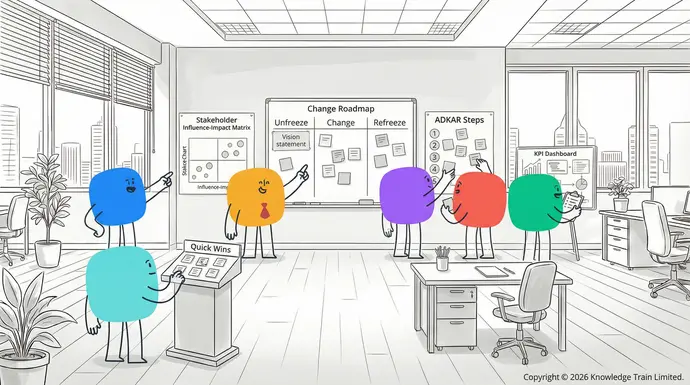
- : Stabilise the organisation by embedding changes into everyday practice.These roles typically offer experience in project support and coordination. They are an excellent opportunity to learn from experienced professionals and gain practical skills.
Example: A manufacturer seeking to improve quality first destabilised old habits, implemented new protocols, then reinforced behaviours through training and recognition.Career progression
ADKAR modelAs project managers gain experience, there are opportunities for career advancement such as:
- AwarenessSenior project manager of the need for changeProgramme manager
- DesireProject Management Office to support the change (PMO) manager.
- KnowledgeEach role typically comes with increased responsibility and involvement in the strategic aspects of an organisation’s projects. of how to changeContinuing professional development
- AbilityTo be effective, you need to keep learning and developing in to implement changeproject management
- Reinforcement: to sustain changeAttend relevant conferences and workshops
Example: In a software roll-out, employees learned why the upgrade was essential (Awareness, Desire), received hands-on workshops (Knowledge, Ability), and were rewarded for adoption (Reinforcement).Work towards higher level certifications (PMP,
Change management challengesPRINCE2 Practitioner
Organisations frequently encounter obstacles when managing change. Common challenges include:)
- Resistance to changeBe active in professional networks and forums.: Employees may fear job loss, uncertainty, or increased responsibilities.Career path example:
StageSolutionRole: Foster open communication, involve employees in decision-making, and provide adequate support.Experience
Solution: Integrate change efforts with culture change and organisational development strategies.- Insufficient resources or planning: Poor planning can delay or derail change projects.
Solution: Invest in project management, transition planning, and risk assessment.
Change management and business functions
- Organisational developmentSelf-paced: Change management techniques are often a core part of organisational development, aiming for long-term improvement in effectiveness.APM PFQ blended online
- Project management : Integrating change management with £749 +vatproject management ensures project deliverables are adopted and sustained.
- Business transformation : Large-scale initiatives such as mergers or digitalisation depend on robust change management for success.Self-paced
- Stakeholder engagementPRINCE2 Agile Practitioner (with Foundation) self-paced online: Identifying and actively involving key stakeholders is crucial in minimising resistance and ensuring buy-in.
- Leadership£1,399 +vat: Strong, credible leadership drives the success of change initiatives through clear direction and support.