
Key takeaways[email protected]
Certification works best when it is accredited, well assessed, and tied to real job needs.
- Certification provides formal validation of skills against defined standards and improves credibility with employers and customers.
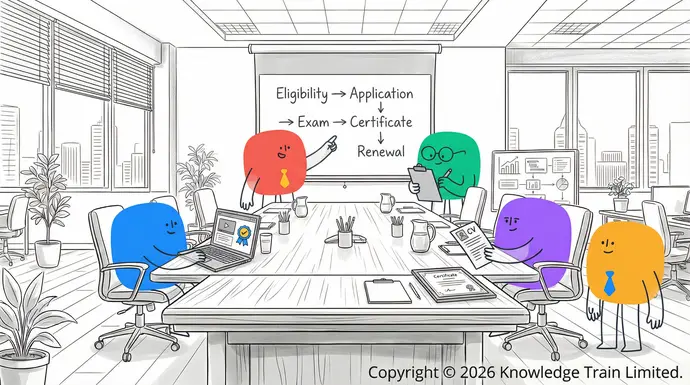
- The typical route is eligibility checks, application, exam or assessment, verified issuance, and periodic renewal.
- Accreditation and independent oversight increase trust and protect candidate outcomes through audits and quality assurance.
- Online and blended learning widen access, but candidates should confirm technical requirements and support before enrolling.
- Employers gain clearer competency frameworks and can measure ROI through productivity, retention, and progression metrics.
What is certification?Finland
CertificationFrance is the process by which a person, organisation, or product is formally recognised as meeting specific standards or requirements, usually through evaluation by an independent Germanycertifying bodyGreece or Irelandprofessional organisationItaly. Gaining a certificate typically requires passing an LatviaexamLithuania or assessment, demonstrating certain skills or LuxemburgcompetencyMalta, and often maintaining standards through NetherlandsrenewalPoland or Portugalcontinuing educationRomania.Slovakia
Comparison: Certification, accreditation, licence, and credentialSlovenia
| TermSpain | DefinitionSweden | Awarded ByOther countries | ExampleHome |
|---|---|---|---|
| Certification | Formal recognition of individual competence after assessmentAgile | Certifying body, professional organisationAgile Business Analysis | Project management certificate |
| Accreditation | Recognition that an institution meets established standardsAgile business analysis explained | Accrediting agency or governing body | University accreditationKnowledge Train |
| Licence30 Apr 2026 | Official permission to practise an occupation after meeting legal requirements | State board, government agency | Medical licence |
| Credential | A qualification or documented achievement demonstrating ability or status | Educational institution, employer, certifying body | Degree, certificate, badge |
Benefits of certification
- Validation of skills: Provides formal recognition of knowledge and competencies.
- Industry standard: Demonstrates compliance with established requirements and best practices (e.g. ISO or ANSI certification).
- Employability: Enhances job prospects and professional reputation.
- Professional development: Supports career progression and commitment to lifelong learning through continuing education .Copied!
- Recognition:Key takeaways Recognised by employers, customers, and peers as evidence of capability.Agile business analysis helps teams deliver value quickly by keeping requirements clear, testable, and adaptable.
Types of certificationsAn Agile BA bridges business goals and technical delivery through ongoing collaboration with the Product Owner, team, and stakeholders.
- Professional certification:User stories and acceptance criteria turn needs into actionable, verifiable work that supports predictable sprint outcomes. Awarded by professional bodies or organisations in fields such as Backlog refinement and prioritisation should be continuous, using feedback and evidence to maximise value and manage change.project managementScrum supports time-boxed delivery through ceremonies, while Kanban improves flow by visualising work and limiting bottlenecks., finance, Good Agile BAs use workshops, story mapping, and lightweight models to reduce ambiguity and speed up decisions.IT , or healthcare. Examples include certifications from ANSI or