download

Self-paced
Better Business Cases Foundation self-paced online
- £699 +vat
- What is a business case?
- A business case is the justification for some activity (e.g. a project) undertaken by your organisation. It weighs up the timescales, costs and risks of doing the activity against the benefits to be gained. Think of it as weighing up the pros and cons and then taking a sensible decision.
- A business case forms an essential component of the curriculum of the
- The technical storage or access is strictly necessary for the legitimate purpose of enabling the use of a specific service explicitly requested by the subscriber or user, or for the sole purpose of carrying out the transmission of a communication over an electronic[3]Key takeawaysThe costs of doing the project or activity is the next important bit of information. On this project, the costs of moving to a new house will be £5,000. These are the project costs.A structured lessons learned cycle turns project experience into repeatable improvements.However, the couple will spend an additional £2,000/year for every year over which the business case is calculated. For a project in an organisation, this is usually referred to as the operational costs of maintaining and operating the projects outputs e.g. an IT system. At this point, the couple knows the total costs over the timescales when the benefits shall be realized.
Capture lessons in real time, at phase ends, and at project close to avoid losing detail.RisksUse neutral facilitation, surveys, and focused questions to surface honest insights without blame.For any activity or project, it’s also important to understand the major risks involved. Risks are the uncertain things which may or may not happen during the period of the investment. There is only one risk identified here, which is the risk that the couple might lose touch with friends who live close to them right now.Standardise documentation with templates, input forms, and executive summaries so lessons stay usable.Investment appraisal
- Analyse for root causes and patterns, then convert findings into specific, measurable actions.The next section is where the costs and timescales and risks are weighed up. For this project, it’s a simple decision for the couple to decide if it’s worth spending money over the next 5 years to give their kids better schooling and to save John 2 hours a day commuting.Store lessons in a central, searchable repository and review them at project kick-off to ensure reuse.For an organisation to decide if an investment is worthwhile, however, there are several different ways in which it can decide about the investment.Track impact with KPIs such as reuse rates, fewer repeat issues, and improved delivery outcomes.Often in organisations there are rules defined to help business analysts or
project managers
- write what’s called an investment appraisal. In the next example, we’ll look at one example known as net benefits. Business case example 2: Handheld device projectContentsImagine a heating repair services company that uses a paper-based set of forms filled in by an engineer during site visits. The spare parts required to fix the heater are recorded on a form which is given to staff to process back in the office. They then order the parts, and schedule a follow-up visit for the engineer to fix the heater.
lessons learned
, involves the identification, analysis, and subsequent utilisation of experiences to better inform future actions and decision-making.By leveraging the knowledge gained from past mistakes and successes, organisations and project managers can significantly improve their project outcomes, reduce risks, enhance team performance, and increase overall efficiency. In this article, we will embark on a comprehensive exploration
- of lessons learned, delving into the process of their identification, documentation, analysis, storage, and application, as well as best practices and potential challenges..After completing this reading, you will have a complete understanding of how to successfully incorporate a lessons learned system into your organisation, paving the way for continuous improvement and project
- success.The lessons learned processThe lessons learned process is a structured approach designed to help project teams capture, document, analyse, and utilise valuable insights from past experiences. By adhering to this methodical process, project managers and their teams can enhance their project performance, learn from past mistakes, and increase the probability of project success.Five steps of the lessons learned process
- Lessons learned process diagramIdentify: The first step in the process involves recognising and pinpointing valuable experiences and insights throughout the project life cycle. It is crucial to encourage team members to note successes and challenges as they occur.Document: Once identified, these lessons must be recorded in a clear, concise, and accessible manner, usually by using standardised templates or forms.
- Analyse: The documented lessons should then be examined to understand the root causes, identify patterns, and determine potential implications for future projects.Store
- : The analysed lessons should be stored in a centralised, easily accessible location, such as a database, shared drive, or specialised knowledge management system.Retrieve: Finally, the lessons should be retrieved and applied to current or future projects as needed. This step is essential to ensure the full value of the lessons learned process is realised.When to capture lessons learnedCapturing lessons learned is most effective when done at the following times:
- End of project: Conducting a comprehensive review at the conclusion of the project allows for a holistic evaluation of the entire project life cycle. This timing can provide valuable insights into overall project performance and outcomes.
Real-time learning: Encouraging the ongoing capture of lessons as they occur can help prevent valuable insights from being lost due to time lapses or fading memories.By adhering to this structured approach and capturing lessons at these strategic moments, project teams can establish a robust knowledge base. This resource will be invaluable for improving project management practices, enhancing decision-making, and increasing the likelihood of project success.
Remember, the lessons learned process is not a one-time event but a continuous cycle of improvement. Regularly practising and refining this process can lead to substantial advancements in
PRINCE2 AgileBetter Business Cases Practitioner (with Foundation) courseproject management capabilities is a refinement of the and overall organisational performance.P£2,400 +vatIdentifying lessons learnedroject Effective identification of lessons learned is a crucial step in capitalising on the value of project experiences. This process requires careful preparation and skilled facilitation of lessons learned sessions.IN CSee all datesPreparing for lessons learned sessionsontrolled Project surveysE Before the session, team members should be asked to complete nvironments (PRINCE2) project management methodology. While traditionally, project surveysPRINCE2Self-paced. These surveys are designed to encourage reflection on project experiences and gather initial thoughts on successes, challenges, and other aspects of the project. They will also provide a foundation for more in-depth conversations during the lessons learned session. has a focus on top-down strategy and decision-making, PRINCE2 Agile modifies this framework with Agile practices to improve responsiveness, autonomy and flexibility.Better Business Cases Practitioner (with Foundation) self-paced onlineCategorising lessons learned
While these two styles of management seem incompatible at first, PRINCE2 has always emphasized flexibility and scalability, key features also present in Agile frameworks. Lessons should be organised into specific categories to help with analysis and future retrieval. Common lesson categories include:
PRINCE2 Agile seamlessly combines the £1,199 +vatProject management processesPRINCE2 framework Technical challenges with compatible Agile practices, allowing for both control and flexibility. Communication
Important to note however, is that while Resource allocationPRINCE2 Agile Foundation certificationSelf-pacedRisk management has no prerequisites, a Better Business Cases Foundation self-paced online.PRINCE2 Agile Foundation Conducting lessons learned sessions course does not provide as comprehensive an overview of either £699 +vatFacilitation techniquesPRINCE2 or AgileBusiness case FAQsFacilitating productive lessons learned sessions can be achieved by using the following techniques: practices as say, a PRINCE2 Foundation course or AgilePM Foundation course.Who approves a business case?Employ a neutral facilitator to maintain objectivity
This course is better suited to those who already have a general understanding of PRINCE2 and Agile and want to learn how to improve the Usually on a project, the project sponsor (the person or people who are committing the funds) will approve a business case. Before approving it, they need to have confidence that the problems have been addressed and the right solution has been selected, that the benefits are achievable and realistic, when the investment will pay off, and how big will the return on investment be.Encourage open and honest communicationPRINCE2 methodWhat makes a good business case?Use brainstorming techniques to generate ideas with the addition of contemporary Agile practices.As you have seen in this article, there’s several important bits of information which goes into a business case. Don’t spend unnecessary time though adding information which isn’t required. Your project sponsor will have to read your business case before they approve it, and you don’t want to make their job any harder than it already is!Utilise visual aids such as mind maps or whiteboards to stimulate discussion and ideation.
AgilePM FoundationThere are several things you can use to check whether your business case is adequate or not. Here’s a checklist of 13 questions to ask yourself before you submit your business case to your sponsor for approval:Key questions to ask
The APMG Agile PM qualifications equip candidates with the tools and knowledge required to apply the AgilePM method to working Are the reasons for the project consistent with the corporate, Facilitating deliberations can be guided by using the following essential questions:projectsportfolioWhat went well in the project?. Unlike other, more general, qualifications such as the PMI-ACP or What challenges did we face?®programme managementHow did we overcome these challenges?, the Agile PM course trains you in the use and application of practical strategies?What would we do differently next time?project management toolsIs the What unexpected events occurred, and how did we handle them? and roles.project planBy focusing on these questions, you can elicit valuable insights from your team members. Remember to create an environment where all participants feel comfortable and safe to share their experiences and observations.
AgilePM is based on the aligned with the business case? (e.g. are the costs and timescales in the project plan correctly reflected in the business case?)By investing time and effort into thoroughly preparing and skilfully facilitating lessons learned sessions, you will be able to generate a wealth of valuable insights and information. This knowledge, when properly documented and analysed, can significantly enhance future project performance and organisational knowledge.Dynamic Systems Development MethodAre the benefits clearly identified and justified?Enhance your skills with our expert-led courses (DSDM) and has guidance in the form of the AgilePM handbook from the Agile Business Consortium.Is it clear how the benefits will be realized?
AgilePM training cover all vital aspects of DSDM product development including the project lifecycle, development roles, quality assurance, KPI’s and much more!Is it clearly defined what will judged a successful outcome?
AgilePM is an iterative approach to product development that focuses on setting short-term goals interspersed with regular assessment points.Is the preferred business option clearly stated, along with the reasons why?
There are no prerequisites for an If the project requires external procurement, is the preferred sourcing option stated, and why?Self-pacedAgile PM FoundationIs it clearly stated how any necessary funding will be obtained?APM PFQ blended online course.Does the business case include non-financial, as well as financial criteria?
PSM IDoes the business case include operations and maintenance costs and risks?£749 +vat
Professional Scrum Master I courses are the entry-level Does the business case include project costs and risks? Scrum certificationDoes the business case conform to organisational accounting standards (e.g. break-even analysis and cash-flow conventions)? How do you write a good business case?
A good business case must contain certain key information including:
The reasons for doing the project;
The business options which have been considered, including the base business options of do nothing, so something, or do something else;
By owning the business case, it means this person is accountable for ensuring that any investment decisions which are taken based upon the information within the business case are worthwhile.
Subscribe to our exclusive offers and promotions
Subscribe now {"@context":"https://schema.org","@type":"ImageObject","contentUrl":"https://www.knowledgetrain.co.uk/training-courses/how-to-write-a-business-case-890x501.webp","description":"How To Write a Business Case","license":"https://www.knowledgetrain.co.uk/license","acquireLicensePage":"https://www.knowledgetrain.co.uk/license","creditText":"Knowledge Train","uploadDate":"2023-05-18T08:21:15.000Z","copyrightNotice":"© 2023 Knowledge Train Limited. All rights reserved.","creator":{"@type":"Organization","name":"Knowledge Train","url":"https://www.knowledgetrain.co.uk"}} Related articles or an equivalent qualification. ating recommendations for future use.
PRINCE2 Agile Practitioner courses elaborate on those topics covered by the PRINCE Agile Foundation course. Techniques for analysing lessons learned data
This course explores the practical application of the There are various approaches to maximise the value from your lessons learned data. Consider these techniques:PRINCE2 method Root cause analysis to working projects. : Delve deep to uncover the underlying reasons for successes and failures.
Agile PM Practitioner SWOT analysis
To be eligible for the Agile PM Practitioner examination, candidates are required to have first passed the Agile PM Foundation exam or have an equivalent certification in Agile. : Identify Strengths, Weaknesses, Opportunities, and Threats that the lessons highlight.
The AgilePM Practitioner qualification aims to build upon the concepts first taught in the AgilePM Foundation course with a greater emphasis placed on your ability to apply and tailor the method to any given scenario. Pareto analysis
Earning this qualification allows you to demonstrate your competence in DSDM management and your ability to begin work as an : Prioritise the 20% of factors that led to 80% of results.Agile project managerFixing and flexing in PRINCE2 AgileAffinity diagramming to potential employers. : Group related lessons to identify common themes.
Upon completion, candidates will be equipped with the confidence and in-depth knowledge necessary to implement the AgilePM framework and manage the daily tasks of a professional project manager.Simon Buehring
PMI Agile Certified Practitioner (PMI-ACP)19 Feb 2026SWOT analysis diagram® Identifying trends and patterns
The PMI-ACPLearn about the flexibility within the PRINCE2 framework to balance performance aspects effectively. Discover key strategies by reading further.Search for recurring themes across several projects or stages. This can include comparing lessons from similar project types, looking at lessons across different timeframes, or analysing lessons by project role or department.® Consider using data visualisation tools like charts or heat maps to make these patterns more visible. is PMI’s answer to the growing need for experienced Agile project managers. Whilst not itself an Generating actionable insightsAgile project management certification Once you’ve done the analysis, turn those insights into actionable recommendations:, the ACP is PMI’s fastest growing certification with an increasing number of Prioritise insights based on potential impact and ease of implementation.project managers Create specific, measurable actions to address issues or replicate successes. electing to acquire this qualification each year. Map the insights to existing processes or methodologies in your organisation.
PMI-ACP Set up a feedback loop to monitor how effective the implemented recommendations are.®Project management glossaryRemember that the point of the analysis is not just to understand what happened, but to shape future decisions. By using these techniques, you can take lessons learned from past projects and turn them into tools for improvement. This level of analysis and critical thinking will allow your organisation to continually adapt its qualifications recognize practitioners’ ability to work as an project management approachAgile practitionerKnowledge Train based on real-life experiences., rather than simply having knowledge of the subject. The 19 Feb 2026Storing and retrieving lessons learnedPMI To effectively use lessons learned, you must have a system for storing and retrieving them. This section provides guidance on setting up an efficient process. brand carries weight and credibility owing to the difficulty of its certification exam, guaranteeing that only those who have a good grasp of course material go on to earn their qualifications.Discover essential project management terminology in our glossary. Gain clarity on crucial concepts and boost your project management skills as you explore our detailed guide.Creating a centralised lessons learned repository
To be eligible for the PMI-ACP examination, candidates require 2000 hours of project management experience, and 30 contact-hours of training making it mandatory for candidates to first attend a PMI training course provided by select training service providers. It is possible however to earn this experience through other A Agile courses central repository such as a PSM I or Agile PM training course. should be the single source of truth for all lessons learned in your organisation. When building this repository, it’s important to choose a platform that works well with your existing
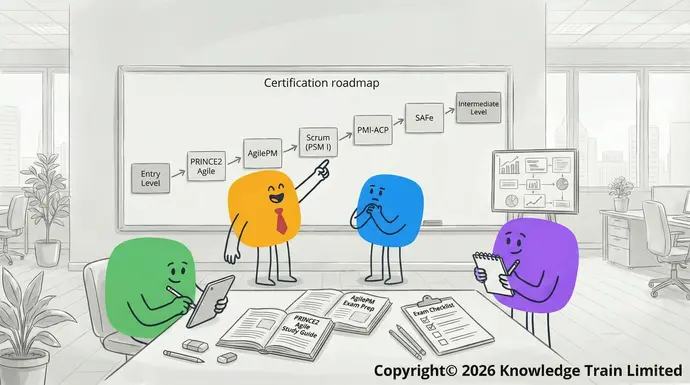
Which Agile project management qualification is best for me? project management tools
Below we’re going to give a quick rundown of which . Use a consistent structure and categorisation system, so the lessons are well-organised. Plan for the repository to be scalable so you can add new projects and insights over time.Agile project management certification Implementing effective search and retrieval systems might be best from you based on current experience, industry or role: Make sure that lessons are easily discoverable. This can be done by implementing a good search function with filters based on project type, date, and category. Use a tagging system to identify key themes and topics, which will allow users to find relevant information quickly. You can also add an option for users to rate the usefulness of a lesson to help surface the most valuable insights. These features will help increase the accessibility and usefulness of the stored knowledge.
PRINCE2 Agile PractitionerPRINCE2 Agile Foundation or equivalentProject managers, senior suppliers, team managers, change advisors, quality assurance supervisors, project analysts.PRINCE2 Agile is most popular in the UK and EU.Starting a project management career: Free ebookEnsuring accessibility and usability of stored lessons
| Qualification Encourage everyone to use the lessons learned repository by making it accessible and easy to use. This includes creating user-friendly interfaces on both desktop and mobile platforms. Role-based access control can help protect sensitive information while still providing appropriate access. Regularly curate the content to keep it up-to-date and valuable. Conduct training sessions on how to use the repository so that everyone can get the most out of this resource. | PrerequisitesSimon BuehringCreating a well-organised, easily searchable, and accessible repository will ensure your organisation can effectively leverage past experiences. This will turn lessons learned from being static records into resources that actively improve decision-making and project outcomes across your organisation. | Best suited for?19 Feb 2026Leveraging lessons learned for future projects | Country The real power of lessons learned lies in how they are applied to future projects. In this part, we’ll explore strategies and techniques for leveraging lessons learned effectively to improve project outcomes and drive organisational success. |
|---|---|---|---|
| PRINCE2 Agile FoundationStart your project management career with our free ebook. Learn about pathways and qualifications necessary for success in the field.Incorporating lessons learned into project planning | None Incorporating lessons learned into your | Project managers, programme managers, team managers, change advisors, quality assurance supervisors, project analysts. project planning | PRINCE2 Agile is most popular in the UK and EU. process is a crucial step in ensuring that past experiences inform future work. To do this, review relevant lessons learned when starting a new project. Make a |
| PRINCE2 Agile Practitioner lessons learned review | PRINCE2 Agile Foundation or equivalent a standard part of project kick-off meetings and assign team members to research and present applicable lessons to the group. This practice ensures that lessons learned are not just documented but actively inform your project strategies. | ||
| PRINCE2 practices: Free ebook | Simon Buehring | 19 Feb 2026 | |
| Get a free ebook on PRINCE2 practices to prepare for your PRINCE2 Foundation exam. Discover the integrated elements of PRINCE2 by reading further. | |||
| project practices | Scrum masters, Agile project managers, systems engineer, user researcher. and outcomes. | US and UK. Enhance your skills with our expert-led courses | |
| PMI-ACP® | None**Project management steps | Project managers, portfolio managers, technical supervisors, project analysts. | USKnowledge TrainSelf-paced |
*Certifications in Agile are universally applicable. This list simply illustrates the most notable industries to make use of each respective framework.19 Feb 2026APM PFQ blended online
**Candidates require 21 hours of project management training to be eligible for the exam. This can be attained through a PMI-ACP ®Project management is crucial for success. Discover the essential phases and elevate your skills to ensure projects from start to finish deliver exceptional outcomes.£749 +vat training course.
References to increase their utility. Regularly review and update your lessons learned repository to keep it relevant and valuable over time.
[1] https://www.pmi.org/-/media/pmi/documents/public/pdf/learning/thought-leadership/pulse/pulse-of-the-profession-2017.pdfMeasuring the impact of lessons learned
[2] https://i.forbesimg.com/forbesinsights/pmi/achieving_greater_agility.pdfEnsuring the effectiveness of your lessons learned process requires you to measure its impact on project performance and organisational growth. This section will focus on key performance indicators and evaluation methods for assessing the value of your lessons learned initiatives.
[3] https://assets.kpmg/content/dam/kpmg/nl/pdf/2017/advisory/agile-project-delivery-survey.pdfKey performance indicators for lessons learned processes
[4] https://www.liquidplanner.com/blog/stats-2017-project-management-manufacturing-report/Consider tracking the following
[5] https://www.deltamatrix.com/why-is-agile-time-to-market-ttm-felivery-50-faster/KPIs