
IntroductionWhat is GDPR?
Kanban is discussed on many agile coursesKnowledge Train, including a 29 Apr 2026PRINCE2 Agile course
The 4 principles of KanbanContents
1. Visualize workflow
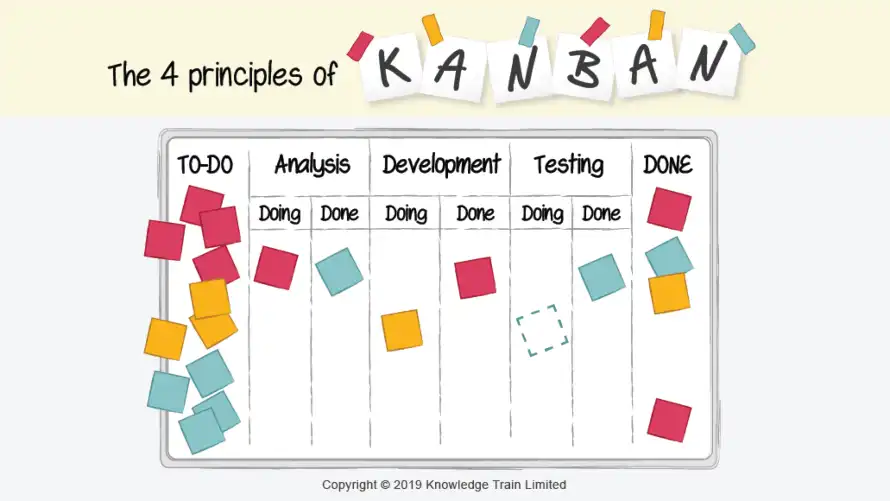
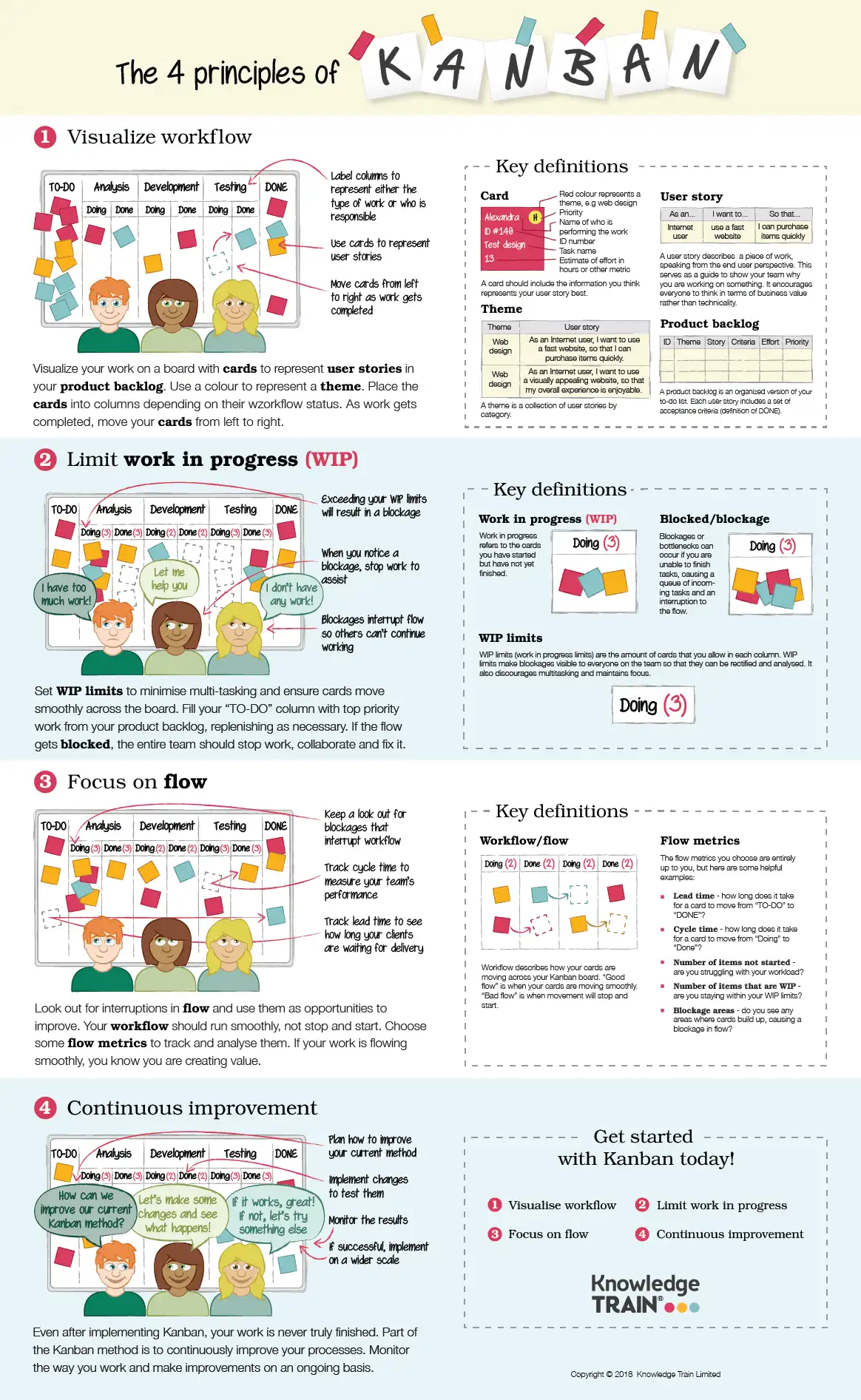
Visualize your work on a board with cards to represent user stories (work) in your product backlog (inventory). Use colours to represent the theme of your Introduction to the General Data Protection Regulation (GDPR)user stories . For a simple Kanban board, label one column “TO-DO” and another “DONE”. Label columns in between “TO-DO” and “DONE” to represent either the type of work or whoever is responsible for undertaking it. Split these columns into two and label “Doing” and “Done”. Place the cards into columns depending on their workflow status. Doing this enables the whole team to view work in progress, work that has been completed and work to be started next. As work gets completed, move your cards from left to right.Historical Context and Scope
Top tip: Keep your column labels simple and intuitive.Key GDPR Principles
2. Limit work in progress (WIP)
Set a limit on how much work can be in progress at one time in each column. In other words, how many cards can be in each column at a given time. This ensures that cards are moving smoothly across the board as and when the team are ready for them.Individual Rights Under GDPR
Do the top priority work first
Your “TO-DO” column should be filled with top priority work from your product backlog. When you have a space in your “TO-DO” column, you can fill it with another Organisational Obligations and Requirementsuser story from your product backlog.Penalties and Enforcement
By setting work in progress limits (WIP limits), the entire team can quickly see if there is a blockage and collaborate to fix it. Setting WIP limits eliminates multi-tasking, which is the ultimate productivity killer.
Top tip: Checklist: Steps for GDPR ComplianceTeams can assist other teams when bottlenecks are identified, regardless of expertise.
3. Focus on flowCommonly Used GDPR Abbreviations
By now, your work should flow freely through the Kanban system. It might even feel very easy! Make sure that you keep a lookout for any interruptions in flow and use these as opportunities for improvement. Workflow should run smoothly and not stop and start. Choose some flow metrics to track and analyse them. Which ones you choose are entirely up to you, but here are some helpful examples:
- Lead time Global Reach and International Implications– how long does it take for a card to move from “TO-DO” to “DONE”?
- Cycle time Further Reading and Authoritative Resources– how long does it take for a card to move from “Doing” to “Done”?
- Number of items not started FAQs– are you struggling with your workload?Introduction to the General Data Protection Regulation (GDPR)
- Number of items that are WIP The General Data Protection Regulation, commonly known as – are you staying within your WIP limits?GDPR
- Blockage areas , is an EU-wide legal framework for privacy and data protection. Enforced from 25 May 2018, GDPR was adopted by the European Parliament and the Council of the European Union. It governs the handling of personal data relating to individuals (data subjects) in the European Economic Area (EEA) and impacts organisations both within and outside the EU through its extraterritorial reach.