The 4 Kanban principles: A visual guide

The 4 principles of KanbanLean Six Sigma Black belt certificate
1. Visualize workflowStill not sure which course is right for you?
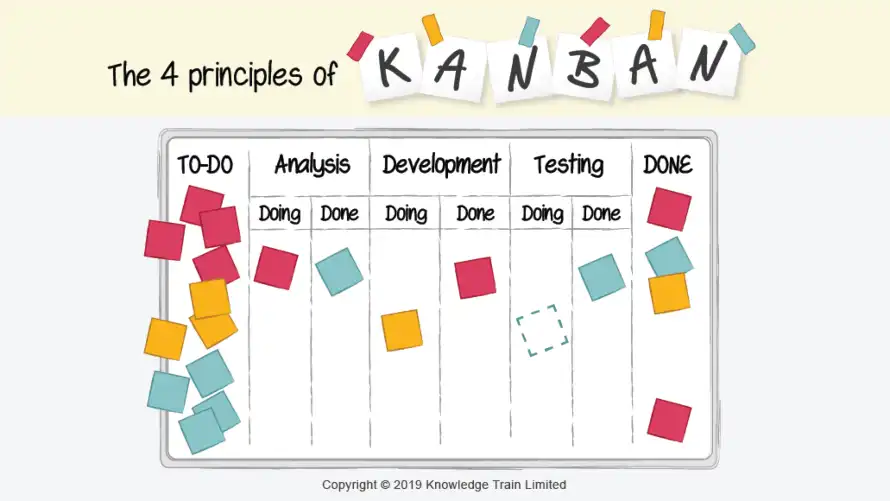
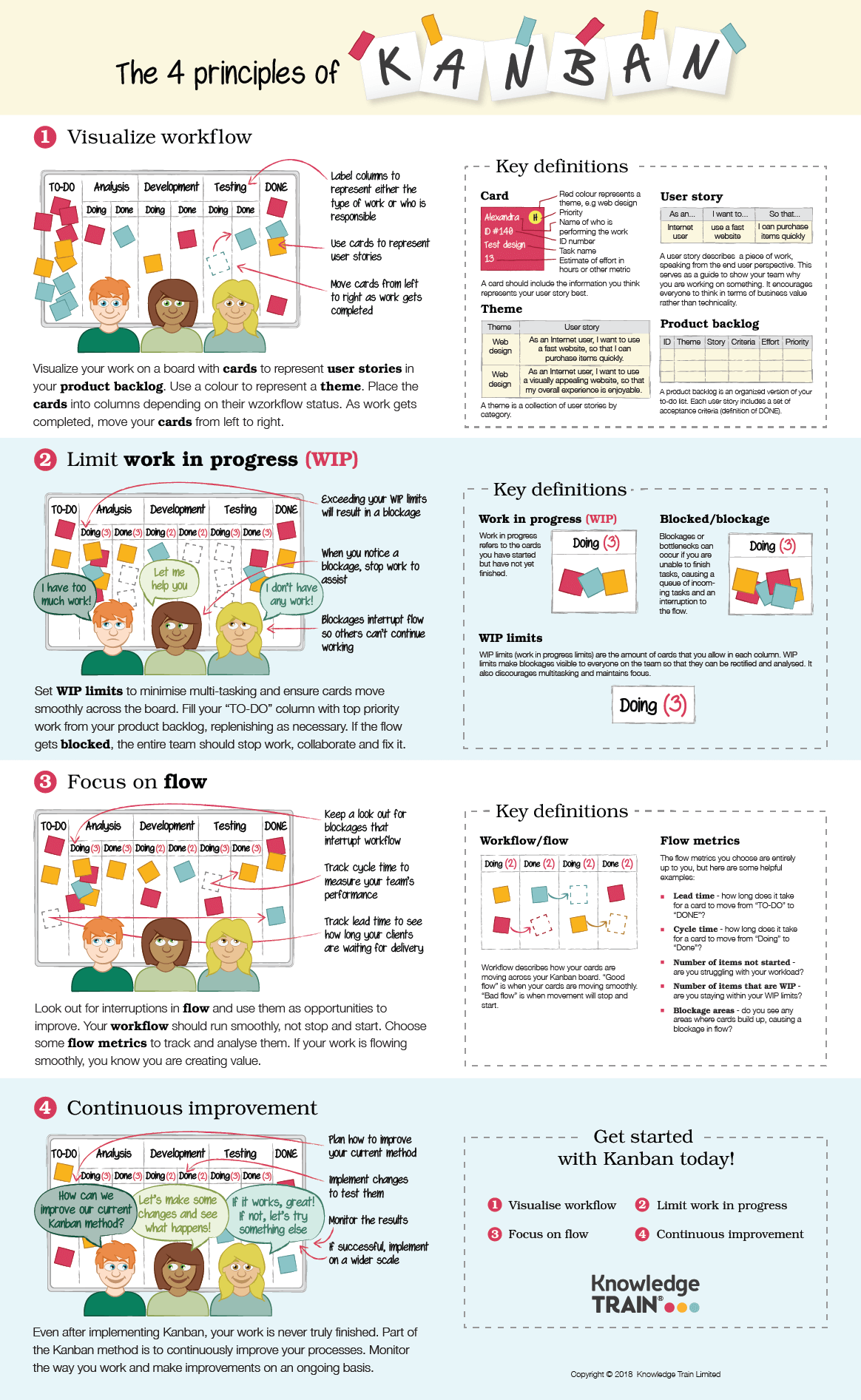
Visualize your work on a board with cards to represent user stories (work) in your product backlog (inventory). Use colours to represent the theme of your See our quick guideuser stories or . For a simple Kanban board, label one column “TO-DO” and another “DONE”. Label columns in between “TO-DO” and “DONE” to represent either the type of work or whoever is responsible for undertaking it. Split these columns into two and label “Doing” and “Done”. Place the cards into columns depending on their workflow status. Doing this enables the whole team to view work in progress, work that has been completed and work to be started next. As work gets completed, move your cards from left to right.chat with an advisor
Top tip: Choose how you learnKeep your column labels simple and intuitive. Lean Six Sigma training is available as a self-paced yellow belt course for individuals and as tailored programmes for teams at all belt levels. Both options focus on practical tools, real examples and clear guidance, so you can apply what you learn straight away.
2. Limit work in progress (WIP) Self-paced online
Set a limit on how much work can be in progress at one time in each column. In other words, how many cards can be in each column at a given time. This ensures that cards are moving smoothly across the board as and when the team are ready for them.
Do the top priority work firstStudy anytime, at your own pace
Your “TO-DO” column should be filled with top priority work from your product backlog. When you have a space in your “TO-DO” column, you can fill it with another Interactive modules and quizzesuser storyIdeal first step into Lean Six Sigma from your product backlog.
By setting work in progress limits (WIP limits), the entire team can quickly see if there is a blockage and collaborate to fix it. Setting WIP limits eliminates multi-tasking, which is the ultimate productivity killer.
Top tip: View enrol optionsTeams can assist other teams when bottlenecks are identified, regardless of expertise.
3. Focus on flow Corporate / team training
By now, your work should flow freely through the Kanban system. It might even feel very easy! Make sure that you keep a lookout for any interruptions in flow and use these as opportunities for improvement. Workflow should run smoothly and not stop and start. Choose some flow metrics to track and analyse them. Which ones you choose are entirely up to you, but here are some helpful examples:
- Lead time Programmes tailored to your team– how long does it take for a card to move from “TO-DO” to “DONE”?Delivered by Lean Six Sigma experts
- Cycle time Build capability from yellow to black belt– how long does it take for a card to move from “Doing” to “Done”?
- Number of items not started – are you struggling with your workload?Request a quote
- Number of items that are WIP – are you staying within your WIP limits?All Lean Six Sigma options provide APMG-accredited training and prepare you for certification. Choose the route that best fits how you and your team want to learn.
- Blockage areas Enrol on a Lean Six Sigma course– do you see any areas where cards build up, causing a blockage in flow?Choose how you want to study below. You can enrol on a self-paced online yellow belt course, or request tailored Lean Six Sigma training (yellow, green and black belts) for your team, all aligned with APMG-accredited Lean Six Sigma standards.
Top tip: Smooth flow = creating value
4. Continuous improvementLean Six Sigma Yellow Belt self-paced online
Remember that even after implementing Kanban, the work is never truly finished. Part of the Kanban method is to continuously improve your processes. Monitor your Kanban system and make improvements on an ongoing basis.
Conclusion £499
By following these 4 principles, you should have enough of an overview to get yourself started with a Kanban board and some cards to represent your user storiesEnrol now.
For some teams, Kanban may be all they need to effectively manage their day to day development. Kanban ensures that there is a seamless flow to your production line regardless of the type of work you do. However, you might like to use Kanban alongside a good Scrum framework , which will provide even more structure and organisational improvements.