The 4 Kanban principles: A visual guideSimon Buehring

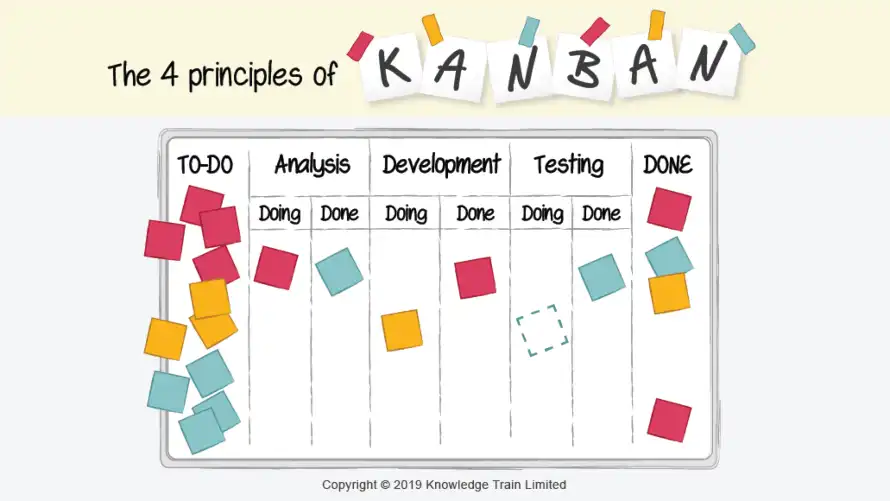
1. Kanban is a highly visual work management method, developed in Japan in the late 1940’s by Toyota engineers. The word Kanban roughly translates in Japanese as “visual card”.
Limiting waste
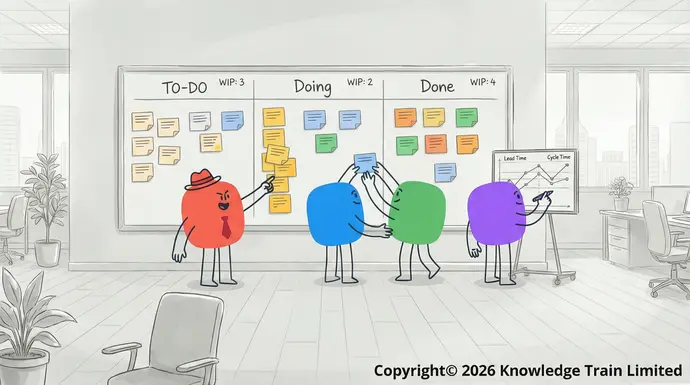
By displaying cards on a board, a team can easily display a workflow to everybody involved in the team. The fundamental benefit of working in this way is that any disruptions to workflow are easily identified, and team members can collaborate to rectify issues before they get out of control.A Guide to the PMBoK (
The approach also limits the amount of work in progress, thereby minimising any build-up of tasks which wastes time and money.Project Management Institute
Pulling work)
Kanban is based on a pull rather than a push system. This means that team members only start work when they have capacity, rather than work being pushed to them with the potential of getting piled up. Kanban can be a valuable tool when managing – Probably not one you’d take on your summer holiday, but definitely a reference bible for your bookshelf especially if you’re studying for the projectsPMP exam that require deliverables frequently and is also a popular choice for software development teams..
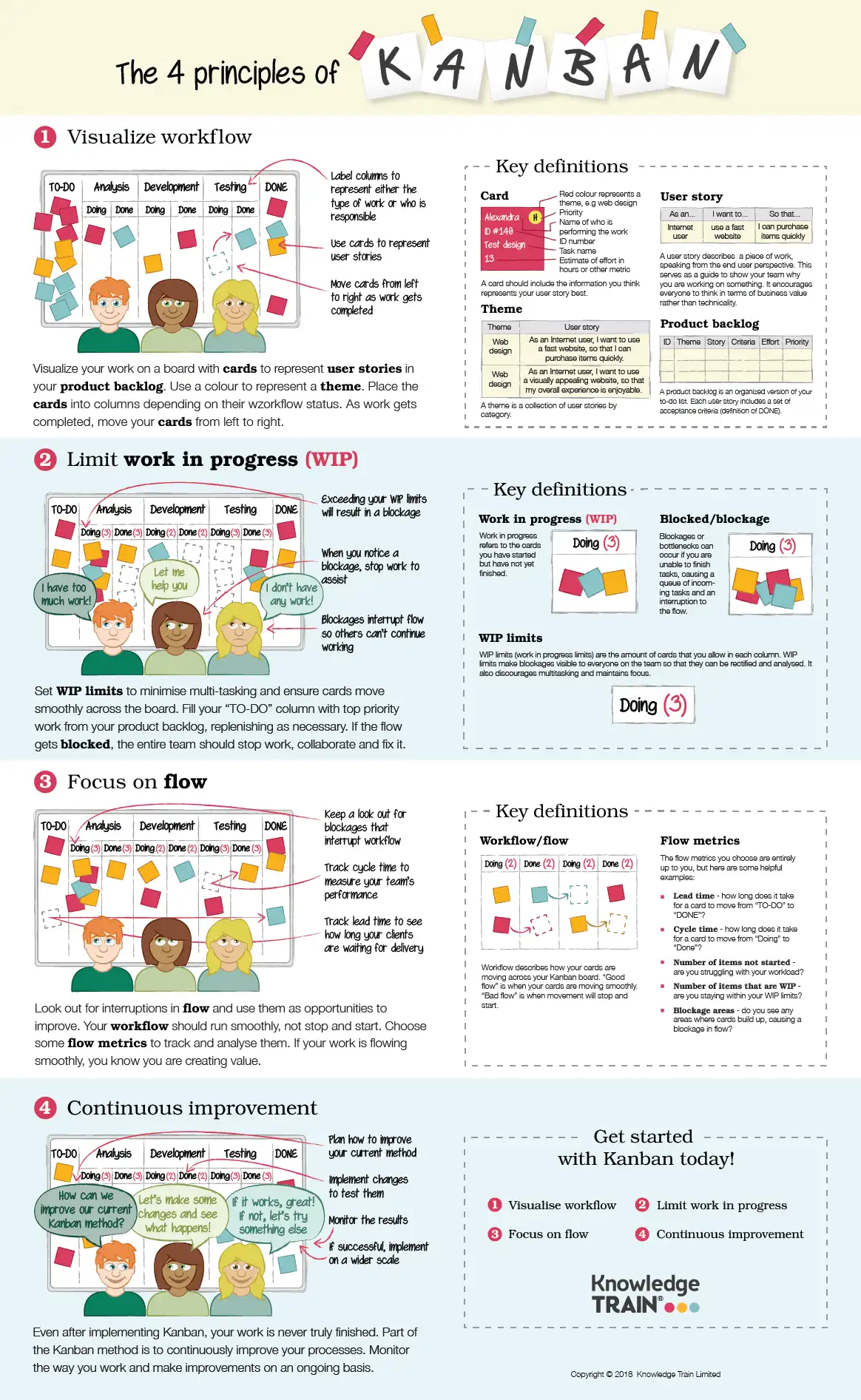
The graphic below was created to help you get a basic understanding of the 4 principles of Kanban. If you like it, please show your appreciation by linking back to this page.2.