What is cybersecurity? Types, threats and best practices

Key takeaways
Strong cybersecurity reduces business risk by protecting data, systems, and essential services.
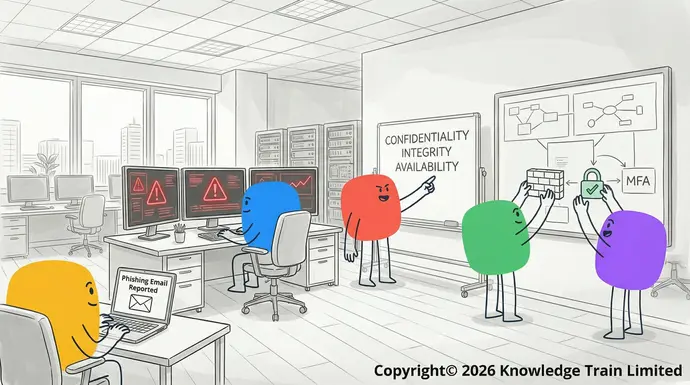
- Effective security balances confidentiality, integrity, and availability across systems and data.
- Prioritise low-cost controls such as multi-factor authentication, password management, and rapid patching.
- Zero-day exploit: Attacks that target vulnerabilities before they can be patched.
- Advanced persistent threat (APT): Prolonged and targeted cyberattacks, often carried out by organised groups.
Cybersecurity best practices
- Use strong, unique passwords and change them regularly.
- Enable multi-factor authentication wherever possible.
- Update and patch operating systems and applications promptly.
- Verify email senders and beware of unexpected attachments or links (phishing protection).
- Install and maintain up-to-date antivirus and firewall software.
- Back up important data securely and regularly.
- Limit access based on the principle of least privilege.
- Follow cyber hygiene routines and educate staff about social engineering risks.
- Develop an incident response plan and conduct regular security training.
- Adopt a zero trust approach by continuously verifying devices and users.
Cybersecurity roles and careers
The demand for cybersecurity professionals continues to grow. Typical roles include:
- Security analyst
- Organised approach to addressing and managing security incidents.
FAQs
What is cybersecurity in simple words?
Cybersecurity means protecting computers, networks, and data from unauthorised access and attacks to keep them secure and private.
What are the main types of cybersecurity?
The main types are network security, application security, endpoint security, cloud security, and information security.
What are the top cybersecurity threats?
Major threats include malware, phishing, ransomware, social engineering, data breaches, and zero-day exploits.
How is information security different from cybersecurity?
Information security covers protection of all types of information, while cybersecurity is focused specifically on securing digital data and systems from cyber threats.
How can individuals and organisations protect themselves?
Use unique strong passwords, enable multi-factor authentication, regularly update software, guard against phishing, use antivirus and firewalls, and maintain data backups.
What is the CIA Triad in cybersecurity?
The CIA Triad refers to the three core principles: confidentiality, integrity, and availability, which all security measures aim to protect.
What does a cybersecurity professional do?
A cybersecurity professional safeguards networks and systems from attacks, detects vulnerabilities, manages incidents, and ensures compliance with security policies.