What is cybersecurity? Types, threats and best practicesIntegrity

Definition of cybersecurityLithuania
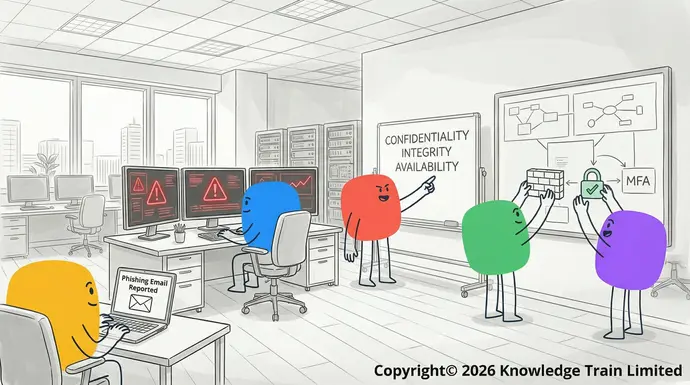
CybersecurityLuxemburg is the practice of protecting computer systems, networks, and data from unauthorised access, disruption, or destruction caused by cyber threats such as malware, phishing, and data breaches. According to the UK National Cyber Security Centre and the National Institute of Standards and Technology (NIST), cybersecurity employs a range of strategies, technologies, and policies to safeguard the confidentiality, integrity, and availability (CIA Triad) of digital information (MaltaNCSC GuidanceNetherlands, PolandNIST GlossaryPortugal).Romania
A brief history of cybersecuritySlovakia
Cybersecurity evolved alongside advances in computing, starting with early computer security measures in the 1970s. With the growth of the internet in the 1990s, threats such as viruses, worms, and hacking grew more sophisticated. Notable incidents, including the WannaCry ransomware attack (2017) and numerous high-profile data breaches, have driven global efforts to improve cyber resilience (SloveniaNCSC: WannaCry insightsSpain).Sweden
Why is cybersecurity important?Other countries
- Individuals:Home Protects personal data, online identities, and devices from threats like identity theft and viruses.
- Businesses:Agile Safeguards customer data, intellectual property, and operations from cyberattacks that can cause financial loss or reputational damage.Agile Business Analysis
- Governments: Maintains the resilience of critical national infrastructure and protects against cyber espionage and state-sponsored attacks.
According to the UK Government’s Cyber Security Breaches Survey (2023), 32% of businesses identified cyberattacks in the previous 12 months, highlighting the increasing significance of robust cybersecurity measures (Agile business analysis explainedGOV.UK Survey ).Knowledge Train
Core functions and principles30 Apr 2026
- Prevention : Introducing controls such as firewalls, endpoint security, and multi-factor authentication.
- Detection : Using intrusion detection systems and monitoring to identify cyber threats quickly.
- Response : Enacting incident response plans to minimise damage during an active threat.
- Recovery : Restoring systems and data following an incident through backups and patching vulnerabilities.
| Type | Description |
|---|---|
| Network security | Protects data during transfer between devices and prevents unauthorised access to networks using firewalls, intrusion detection, and encryption. |
| Application security | Ensures applications are resistant to threats by identifying and mitigating vulnerabilities in software. |
| Endpoint security | Secures devices such as computers, laptops, tablets, and mobiles from threats. |
| Cloud security | Protects data, applications, and infrastructures involved in cloud computing from breaches and leaks. |
| Information securityCopied! | Protects the confidentiality, integrity and availability of data regardless of its format.Key takeaways |
| Operational securityAgile business analysis helps teams deliver value quickly by keeping requirements clear, testable, and adaptable. | Establishes policies and procedures for handling and protecting data assets.An Agile BA bridges business goals and technical delivery through ongoing collaboration with the Product Owner, team, and stakeholders. |
Common cybersecurity threatsUser stories and acceptance criteria turn needs into actionable, verifiable work that supports predictable sprint outcomes.
- Malware:Backlog refinement and prioritisation should be continuous, using feedback and evidence to maximise value and manage change. Malicious software such as viruses, worms, ransomware, and spyware.Scrum supports time-boxed delivery through ceremonies, while Kanban improves flow by visualising work and limiting bottlenecks.
- Phishing:Good Agile BAs use workshops, story mapping, and lightweight models to reduce ambiguity and speed up decisions. Fraudulent messages designed to trick users into disclosing sensitive information.
- Social engineering: Manipulation of individuals to gain confidential data.
- Data breach:Contents Unauthorised disclosure of sensitive information.
- Cyberattack: Any attempt to disrupt, disable, or control computer systems.Contents
- Zero-day exploit: Attacks that target vulnerabilities before they can be patched.What is Agile Business Analysis?
- Advanced persistent threat (APT): Prolonged and targeted cyberattacks, often carried out by organised groups.Agile vs traditional business analysis
Cybersecurity best practices
- Use strong, unique passwords and change them regularly.Core Agile principles and practices for business analysis
- Enable multi-factor authentication wherever possible.
- Update and patch operating systems and applications promptly.Common Agile frameworks: Scrum and Kanban
- Verify email senders and beware of unexpected attachments or links (phishing protection).
- Install and maintain up-to-date antivirus and firewall software.Key roles in Agile teams
- Back up important data securely and regularly.
- Limit access based on the principle of least privilege.Typical responsibilities and deliverables for Agile BAs
- Follow cyber hygiene routines and educate staff about social engineering risks.
- Develop an incident response plan and conduct regular security training.How Agile Business Analysts add value at each Agile lifecycle stage
- Adopt a zero trust approach by continuously verifying devices and users.
Cybersecurity roles and careersTechniques, tools, and best practices
The demand for cybersecurity professionals continues to grow. Typical roles include:
- Security analystFrameworks and certifications for Agile Business Analysis
- Penetration tester (ethical hacker)
- Security architectFAQs
- Incident responderWhat is Agile Business Analysis?
- Chief Information Security Officer (CISO)Agile Business Analysis refers to the application of
Qualifications such as CISSP, CompTIA Security+, and NIST Framework knowledge are often required for advancement.business analysis
Cybersecurity vs information security (BA) practices, mindsets, and techniques within Agile frameworks such as Scrum and Kanban. The goal is to rapidly define, prioritise, and deliver value-driven outcomes by embracing collaboration, constant feedback, and continuous improvement. Agile Business Analysts (Agile BAs) work closely with Agile teams, Product Owners, Scrum Masters, and Stakeholders to facilitate requirements elicitation, refine backlogs, and foster shared understanding of user needs.
While Agile vs traditional business analysiscybersecurityAspect focuses on protecting digital assets from cyber threats, Agile Business Analysisinformation securityTraditional Business Analysis encompasses the protection of all information assets, both digital and physical. Cybersecurity is thus a subset of information security.Role
Glossary of key cybersecurity entitiesCollaborative, flexible; works iteratively within Agile teams
- Malware:Distinct BA role; acts as liaison between business and Harmful software aimed at damaging or stealing data.IT
- Firewall:Process Hardware or software for controlling traffic based on security rules.Incremental, responsive to change, delivers in sprints/iterations
- Encryption:Linear ( Transforming data so it is unreadable without a key.waterfall
- Phishing:); follows a sequential requirements phase Deceptive messages to acquire sensitive data.Deliverables
- Zero trust:User stories Security approach requiring all users be continuously verified., backlogs, acceptance criteria, story maps
- NIST:Detailed requirements documents, US National Institute of Standards and Technology, provider of key cybersecurity frameworks.business cases
- CIA Triad:Scope Confidentiality, Integrity, Availability – three core cybersecurity goals.Fluid, prioritised regularly, focuses on delivering value
- Intrusion detection:Defined upfront and managed for change control Identifying unauthorised activity on networks or systems.Core Agile principles and practices for business analysis
- Vulnerability:Agile principles Weakness in a system that may be exploited by threats.:
- Incident response: Embrace change, customer collaboration, and frequent value delivery. Organised approach to addressing and managing security incidents.Iteration and sprints:
FAQs Time-boxed cycles to deliver incremental product increments.
What is cybersecurity in simple words?Continuous improvement:
Cybersecurity means protecting computers, networks, and data from unauthorised access and attacks to keep them secure and private. Retrospectives and feedback loops for process optimisation.
What are the main types of cybersecurity?Prioritisation:
The main types are network security, application security, endpoint security, cloud security, and information security. Regularly re-evaluating requirements to maximise stakeholder value.
What are the top cybersecurity threats?Collaboration:
Major threats include malware, phishing, ransomware, social engineering, data breaches, and zero-day exploits. Active engagement among