Certification: Definition, Types, Process and Standards

Key takeaways
Certification works best when it is accredited, well assessed, and tied to real job needs.
- Certification provides formal validation of skills against defined standards and improves credibility with employers and customers.
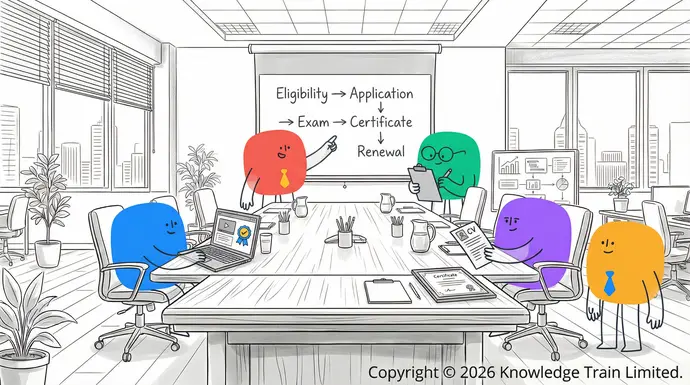
- The typical route is eligibility checks, application, exam or assessment, verified issuance, and periodic renewal.
- Accreditation and independent oversight increase trust and protect candidate outcomes through audits and quality assurance.
- Online and blended learning widen access, but candidates should confirm technical requirements and support before enrolling.
- Employers gain clearer competency frameworks and can measure ROI through productivity, retention, and progression metrics.
- Professional certification: Awarded by professional bodies or organisations in fields such as [email protected]project management, finance, IT +44 (0)207 148 5985, or healthcare. Examples include certifications from CoursesANSIPROJECT MANAGEMENT or PRINCE2state boards®.Foundation
- Academic certification:Learn the fundamentals of the PRINCE2 method. Issued by educational institutions after completing a course of study or passing qualifying exams – for instance, university Practitioner certificatesIncludes Foundation & Practitioner combined option. and diplomas.Association for Project Management (APM)
- Technical certification:Project Fundamentals Qualification (PFQ) Validates competency in technical or vocational areas like IT, electrical work, or health and safety. Managed by certifying bodies, sometimes requiring assessment at a test centre.Start your APM project management career.
How to get certifiedProject Management Qualification (PMQ)
- Eligibility:Advance your APM project management expertise. Confirm you meet any prerequisites, such as specific Project Risk Single Certificate Level 1 qualificationsEnhance your project risk management skills., training, or work experience. These are outlined by the certifying body or AgilePMgoverning body®. – Agile Project Management
- Application:Foundation Submit your application and supporting evidence (e.g. qualifications, training records). Pay applicable fees.Learn the key principles of Agile Project Management.
- Exam/Assessment:Practitioner Pass a formal Includes Foundation & Practitioner combined option.exam
Learn the fundamentals of artificial intellegence.
How long does a certification last?AI Project Governance Framework (AIPGF)
The validity of certification varies by profession and certifying body, but typically lasts between 1 and 5 years. Renewals may involve continuing education or re-examination.Foundation
Is certification the same as a license?Learn the fundamentals of the governance framework.
No, certification and licence are different. A licence is a legal authorisation from a governing body to practise an occupation. Certification recognises achievement of a standard but does not, by itself, grant legal authority to practise.Practitioner
Are certifications worth it?Includes Foundation & Practitioner combined option.
Yes, certifications can enhance your career prospects, validate your skills, promote professional development, and increase your credibility in an industry. However, their value may depend on the field and employer requirements.Workshops