How to write a user story

Key takeaways
Strong user stories focus on user value and enable clear delivery decisions.
- Write user stories from the end user perspective using “As a… I want… so that…”.
- Clarify the who, what, and why, and keep technical detail light to preserve design options.
- Use a persona profile to make the end user and their goal concrete.
- Apply I.N.V.E.S.T. so stories are independent, valuable, small, and testable.
- Add lean, measurable acceptance criteria to define Done and avoid turning it into a to-do list.
- Build, prioritise, estimate, and refine the backlog, splitting stories that become too large or risky.
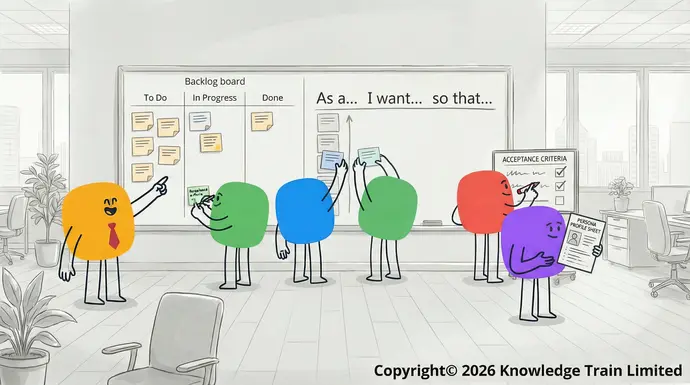
What is a user story in agile?®
A Agileuser storyFoundation is a simple description of a requirement and is a popular Learn the fundamentals of the PRINCE2 Agile method.agile methodPractitioner to capture user requirements. It serves as a guide for the team about a user requirement. User stories are one of the many agile technique or methods which you will learn on an Includes Foundation & Practitioner combined option.Agile Project Management courseAI Project Governance Framework (AIPGF).Foundation
Agile user stories provide context and clarity of expectations, without focusing on technical details. Defining technical details too early can discourage alternative design options and changes. Being purposely vague, user stories provide room for creativity and interpretation.Learn the fundamentals of the governance framework.
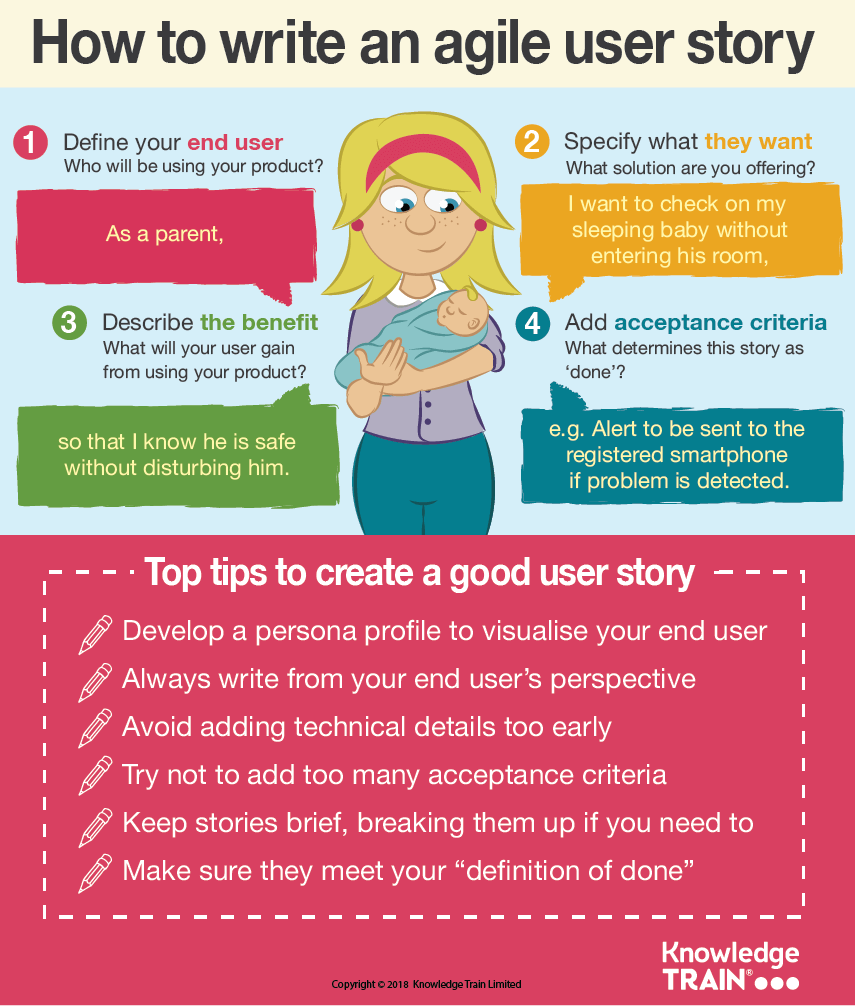
An agile user story speaks from the end user perspective and follows this format:Practitioner As a ….. I want to ….. so that …..Includes Foundation & Practitioner combined option.
A user story encourage team conversation which may uncover hidden assumptions and requirements. They are to be kept brief and should always meet the allocated acceptance criteria or definition of “Done”.Better Business Cases
Who can write a user story?™
Users are the ideal people to write user stories. If you’re using Foundation ScrumLearn the fundamentals of Better Business cases., it’s the Product Owner’s job to prioritise the user stories in the Product Backlog. The highest priority stories are pulled from the backlog to work on during a Scrum sprint.Practitioner
How to write a user storyIncludes Foundation & Practitioner combined option.
The key to writing an effective user story is to determine the who, what and why. Ensure that your user stories follow the I.N.V.E.S.T. standard – independent, negotiable, valuable estimable, small and testable.P3O
1. Define your end user®
The first thing to do when writing your story is to define your end user. Who is the person that will be using your product? A helpful way to visualise your user is to make them a persona profile. Give the person a name and find them a photo. Add their relevant attributes, attitudes and behaviours. Finally, give them a goal. The following example is a user definition for a smart baby monitor.Foundation
Example:Learn the fundamentals of the P3O project management office.
As a [parent]Practitioner
2. Specify what your end user wantsIncludes Foundation & Practitioner combined option.
For this part you’ll need to think about the solution your product is offering. What does your end user want from your product? Refer to the “goal” section of your persona profile, then add a brief description of this to your story. The following example shows what the end user wants from using a smart baby monitor.Workshops
Example:Introduction to Project Management
As a [parent], I want to [check up on my sleeping baby without going into their room]1-day workshop to learn the basics of project management.
3. Describe the benefit of your productProject Management Essentials
Imagine that you are the end user speaking to the product developer. Tell the developer the benefit you will gain from using this product. The following example shows how the end user will benefit from using a smart baby monitor.2-day workshop to learn how to manage projects without getting certified.
Example:Writing Business Cases
As a [parent], I want to [check up on my sleeping baby without going into their room], so I can [ensure their safety without disturbing them].Half-day workshop to learn to write robust business cases.
4. Add acceptance criteriaAI in Project Management
In Learn how to use AI tools in everyday project work.agileARTIFICIAL INTELLIGENCE (AI), teams are required to deliver products that are potentially shippable. Acceptance criteria is the clearest and quickest way to determine whether a user story is done or not-done.BCS AI
Each user story should have at least one acceptance criteria but try not to list too many. You can use S.M.A.R.T objectives to ensure your criteria are measurable. Always remember to write from your end user’s perspective and not confuse acceptance criteria with a to-do list.Foundation
Example: Learn the fundamentals of artificial intellegence.As a [parent], I want to [check up on my sleeping baby without going into their room], so I can [ensure their safety without disturbing them].AI Project Governance Framework (AIPGF) – Night camera installed on baby’s cot monitor – Baby temperature and breathing monitor function – Data sent to parent’s smartphone – Parent alert sent to smartphone if problem occursFoundation
Start building your backlogScrum Product Owner
Once you have written your user story, you can add it to the backlog. Once you have a bunch of user stories, you can work on prioritizing and estimating the effort.Choose Scrum Alliance or Scrum.org Product Owner training courses.
Embracing change is all part of the agile ethos, so product requirements may change during a sprint and you can refine your user stories as you progress. If you find that your user story is becoming complicated or undoable, you can break it into smaller user stories. That way, the stories are less likely to be left not-done at the end of a sprint.AgileBA